City we serve
Exterior repaints in Dunwoody for 1970s two-story traditionals (30338)
Most Dunwoody houses we paint went up in the 1970s: two stories, a brick or wood front, painted lap siding on the sides and back, and a lot of trim. After fifty years that wood needs real prep before any color goes on. ZIP 30338.
- Area
- Dunwoody
- ZIP code
- 30338
- County
- DeKalb County
- Nearest office
- Atlanta office, Peachtree St NE
- Phones
- Answered 24/7
- Estimates
- Free walkthrough
Painting in Dunwoody usually means a full exterior on a 1970s two-story: washing, scraping, replacing rotted siding boards and trim, priming bare wood, then two finish coats. Expect five to eight working days outside and two to four days for a typical interior. We start with a free walkthrough and written estimate. Call (470) 458-0461, day or night.
Dunwoody grew fast once the perimeter highway opened, and whole neighborhoods off Mount Vernon Road, Chamblee Dunwoody Road and Tilly Mill went up in a handful of years. That's why so many houses here share the same bones: center-hall colonials and traditionals with tall gable ends, double-hung windows, paneled shutters and a two-car garage on the side.
Those houses are now due for their fourth or fifth repaint, and the old coats have started letting go in sheets on the weather sides. We see more failed paint here than in newer suburbs, simply because the siding is real wood and has been through decades of Georgia summers. The good news is that wood siding takes paint well once it's sound and properly primed.
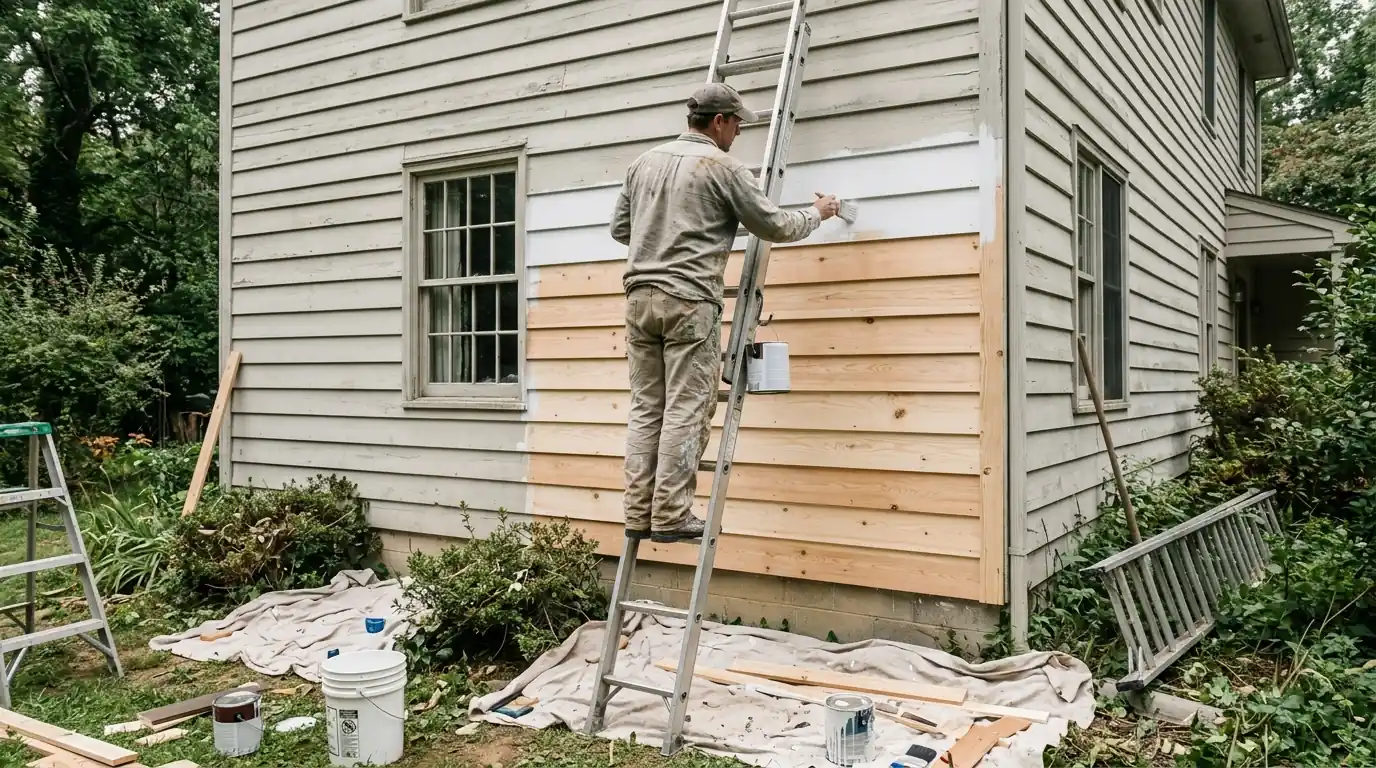
Homes here
Why 1970s wood siding in Dunwoody needs more prep than paint
The typical Dunwoody traditional has cedar or pine lap siding, sometimes with a hardboard panel product on the gables, and wide wood trim around every window. Earlier repaints were often rolled on over chalky surfaces, so the bond between layers is weak. When we scrape, it isn't unusual to find three or four colors stacked up, with the bottom layer still oil-based. That mix is why we spot prime with a bonding or oil primer before any latex topcoat.
These homes were built before 1978, so lead paint is likely somewhere under the current coats, especially on window sashes, trim and porch rails. We test before sanding and follow EPA lead-safe work practices: plastic on the ground, wet scraping, and careful cleanup. Rotted bottom courses of siding and soft corner boards get cut out and replaced with primed stock. Painting over soft wood only buys a year or two.
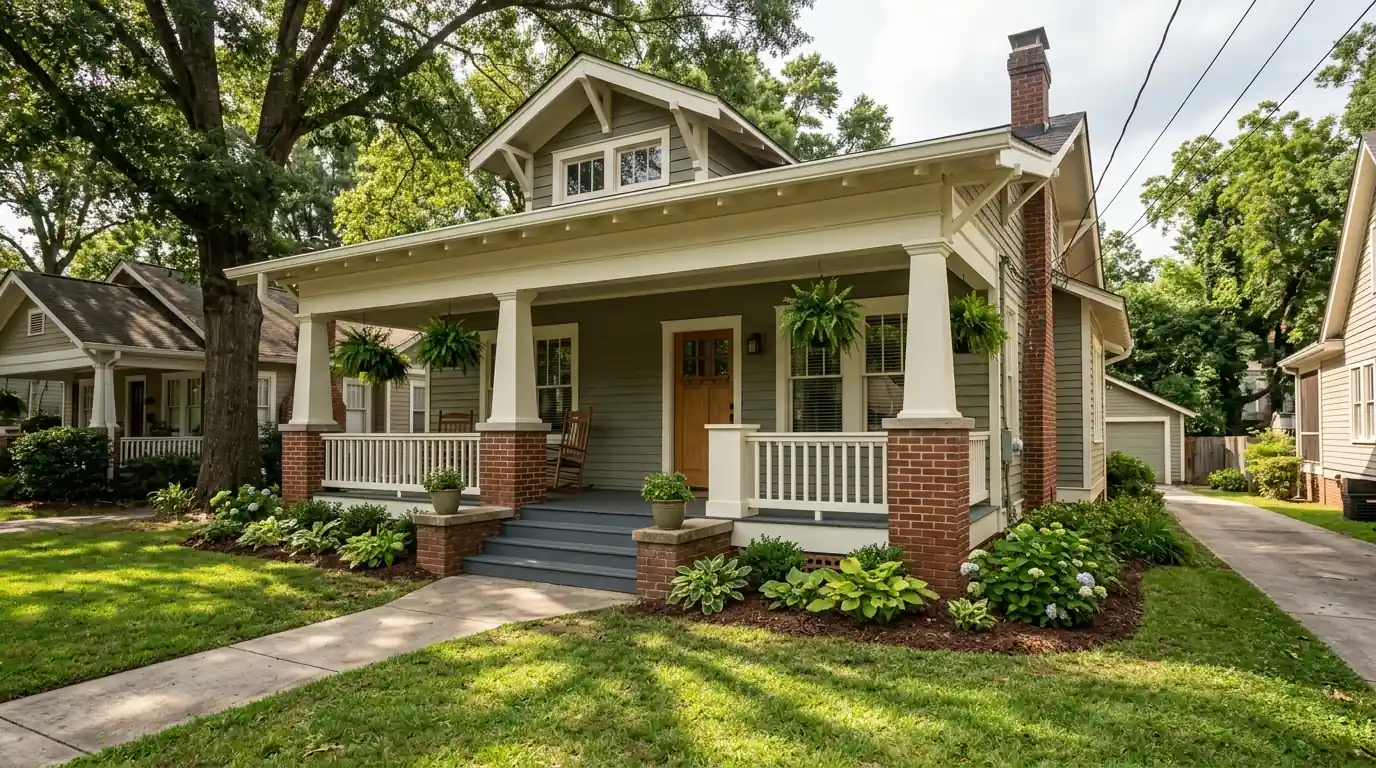
Most requested
Dunwoody painting jobs we get called for most
Full exterior repaint of a two-story traditional
Washing, scraping, board replacement, spot priming and two coats on siding and trim. A typical 2,400 square foot two-story runs about $6,180 to $11,450, depending on rot and how much trim there is.
Exterior House PaintingRotted siding and trim replacement before paint
Bottom siding courses, garage door jambs and window sills are the usual soft spots. We replace them with primed wood or fiber cement so the new paint has something solid to hold.
Wood Rot RepairShutter and front door refresh
Paneled wood shutters crack at the joints and fade fast on west-facing fronts. We remove, repair, prime and spray them, and refinish the front door in a durable enamel.
Front Door & Shutter PaintingInterior trim and stair rail repaints
Seventies interiors have plenty of painted baseboard, crown and spindle rails. We sand, fill nail holes, prime any old oil enamel and brush on a hard-wearing trim finish.
Trim, Door & Baseboard PaintingDeck restaining on wooded back lots
Many Dunwoody decks sit under tall hardwoods and stay damp. We wash, brighten and apply a penetrating stain that won't peel like the old solid colors did.
Deck Staining & SealingLocal conditions
What Dunwoody weather and lots do to exterior paint
Mature hardwood canopy
Big oaks and poplars keep north and rear walls in shade all day. Those walls stay damp, grow mildew and peel first, so we wash with a mildewcide and use a paint with mold inhibitors there.
Old oil under new latex
Decades of mixed coatings mean latex can lift off a slick oil layer underneath. We test adhesion with tape and prime glossy or chalky spots before the finish coats go on.
Tall gable ends
Two-story gables put the highest wood on the house right where sun and rain hit hardest. They need ladders or a lift, careful scraping, and often new trim boards at the peak.
Spring pollen season
Yellow pine pollen sticks to wet paint in March and April. We wash right before painting and watch the forecast so fresh coats aren't sitting tacky during the heaviest drops.
Timing
When to book an exterior repaint in Dunwoody
Late April through June and September through early November are the busiest stretches here, because temperatures sit comfortably above label minimums and humidity is lower in the mornings. Summer works fine, but we start on the shaded side and follow the sun around the house to keep paint off hot siding. Winter is a good time for interior repaints and for getting rot repair done ahead of spring. If your house needs a lot of carpentry, calling in late winter puts you near the front of the spring schedule.
Questions
Painting questions from Dunwoody
How do I know if my Dunwoody siding is too far gone to paint?
Push a screwdriver into the bottom edge of a few boards, especially near downspouts and the garage. If it sinks in easily, that board needs replacing. A few soft boards are normal on a 1970s house and we replace them as part of the job. If whole walls are soft, we'll tell you plainly that new siding makes more sense than paint.
Should I switch from wood to fiber cement on the worst walls?
It's a reasonable move on rear walls that stay wet under trees. Fiber cement holds paint longer and doesn't rot. We can patch in matching lap profiles on damaged sections, prime them and paint everything together so the change isn't obvious from the street. See our notes on painting fiber cement for how it ages.
Can you change my brown 1970s trim to white without it looking patchy?
Yes. Going from a dark trim color to white takes a tinted primer first, then two finish coats, so plan for a little more time and cost on trim. We also paint the window sashes and garage door trim together so nothing is left in the old color by accident.
How long does a full Dunwoody exterior take start to finish?
Five to eight working days is typical for a two-story with moderate rot repair. Heavy carpentry, lead-safe prep on every window, or a week of afternoon storms can push it longer. We give you a day-by-day outline at the walkthrough so you know when the noisy scraping days are.
Painting in Dunwoody? Call us first
Tell us the house, the surfaces and the timing. We will book a free walkthrough and send a written scope.