Exterior painting in Atlanta
Fiber cement siding painting in Atlanta for lap, panel and shake
Fiber cement holds paint well, but the factory or builder coat on many 2000s Atlanta homes is now chalky, faded and cracked at the butt joints. A careful repaint brings it back without the rot and peeling wood siding suffers.
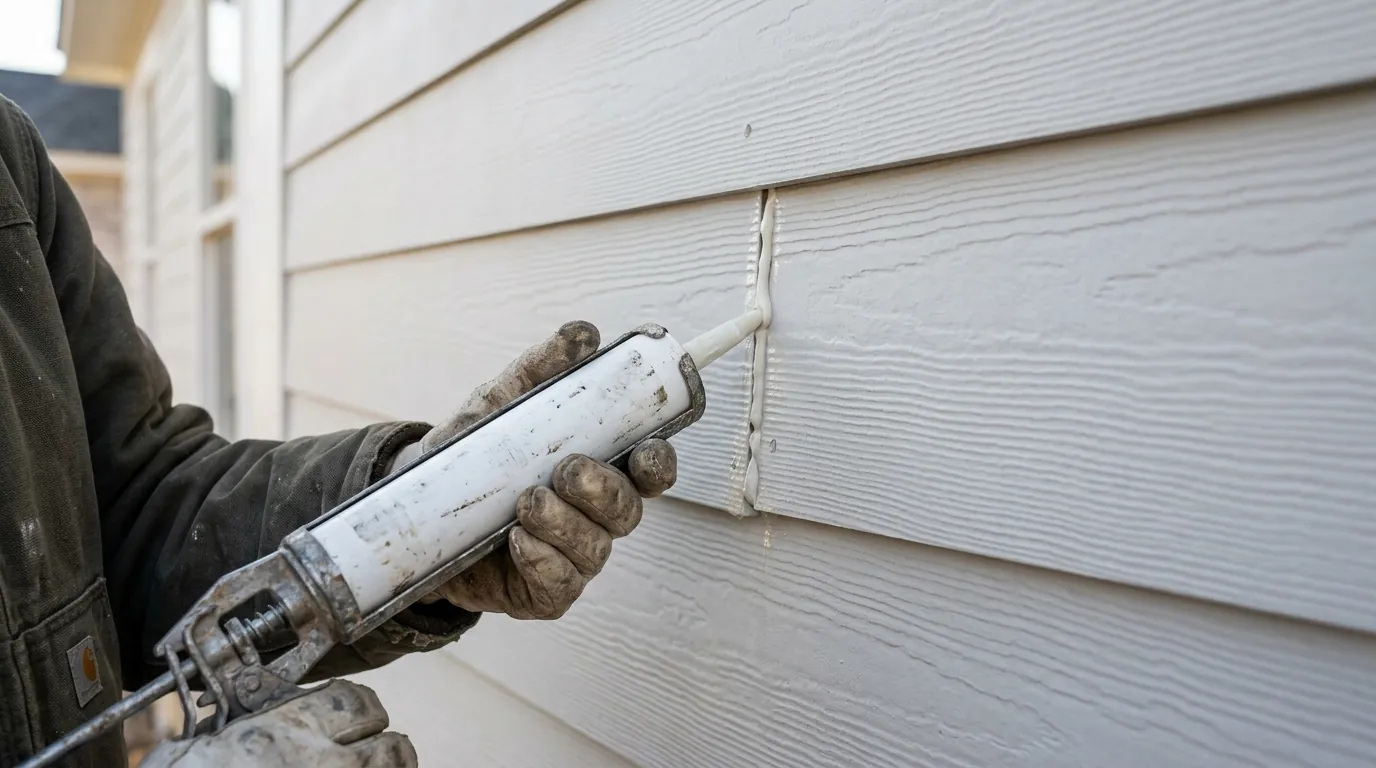
We repaint fiber cement lap, panel and shake siding across metro Atlanta, with washing, butt-joint and trim caulking, spot priming of cut edges and two coats of 100% acrylic. Most homes take 4 to 7 working days. A typical two-story fiber cement house runs $5,980 to $10,640. Call (470) 458-0461 for a free walkthrough and written estimate.
Fiber cement is a mix of cement, sand and cellulose fiber pressed into boards and panels. It doesn't rot, swell or feed termites the way wood does, which is why builders used it on thousands of metro Atlanta homes from the late 1990s onward. It does still need paint. The coating is what keeps water out of the cut edges and the surface from slowly absorbing moisture, and on most subdivision homes that coating is now fifteen to twenty-five years old.
There are two starting points. Factory-primed boards were painted on site by the builder, often with a single thin coat of contractor-grade paint that's long since chalked. Prefinished boards came with a baked-on factory color that lasts longer but eventually fades, especially on the south and west sides. Both repaint well with the right prep; prefinished surfaces just need a more thorough clean and sometimes a bonding primer.
The weak spots on fiber cement aren't usually the boards. They're the joints: butt joints between lap boards, gaps where siding meets trim and corners, and nail holes that were never filled. Open joints let water reach unsealed edges, which then swell and crack paint. We give those details most of the prep time, and we coordinate trim, front door and shutter colors and the garage door on the same schedule.
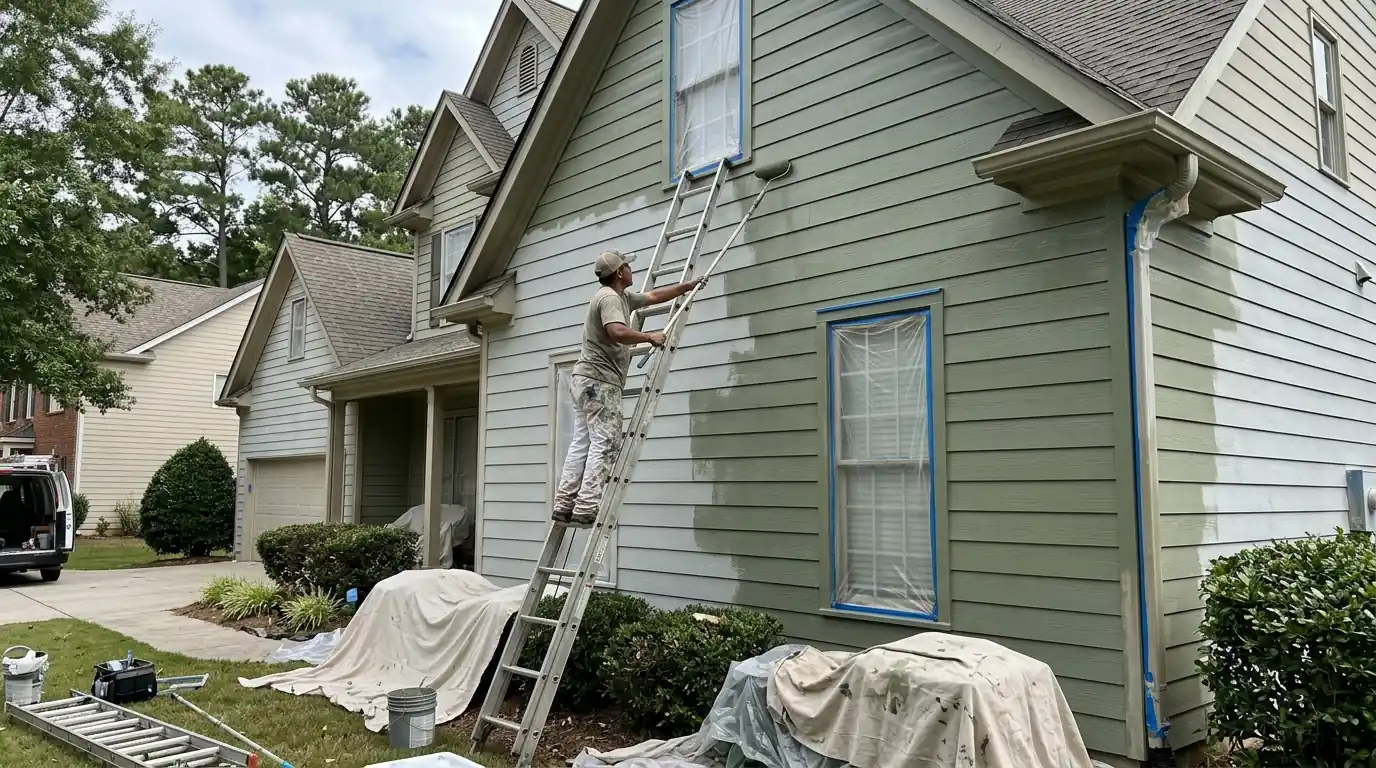
When to call
Signs fiber cement siding needs repainting
Heavy chalk on the boards
If your hand comes away white or colored after wiping the siding, the binder has broken down. Chalky surfaces absorb water and look dull even right after washing.
Open or cracked butt joints
Gaps where lap boards meet end to end, or where caulk has cracked out, let water into board edges. Swelling and flaking at those joints follow.
Uneven fading between sides
A noticeably lighter south or west wall compared with the shaded side means UV has worn the pigment and the film is getting thin.
Paint flaking at the bottom course
The lowest board takes splash from rain and irrigation. Flaking along it often means the bottom edge was never sealed or the board sits too close to grade.
Visible nail heads and rust spots
Face-nailed boards with rusting heads show bleed streaks. Those need to be spotted and primed before new paint, or the rust telegraphs through.
Scope of work
What our fiber cement repaint includes
- Washing every elevation to remove chalk, pollen, mildew and red clay staining
- Checking board ends, bottom edges and clearance from roofs, decks and grade
- Recaulking butt joints, trim gaps and corners with a paintable elastomeric sealant
- Setting and spotting popped or rusting nail heads with a rust-inhibiting primer
- Priming any exposed cut edges, repairs and replacement boards before finish coats
- Bonding primer on glossy prefinished siding where adhesion testing calls for it
- Two coats of 100% acrylic on siding, with trim and fascia in their own colors
- Clean up of overspray, a final walk and labeled leftover paint for touch-ups
How the job runs
Our fiber cement painting sequence
| Step | What happens |
|---|---|
| A1 | Assess and test adhesionOn the walkthrough we wipe for chalk, tape-test the existing paint, check joints and note any damaged boards. That tells us whether a standard primer or a bonding primer is needed. |
| A2 | Wash off chalkChalk is the enemy of adhesion on fiber cement. We wash with a cleaner that cuts it, scrub where needed, rinse and let the boards dry at least a day before caulking. |
| A3 | Caulk joints and fix boardsButt joints, trim gaps and corner boards get new sealant. Cracked or broken boards are replaced with matching profile siding and their cut ends are primed before installation. |
| A4 | Spot and primeNail heads, bare edges and patches get primer. On prefinished or glossy surfaces, we apply a bonding primer where the tape test showed weak adhesion. |
| A5 | Spray or roll, then back-rollFinish coats go on by sprayer with back-rolling, or by roller on smaller areas, so paint gets worked into the wood-grain texture and the drip edges of every lap course. |
| A6 | Second coat and trimAfter the label recoat time, the second siding coat goes on, followed by trim, fascia and doors. We finish with a walk around the house to touch up anything missed. |
Atlanta conditions
Atlanta subdivisions, sun exposure and fiber cement
Much of the fiber cement we repaint is on 2000s and 2010s subdivision homes in Gwinnett, Cobb, Henry and north Fulton, where builder paint was often a single coat. Twenty years of Georgia sun later, south-facing walls in neighborhoods around Lawrenceville and Kennesaw are chalky and pale while the shaded sides still look decent. We usually see the most joint failure on those sunny walls too, because the boards heat and cool through a wider range every day and pull the caulk apart.
Spring pollen and summer storms set the rhythm for fiber cement work here. Pollen sticks to fresh caulk and wet paint, so in March and April we rinse more often and plan coats around afternoon breezes. Red clay splash coats the bottom course on many newer homes where landscaping beds sit close to the siding. Builders were supposed to leave several inches of clearance from soil and mulch, and where that's missing, we'll point it out, because constantly damp bottom edges keep peeling no matter what paint goes on.
Where we do this work most
Built pages for neighborhoods and cities we cover, with ZIP codes.
Typical costs
Typical fiber cement repaint prices in Atlanta
Fiber cement usually costs less to repaint than wood, because there's little scraping and no rot carpentry. The main labor goes into washing off chalk and caulking joints. These 2026 ranges are typical for metro Atlanta homes with two finish coats. Board replacement and bonding primer add to the totals. See our full price guide for comparisons.
| Work | Typical range |
|---|---|
| One-story fiber cement home | $3,690 to $6,450 |
| Two-story fiber cement home | $5,980 to $10,640 |
| Fiber cement siding area, per sq ft | $1.85 to $3.65 per sq ft |
| Replacing a damaged lap board, installed and primed | $135 to $285 per board |
Typical Atlanta ranges, not a quote. Your written estimate follows a free walkthrough. Compare other jobs on our painting price guide.
What moves the price
- How much chalk and fading is present
- Linear feet of butt joints and trim to recaulk
- Factory-primed vs prefinished surfaces
- Number of stories and steep lot access
- Board replacement around grade or roofs
Paints and sealants that suit fiber cement
Fiber cement is alkaline, so it wants a 100% acrylic exterior paint. We commonly use Sherwin-Williams Duration or SuperPaint, Benjamin Moore Aura Exterior or Regal Select, and PPG Manor Hall or Timeless. On chalky or glossy prefinished boards, a bonding primer such as Sherwin-Williams Loxon Conditioner or Zinsser Peel Stop helps the new coat grip. Joints get a paintable siliconized or elastomeric sealant rated for fiber cement. Satin or low-luster sheens hide the wood-grain texture well and clean up easily after pollen season.
Paints, primers and stains our painters work with every week, from Sherwin-Williams and Benjamin Moore to PPG and Romabio.
Questions
Fiber cement siding painting questions from Atlanta homeowners
Do I need to repaint prefinished fiber cement siding?
Not right away. Factory finishes often last fifteen years or more before fading becomes obvious. When the color is uneven or chalky, a repaint is the fix. Prefinished surfaces are smooth and dense, so we clean them more thoroughly and test adhesion. If tape lifts the old finish, a bonding primer goes on before the acrylic coats.
Why are the butt joints in my siding cracking?
Boards expand and contract with heat and moisture, and the gap where two boards meet end to end moves the most. Builders often filled those gaps with stiff caulk that splits after a few summers. We cut out the old material and use a flexible sealant made for fiber cement, then paint over it once it's cured.
Can fiber cement be painted a darker color than it is now?
Yes. Unlike vinyl, fiber cement doesn't warp from heat, so dark grays, navies and deep greens are fine on it. Dark colors do fade faster on sunny walls and show chalk sooner, so we recommend a premium acrylic with good UV resistance for deep tones and a satin sheen to keep color even.
Is spraying or rolling better on fiber cement lap siding?
Spraying gets paint into the bottom edges of every lap course fast, but a sprayed-only coat can be thin. We usually spray and then back-roll each board while it's wet, which pushes paint into the textured grain and evens the film. On small walls or windy days, we roll and brush instead.
What does a fiber cement repaint not fix?
Paint won't cure boards that sit in mulch, soil or roof runoff without clearance, and it won't stop swelling at edges that stay wet. Those need flashing, kick-outs or trimming boards back from grade. We note these on the estimate so you can choose to address them while we're already working on the house.
Related work
Jobs that often go with this one
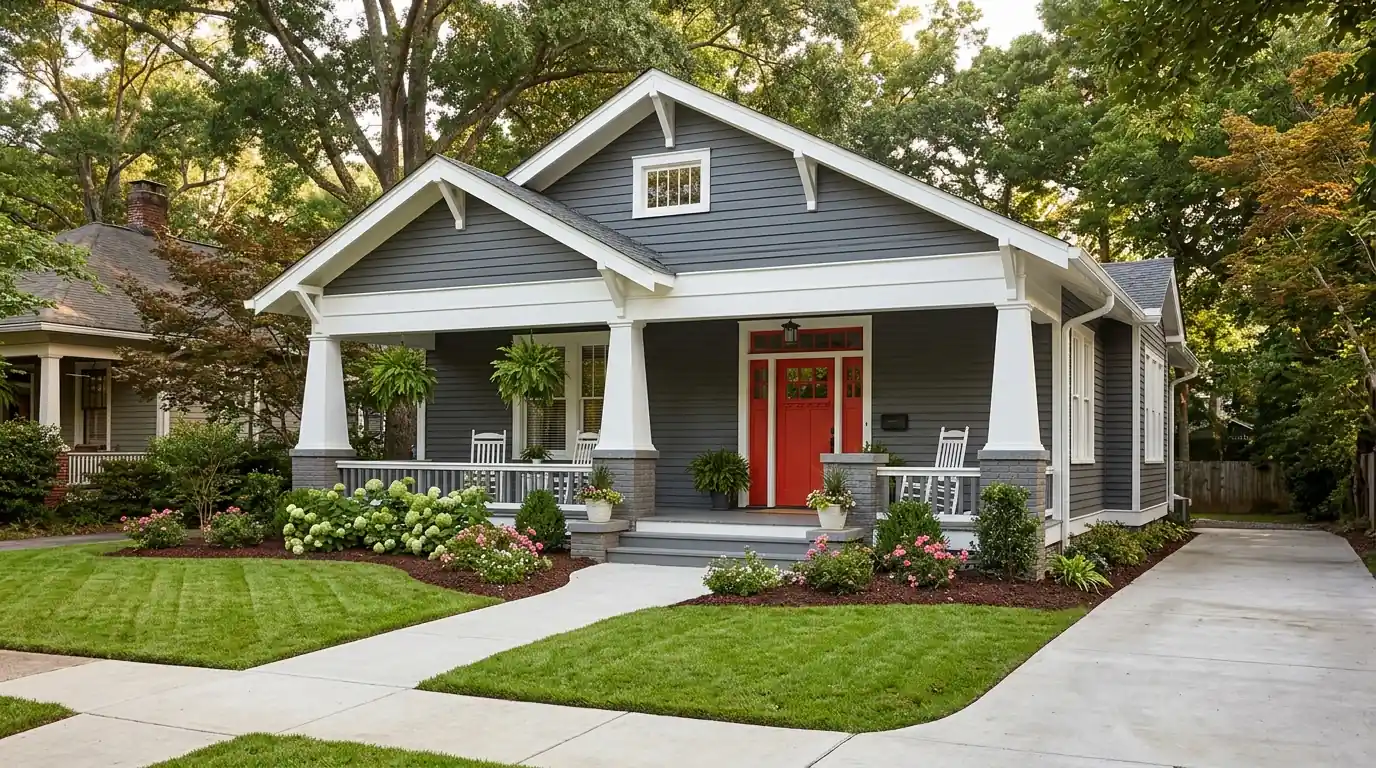
Exterior House Painting
Full exterior repaints on wood, fiber cement and mixed-material Atlanta homes: wash, scrape, sand, caulk, spot prime and two finish coats.
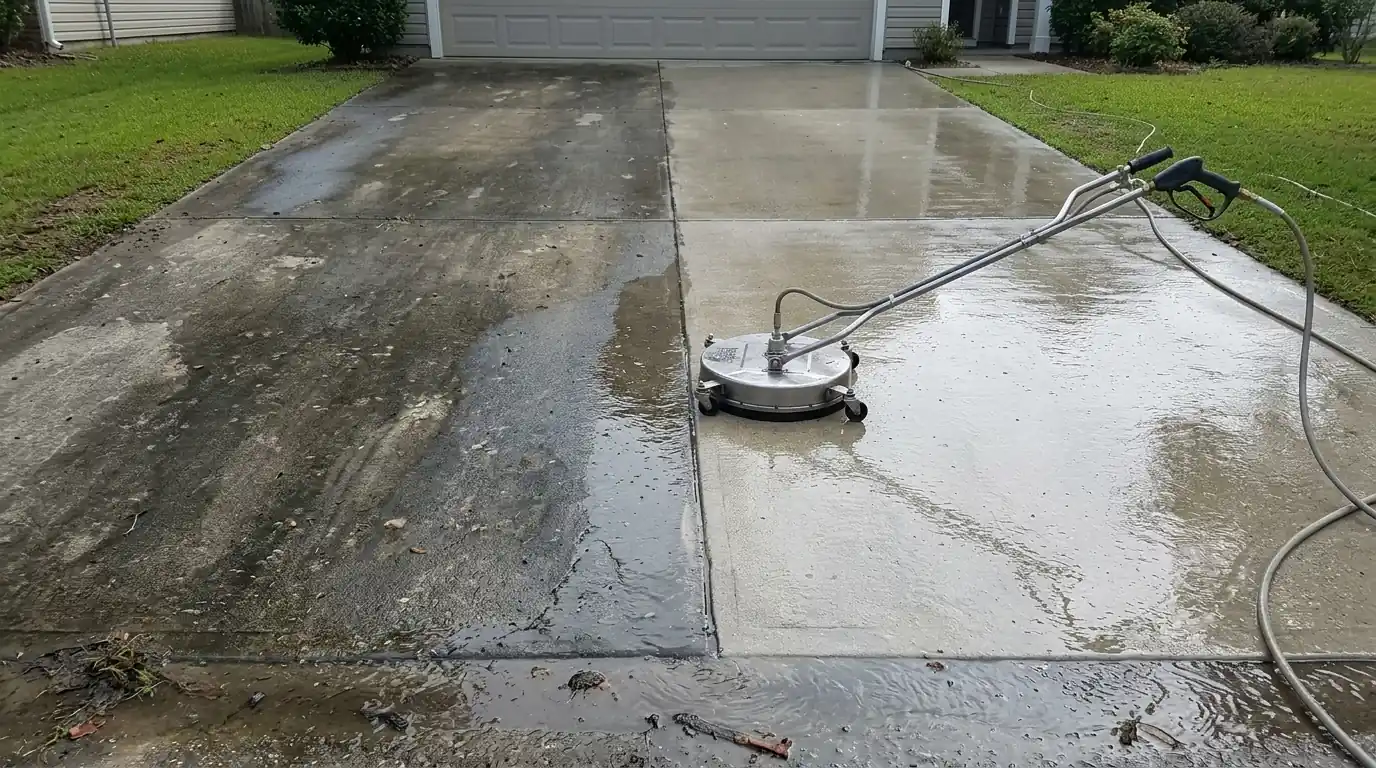
Pressure Washing
Soft wash for siding and pressure washing for concrete, clearing mildew, algae, pollen and red clay before paint or on its own.
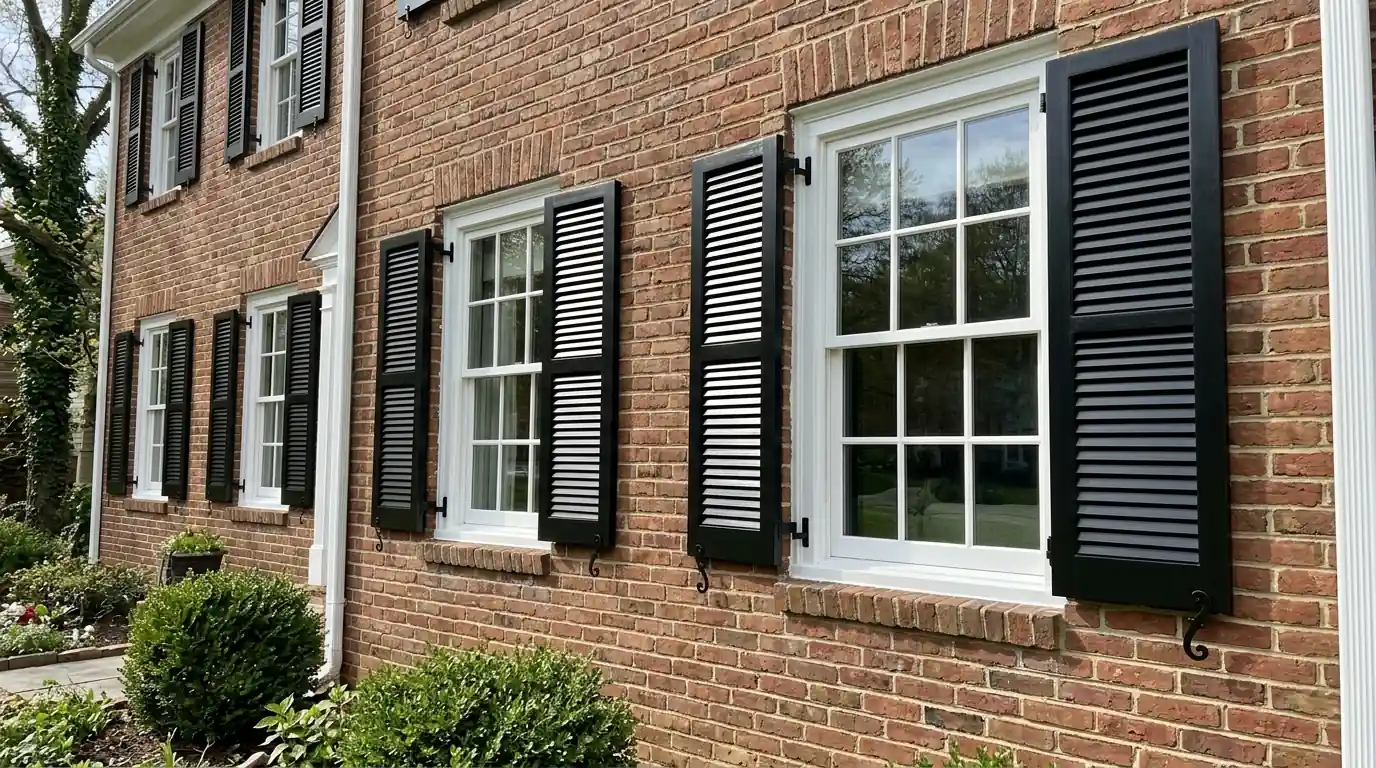
Front Door & Shutter Painting
Front door and shutter painting in high-gloss or satin enamels, with shutters taken down to coat both sides and doors done onsite or off hinges.
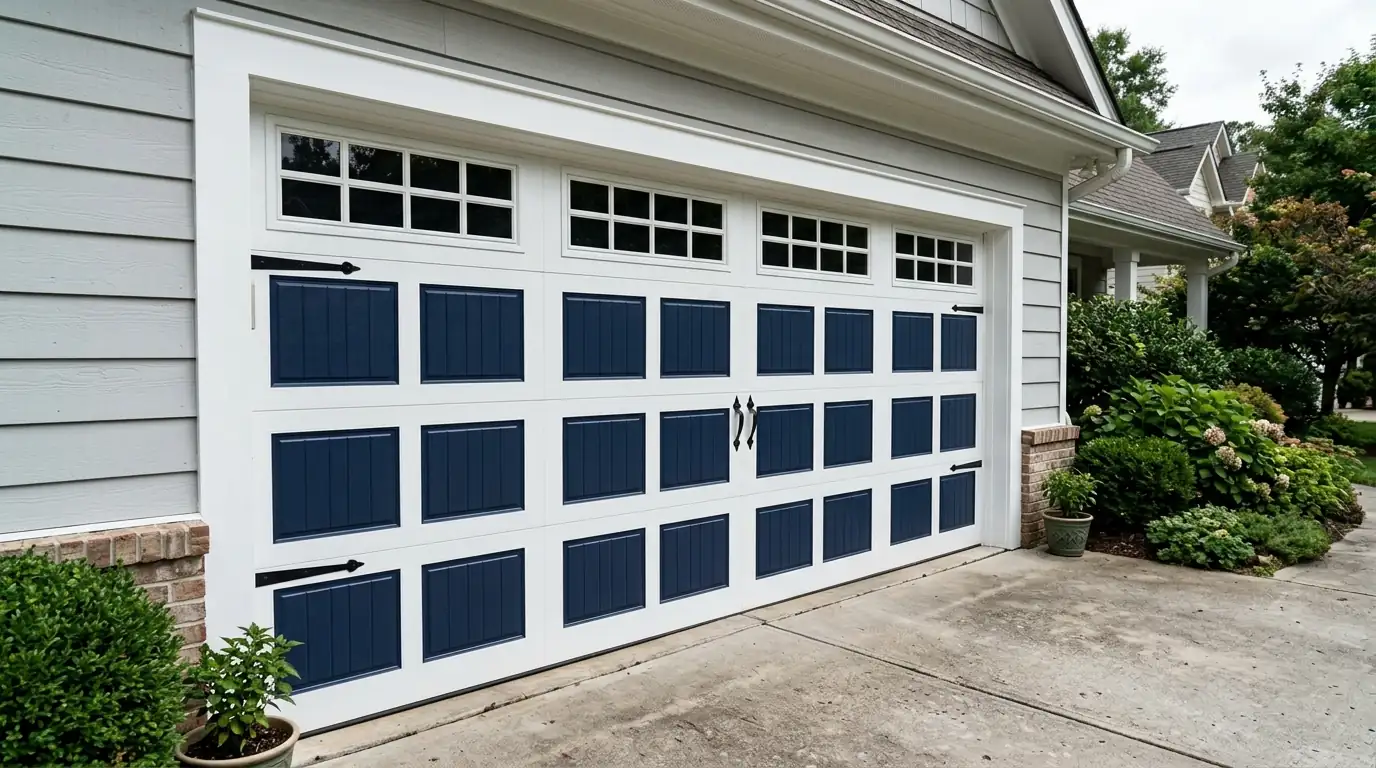
Garage Door Painting
Steel, wood and composite garage doors cleaned, primed and painted panel by panel, matched to trim or done in two tones.
Talk through your fiber cement siding painting job
Call any time. We will ask a few questions, set a walkthrough time and put the scope and price in writing.