Exterior painting in Atlanta
Wood rot repair in Atlanta for trim, sills, fascia and columns
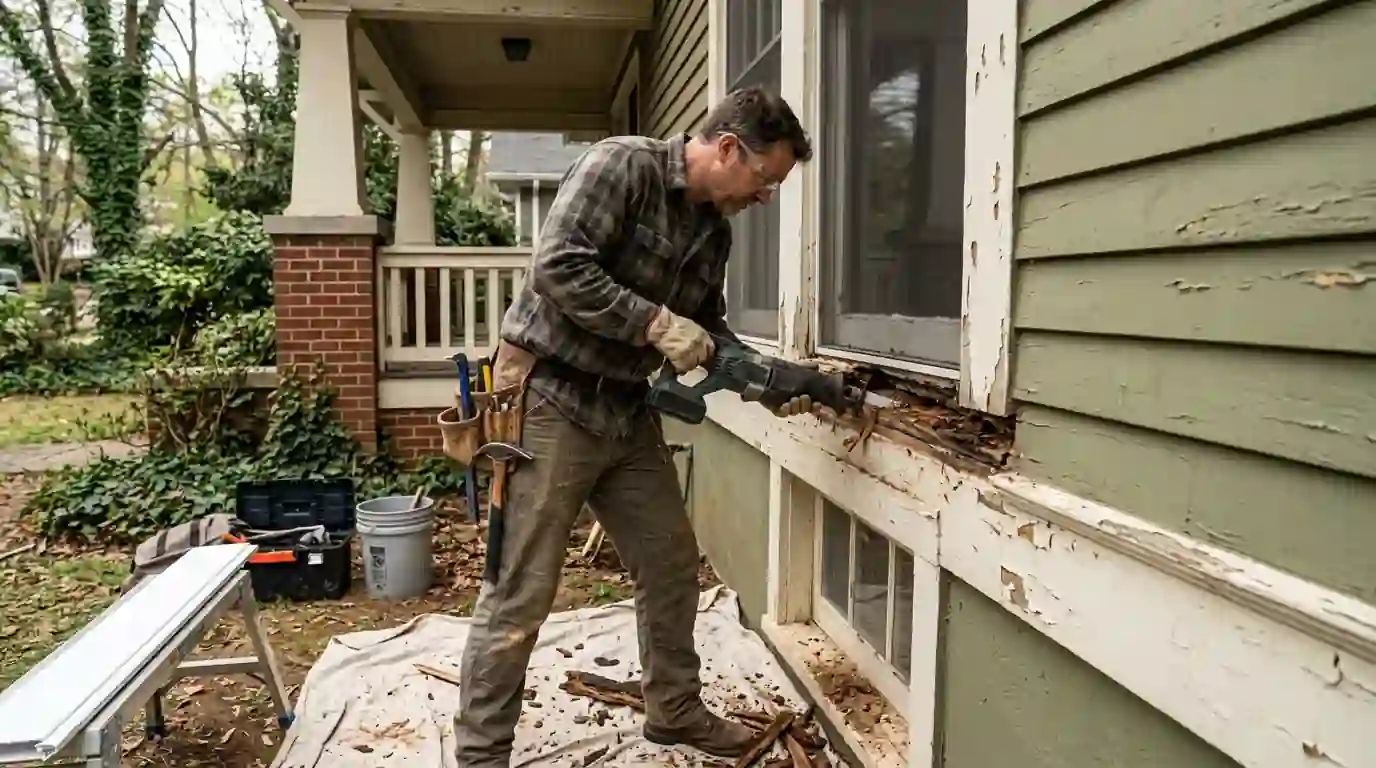
A screwdriver sinks into the window sill, the bottom of the door jamb is crumbling, or paint keeps bubbling on the same piece of fascia. Rot spreads quietly under paint, and a fresh coat over it only hides the problem for a season.
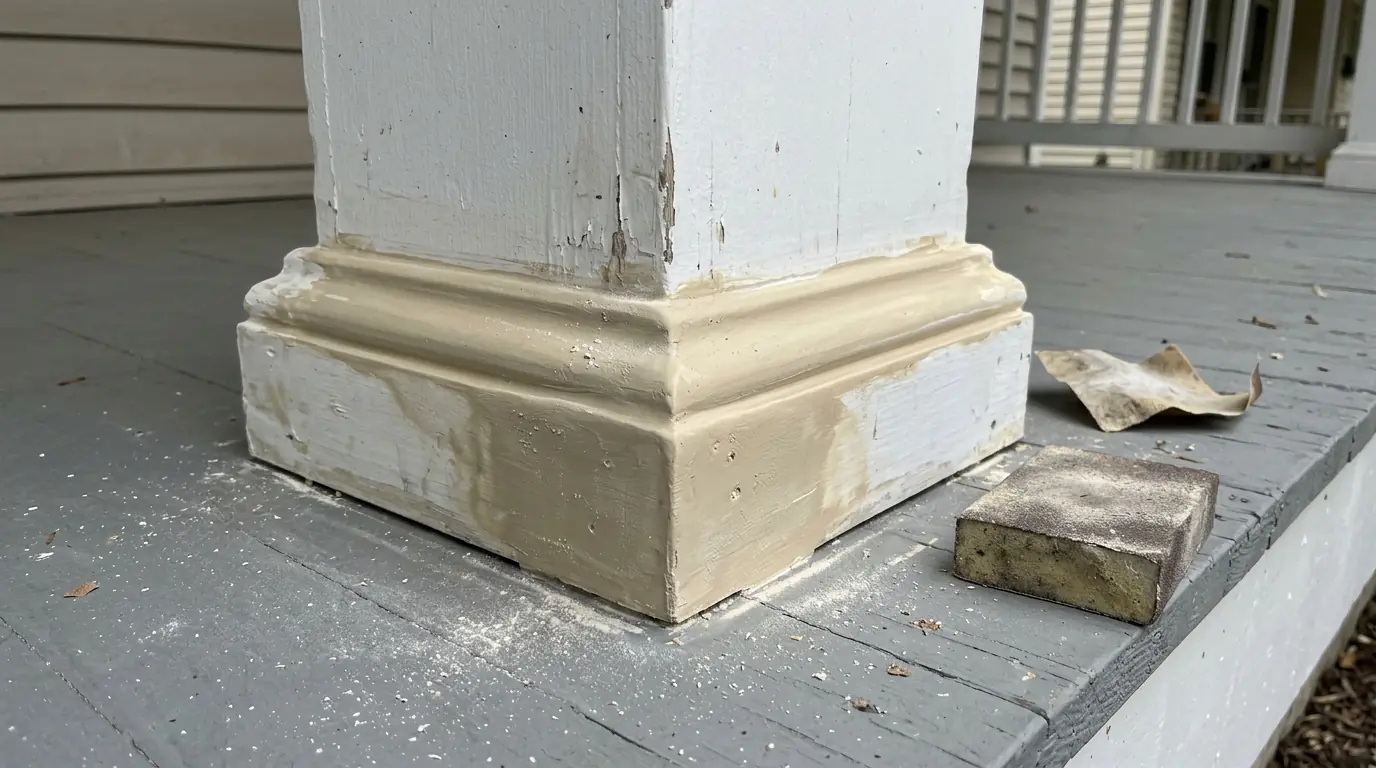
We find, cut out and repair rotted exterior wood, using epoxy consolidant and filler for small areas and replacing larger sections with PVC trim or primed wood. Repairs are primed and painted to match. Most homes need a day or two of carpentry before painting. Typical repairs run $185 to $645 per spot, and larger runs are priced by the foot. Call (470) 458-0461 for a walkthrough.
Rot is a fungus that eats wood when it stays wet. On houses it shows up where water sits or wicks: the bottom of door jambs, window sills, the lower ends of corner boards, fascia behind an overflowing gutter, and the base of porch columns. Paint can hold water in as easily as it keeps it out, especially once it cracks at a joint. So the damage often goes further than the soft spot you can see.
We fix rot as the first stage of a repaint because painting over it is wasted money. Small, contained damage gets dug out, treated with a liquid epoxy consolidant that hardens the soft fibers, then filled with a two-part epoxy filler and shaped. Larger or structural damage is cut out and replaced. For sills, jamb bottoms and trim near the ground we often recommend cellular PVC, which doesn't rot. For profiled trim, primed finger-jointed pine or cedar matches the look.
We'll show you every rotted spot before we touch it, with photos, and price the repairs separately so you can see where your money goes. Rot work pairs naturally with soffit and fascia painting and almost every full exterior job. When a repair turns out larger once the trim comes off, we stop and show you before going further, so the price never changes without your say.
When to call
Signs of rot hiding under the paint
Soft spots under pressure
Push an awl or screwdriver into suspect wood. Sound wood resists; rotted wood lets the tip sink in or crumbles around it. Check sills, jamb bottoms and trim ends first.
Paint bubbling in one place
Paint that blisters or peels on the same board year after year, while nearby boards hold, usually means moisture is coming through from behind or from an end grain cut.
Dark stains at joints
Gray or black staining where two pieces of trim meet, or below a window corner, shows water getting into the joint. Rot often starts right there, out of sight.
Gaps opening around windows
When the caulk line next to a window pulls away and the trim behind it moves, the wood holding the nail is often too soft to hold anything anymore.
Carpenter bee holes
Round, half-inch holes in fascia or rafter tails are carpenter bee galleries. They let water in, and woodpeckers chasing larvae enlarge the damage further.
Mushrooms or fuzzy growth
Any fungal growth on trim, especially near the ground or under gutters, means advanced rot. That piece almost always needs replacement rather than an epoxy fill.
Scope of work
What our rot repair work includes
- Probing every sill, jamb, corner board, fascia run and column base on the house
- Marked-up photos of each rotted area with a repair or replace recommendation
- Cutting out decayed wood back to firm, dry material
- Epoxy consolidant and filler for small, contained damage
- Replacing larger sections with cellular PVC or primed wood to match profiles
- Sealing end grain and back-priming new wood before it goes up
- Caulking joints and setting fasteners with stainless or coated nails
- Priming and painting repairs to match the surrounding trim
How the job runs
From soft wood to sound, painted trim
| Step | What happens |
|---|---|
| A1 | Find the sourceWe trace where the water comes from: a gutter, a missing drip cap, a sprinkler, a joint that lost its caulk. Repairs don't hold if the source keeps feeding the wood. |
| A2 | Decide fill or replaceIf rot is shallow and the piece is mostly sound, epoxy is faster and keeps original profiles. If it runs deep, covers a long section, or carries load, we replace it. |
| A3 | Cut out and dryRotted wood is cut or routed out to solid material. Damp wood is left to dry, sometimes with a fan or heat gun, since epoxy bonds poorly to wet fibers. |
| A4 | Consolidate and fillLiquid consolidant soaks into the remaining fibers and hardens them. Then two-part epoxy filler is packed in, shaped and sanded flush once it cures, usually the same day in warm weather. |
| A5 | Install replacement piecesNew PVC or primed wood is cut to match, back-primed or sealed on every face, and fastened with corrosion-resistant nails. Joints are scarfed or sealed so water sheds away. |
| A6 | Prime and paintEpoxy and new wood get primer, then the same finish coats as the rest of the trim. PVC gets a paint labeled for vinyl so it doesn't warp in sun. |
Atlanta conditions
Why rot is so common on Atlanta homes
Humidity and heavy summer rain keep exterior wood damp longer than in drier climates, and the tree canopy over much of intown Atlanta means some walls barely dry out between storms. Gutters clogged with oak leaves and pine needles overflow onto fascia, which is why we find so much rot along rooflines in older neighborhoods like Grove Park and Riverside. Sprinkler heads aimed at the house do the same to sills and corner boards a few feet off the ground.
Carpenter bees are a local headache. They bore into bare or thinly painted fascia, rafter tails and porch ceilings each spring, and the galleries hold water. We fill the holes with epoxy or replace the board, then paint, since they prefer unpainted wood. Housing era matters too: 1920s homes often have old-growth heart pine that resists rot well, while trim on many 1980s and 1990s builds was finger-jointed pine that fails quickly once its paint is breached.
Where we do this work most
Built pages for neighborhoods and cities we cover, with ZIP codes.
Typical costs
What wood rot repair costs in Atlanta
Rot repair is priced by the spot or by the linear foot, depending on whether we're filling small damage or replacing a length of trim. Height, profile matching and how much paint work follows all affect the number. These ranges reflect typical 2026 Atlanta jobs and are not quotes. We price each repair on the walkthrough so there are no surprises later.
| Work | Typical range |
|---|---|
| Epoxy repair, single sill corner or jamb bottom | $185 to $395 |
| Replace door jamb bottoms and brick mold, one door | $345 to $645 |
| Replace fascia board with PVC or primed wood | $13.75 to $27.40 per linear ft |
| Window sill replacement | $265 to $585 per sill |
| Porch column base rebuild | $285 to $735 per column |
Typical Atlanta ranges, not a quote. Your written estimate follows a free walkthrough. Compare other jobs on our painting price guide.
What moves the price
- Depth and length of the rot
- Epoxy repair or full replacement
- Matching older trim profiles
- Height and ladder or lift access
- Hidden damage found once wood is opened
- Paint work after the repair
Epoxies, trim stock and primers we use
For epoxy repairs we use a two-part liquid consolidant followed by a two-part epoxy filler that sands and paints like wood, choosing a product rated for exterior movement. Replacement stock is cellular PVC for sills, jamb bottoms and ground-contact trim, and primed finger-jointed pine or cedar where profiles must match. New wood is back-primed with an exterior oil primer, end grain gets extra coats, and joints are sealed with a paintable polyurethane or siliconized sealant. Fasteners are stainless or hot-dipped galvanized so they don't rust through the paint.
Paints, primers and stains our painters work with every week, from Sherwin-Williams and Benjamin Moore to PPG and Romabio.
Questions
Wood rot repair questions from Atlanta homeowners
Is epoxy as durable as replacing the rotted wood?
For small, contained damage it often lasts as long as the surrounding wood, because epoxy doesn't absorb water and won't rot. The catch is the edges: if the wood around the repair stays wet, rot can continue there. That's why we only fill when the remaining wood is sound and the water source is fixed. Long runs or structural pieces are better replaced.
Why recommend PVC trim instead of wood for some repairs?
Cellular PVC can't rot and won't attract carpenter bees, so it's a good fit for spots that keep getting wet: sills, jamb bottoms, the lowest foot of corner boards, and trim near patios. It cuts and paints much like wood. We still use wood when a profile can't be matched in PVC or on historic homes where original material matters.
Can you tell how far the rot goes before opening the wall?
Only partly. Probing and a moisture meter tell us a lot about the trim itself. What we can't see is the framing behind it until the trim comes off. If we open a sill and find the sheathing or a stud is soft too, we stop, show you, and give a written price for the added work before going further.
Will the repaired spots show through the new paint?
They shouldn't. Epoxy fills are shaped and sanded flush, and replacement pieces are matched to the existing profile and primed. Once the whole run of trim gets finish coats, repairs blend in. Where only a single repair is painted and the rest of the trim is older, the new paint may look slightly brighter until the surrounding paint is refreshed.
Do you handle rot that carpenter bees started?
Yes. We fill the bee galleries with epoxy or replace the board if the tunnels run long, then prime and paint, since bees prefer bare or weathered wood. We don't treat for the bees themselves. If they're active in large numbers, a pest service first is wise, and we schedule our repair work after that.
Related work
Jobs that often go with this one
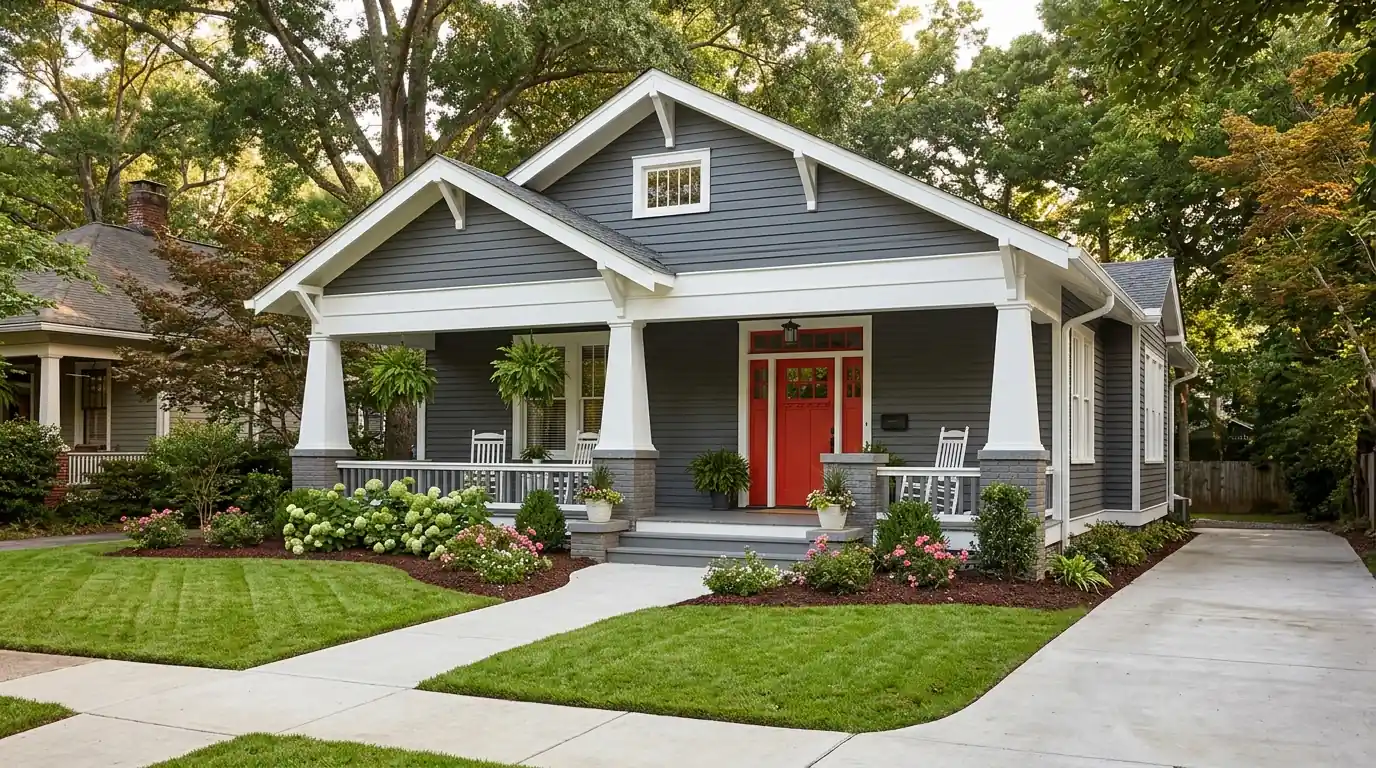
Exterior House Painting
Full exterior repaints on wood, fiber cement and mixed-material Atlanta homes: wash, scrape, sand, caulk, spot prime and two finish coats.
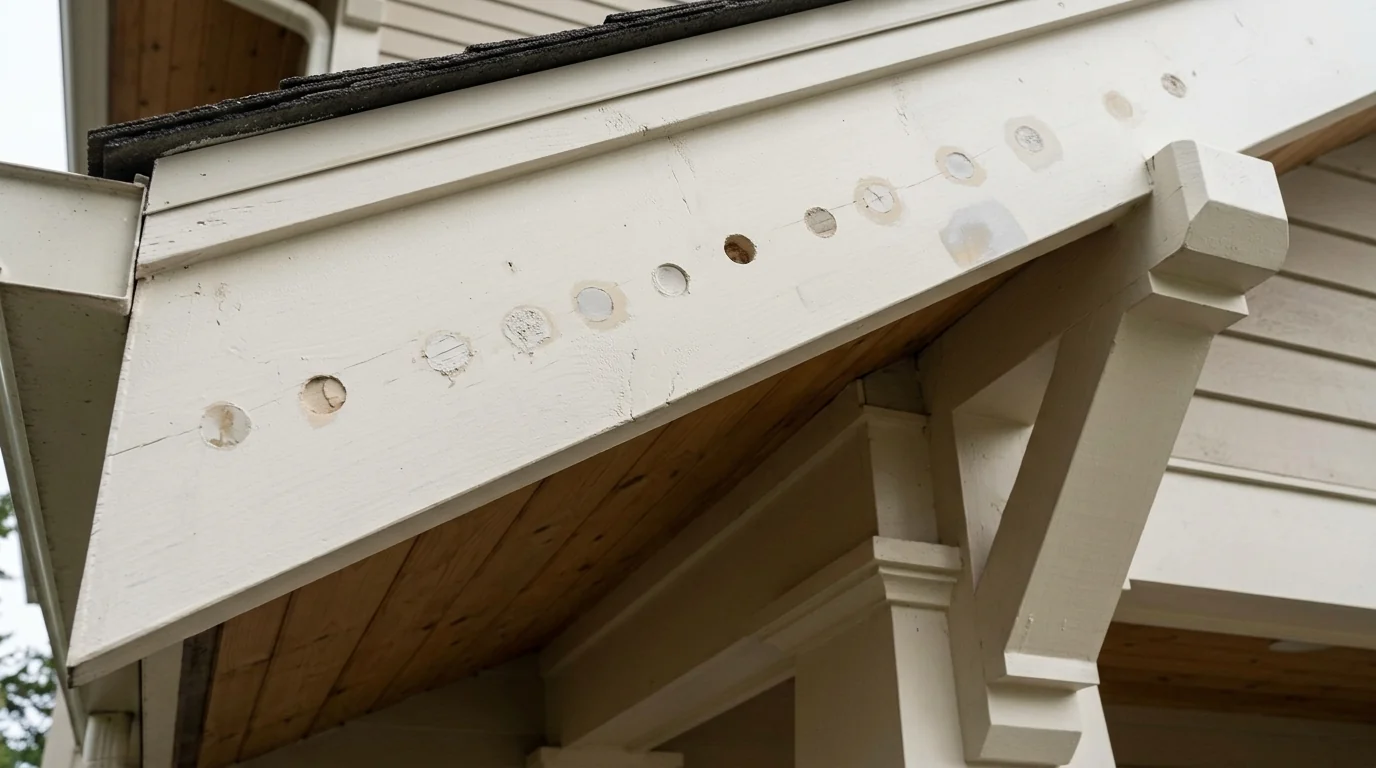
Soffit & Fascia Painting
Painting soffits, fascia, rake boards and eaves, with rot repair at gutter lines and carpenter bee holes sealed before the finish coats.
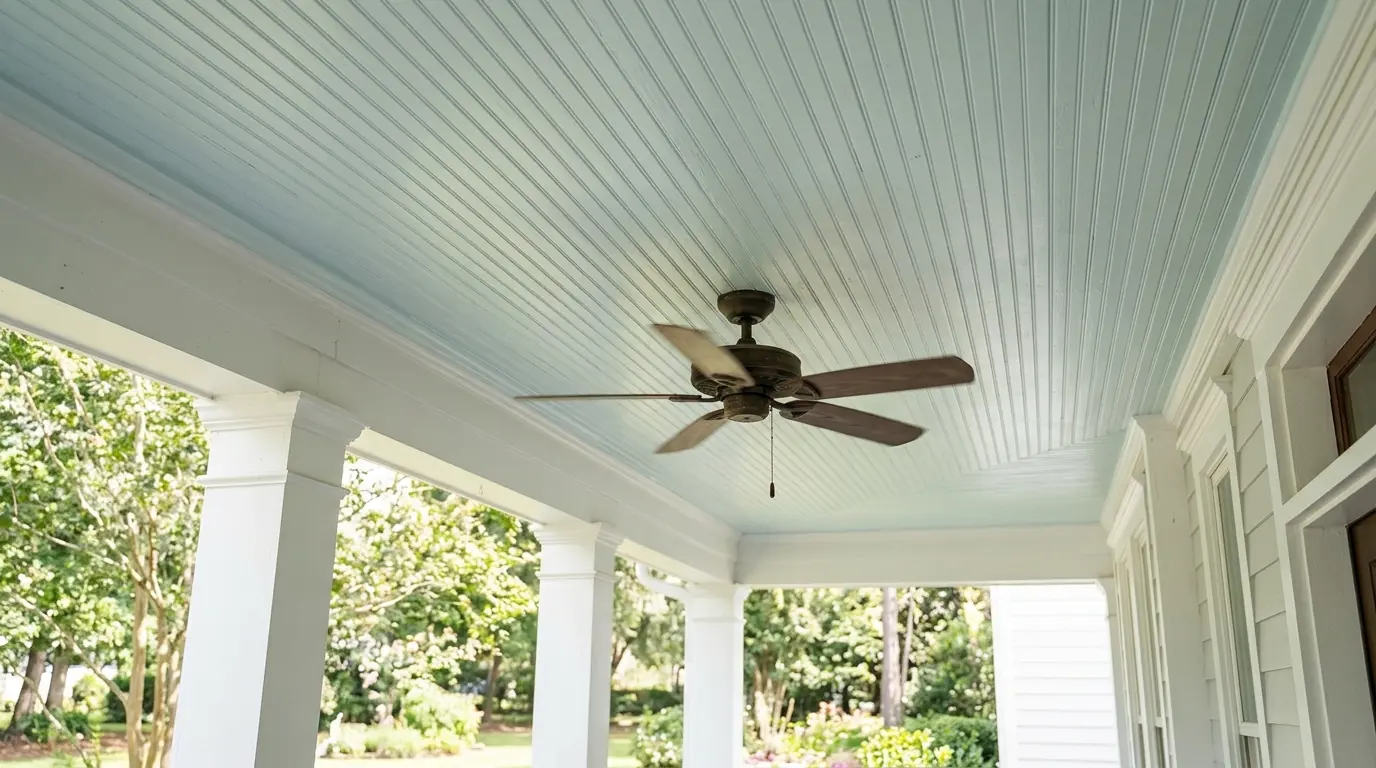
Porch & Column Painting
Porch floors, haint blue ceilings, columns and railings scraped, primed and coated with floor enamel that stands up to foot traffic and summer storms.
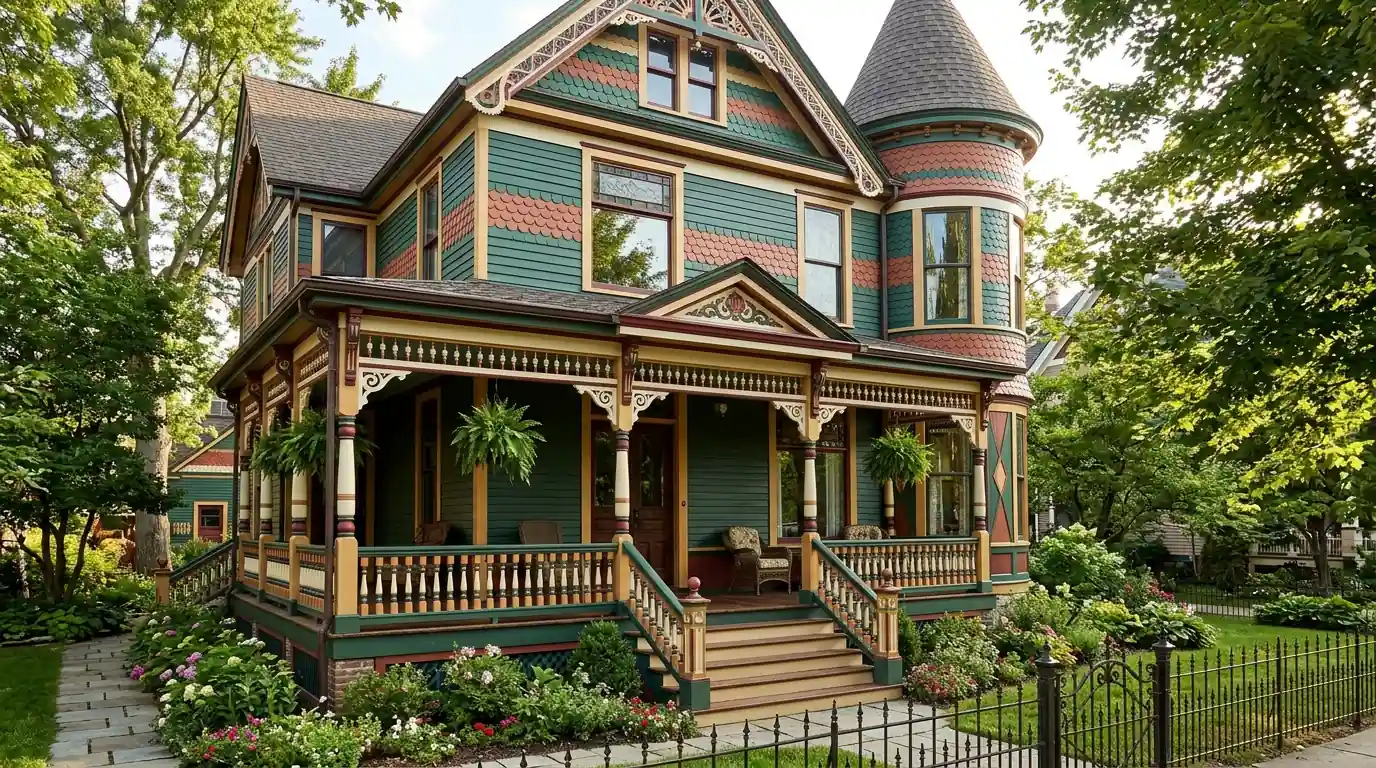
Historic Home Painting
Painting for 1900s to 1930s Atlanta Victorians, craftsman bungalows and Tudors: wood repair, many old layers, period colors, district review.
Talk through your wood rot repair job
Call any time. We will ask a few questions, set a walkthrough time and put the scope and price in writing.