City we serve
Tucker house painting for 1960s and 1970s ranches and split-levels (30084)
Tucker is full of solid 1960s and 1970s houses: long brick ranches, split-levels with a half-buried lower floor, and a few two-story colonials. They're well built, and most just need smarter prep than the last paint job got. ZIP 30084.
- Area
- Tucker
- ZIP code
- 30084
- County
- DeKalb County
- Nearest office
- Atlanta office, Peachtree St NE
- Phones
- Answered 24/7
- Estimates
- Free walkthrough
In Tucker, painting typically covers brick and siding exteriors on split-levels and ranches, fascia and soffit repair, and interior updates that cover dark paneling and dated trim. Most exteriors take four to six working days, interiors two to four. We schedule after a free walkthrough and written estimate. Call (470) 458-0461 any time, even weekends.
Tucker's neighborhoods spread out from Main Street and along LaVista, Lawrenceville Highway and Chamblee Tucker Road, and most of them filled in during the 1960s and 1970s. You'll see a lot of the same patterns: a brick lower level with painted wood or hardboard siding above, a carport turned into a garage, and big backyards running toward wooded creeks.
Many of these houses are on their second or third owner, and the newer owners often inherit a quick cosmetic repaint from the last sale. That usually means fresh color over failing caulk, mildew left unwashed and rotted fascia painted shut. We find the problems first, fix them, and then paint, so the next coat doesn't start peeling in a year.
Homes here
How Tucker's split-levels and ranches are put together
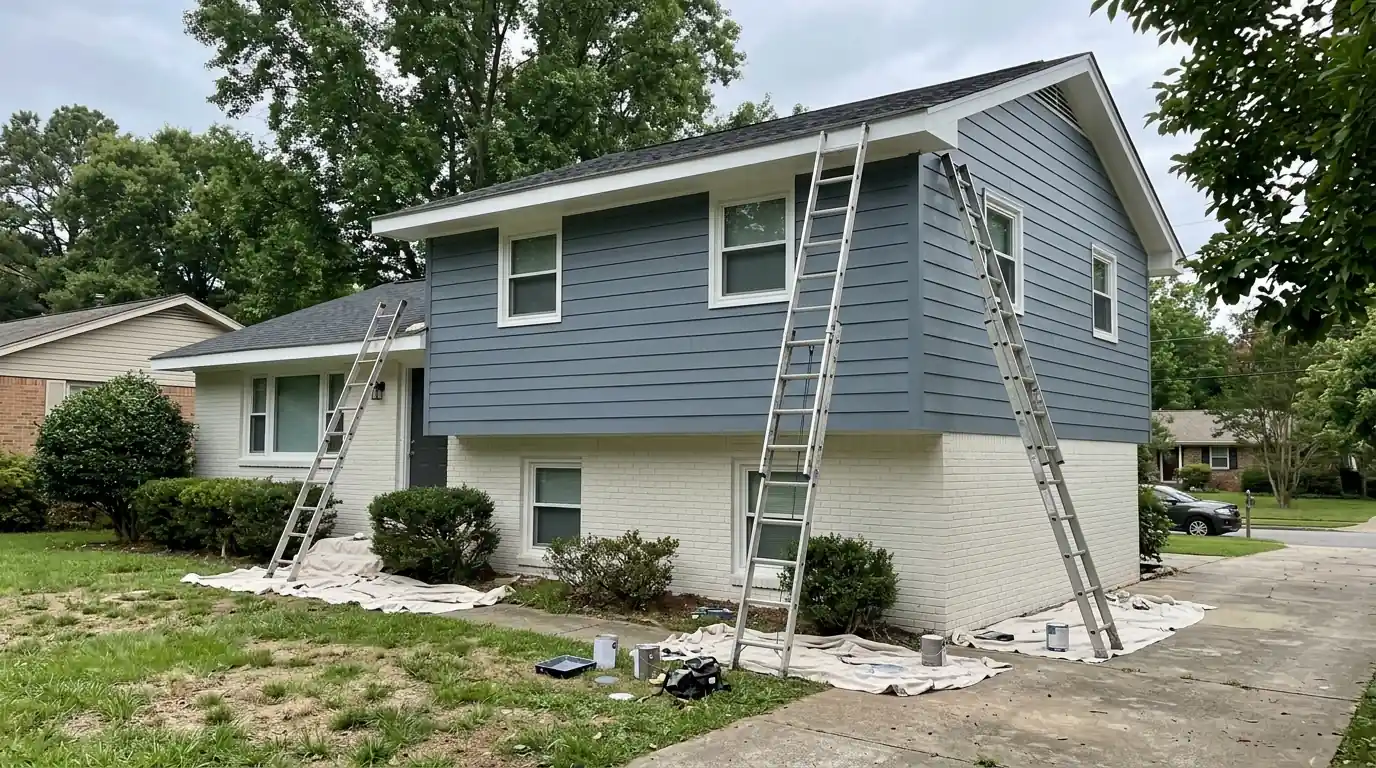
The split-level is the signature Tucker house. The lower half is usually brick or block, set partly into the slope, and the upper half is wood lap, hardboard or plywood panel siding. Hardboard siding from that period swells and flakes when water gets into the bottom edges, so we check every drip edge and replace swollen pieces before priming. Wide overhangs keep some walls dry, but the gutter side of the fascia often hides rot.
Inside, these houses tend to have wood paneling in the den, half flights of stairs with wooden rails, and popcorn ceilings in the bedrooms. Paneling paints well with a bonding primer, though the grooves need careful brushing. Popcorn ceilings from before the early 1980s may contain asbestos, so we test before scraping. Many owners pair a smooth ceiling update with fresh wall color while the rooms are empty.
Most requested
Tucker painting jobs we do most often
Two-tone split-level exteriors
Brick lower level and siding upper level painted in coordinated colors, with fascia and trim in a third. A typical 2,000 square foot split-level runs about $4,870 to $8,640 depending on repairs.
Exterior House PaintingPainting over den paneling
We clean, scuff and prime the paneling with a bonding primer, then paint it so the grooves read as texture instead of dark 1970s wood.
Interior House PaintingFascia, soffit and gutter board repairs
Long ranch rooflines hide rotted fascia behind gutters. We replace the soft sections, prime the cut ends and paint them with the rest of the trim.
Soffit & Fascia PaintingSplit-level stair rails and spindles
Half flights of stairs carry a lot of painted or stained rails. We sand, prime and brush the spindles, or restain the handrail and paint the rest.
Staircase & Railing PaintingLower-level and basement walls
Below-grade block walls in split-levels can sweat. We clean off efflorescence, fix moisture sources where we can and use a masonry coating made for damp walls.
Basement PaintingLocal conditions
Local conditions that shorten paint life in Tucker
Sloped lots and red clay splash
Many houses sit on slopes, so the downhill wall gets red clay splashed up during storms. We clean stains before painting and suggest a darker base band where splash is constant.
Hardboard siding from the era
Pressed hardboard panels absorb water at cut edges and swell. Paint can't fix swelling, so we replace damaged pieces and seal edges carefully on the rest.
Creek-side backyards
Lots that back up to wooded creeks stay humid. Rear walls and decks grow mildew quickly, so we wash with a mildewcide and pick finishes with mold inhibitors.
Past quick-flip paint jobs
A fast repaint before a sale often covers dirt and failed caulk. We check adhesion and remove poorly bonded layers instead of adding another coat on top.
Timing
Good months to paint a Tucker home, and why
Exterior work runs most smoothly from late April, once pollen clears, through June, and again from mid September into November. Split-levels with a damp lower wall do better after a few dry days, so we watch the forecast and may shift you a day or two. Summer interiors are comfortable to work in with the air running, and winter is a smart time for paneling, ceilings and trim indoors. Lead testing is part of the plan on these pre-1978 homes, so we test at the walkthrough to keep the start date firm.
Questions
Painting questions from Tucker
Is the siding on my Tucker split-level wood or hardboard, and does it matter?
It matters a lot. Hardboard has a smooth, uniform face and often a pressed wood-grain pattern, while real wood shows natural grain and knots. Hardboard fails at the bottom edges when water gets in. We'll identify it at the walkthrough and price any replacement boards separately so you can see the difference.
Can you paint the brick on the lower level to match the siding above?
We can, but many owners prefer a contrasting color so the house doesn't look like a single box. Either way, brick needs a breathable masonry coating, not regular siding paint. Our brick painting page explains why breathability matters on a wall that touches soil.
What does it cost to cover paneling in a Tucker den?
A typical 14 by 18 foot den with paneling on all walls usually runs about $1,180 to $2,240 for cleaning, bonding primer and two coats, plus trim. Filling the grooves for a smooth wall look adds labor, so we quote that as a separate option.
My carport was enclosed years ago. Can you make it blend in?
Usually, yes. Enclosed carports often have different siding or trim from the rest of the house. We repair gaps, caulk the joints where old and new materials meet and paint the whole elevation together. Color is what pulls it into the original house.
Painting in Tucker? Call us first
Tell us the house, the surfaces and the timing. We will book a free walkthrough and send a written scope.