Exterior painting in Atlanta
Deck staining and sealing in Atlanta for pine and cedar decks
Your deck has gone gray, the boards are splintering, and last year's stain is peeling off in patches on the steps. Atlanta sun, pollen and summer rain wear a deck down faster than almost any other surface at the house.
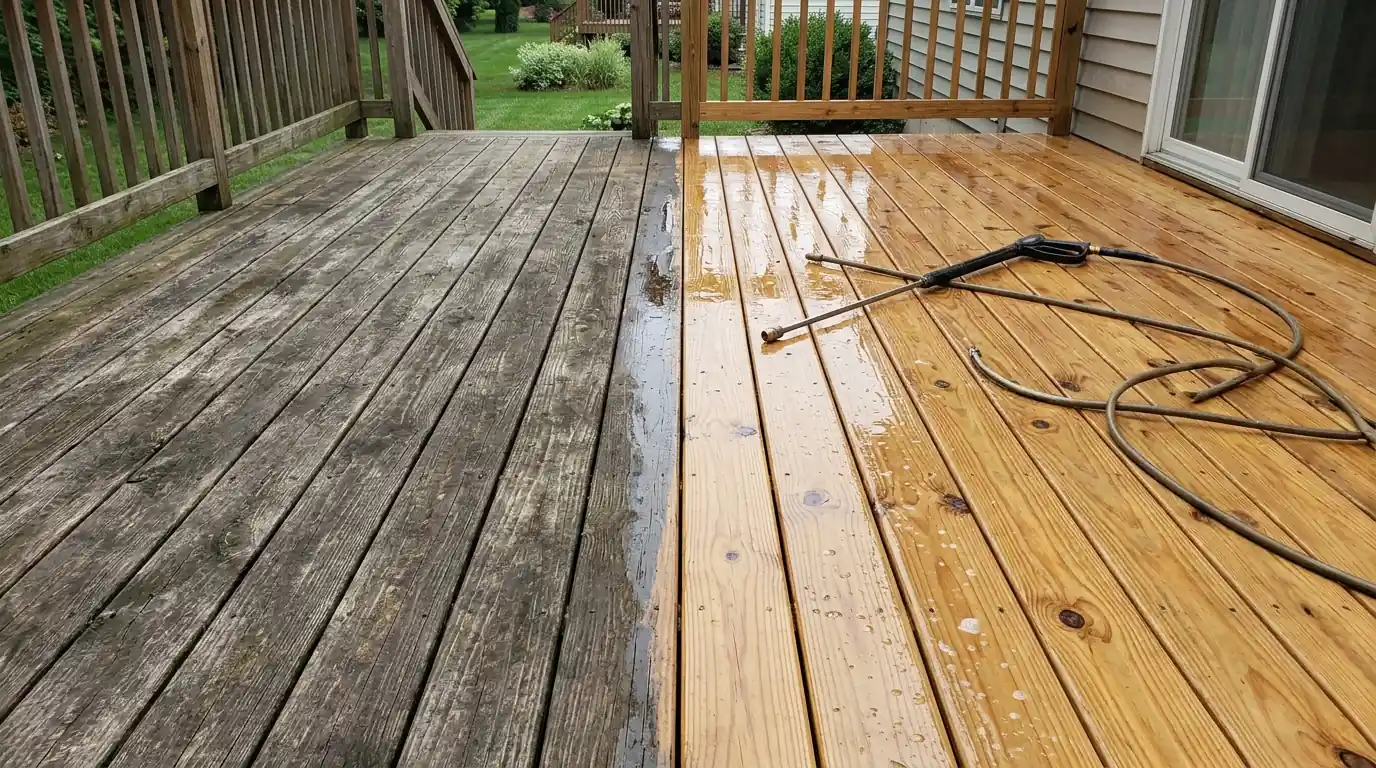
We clean, brighten, sand where needed and stain decks with a transparent, semi-transparent or solid stain chosen for the wood's condition. Most decks take two to three days including drying time between cleaning and staining. Typical Atlanta pricing runs $1.45 to $3.85 per square foot of deck surface, with railings and stairs adding to that. Call (470) 458-0461 and we'll come look at the deck.
Most decks around Atlanta are built from pressure-treated southern yellow pine. It's strong and affordable, but it moves a lot: boards swell in wet weeks, shrink in dry heat, and check along the grain. A stain has to soak in and flex with that movement. A film that sits on top, like paint, cracks along the board edges and then peels, and that is how a lot of decks end up with the patchy, half-stripped look homeowners call us about.
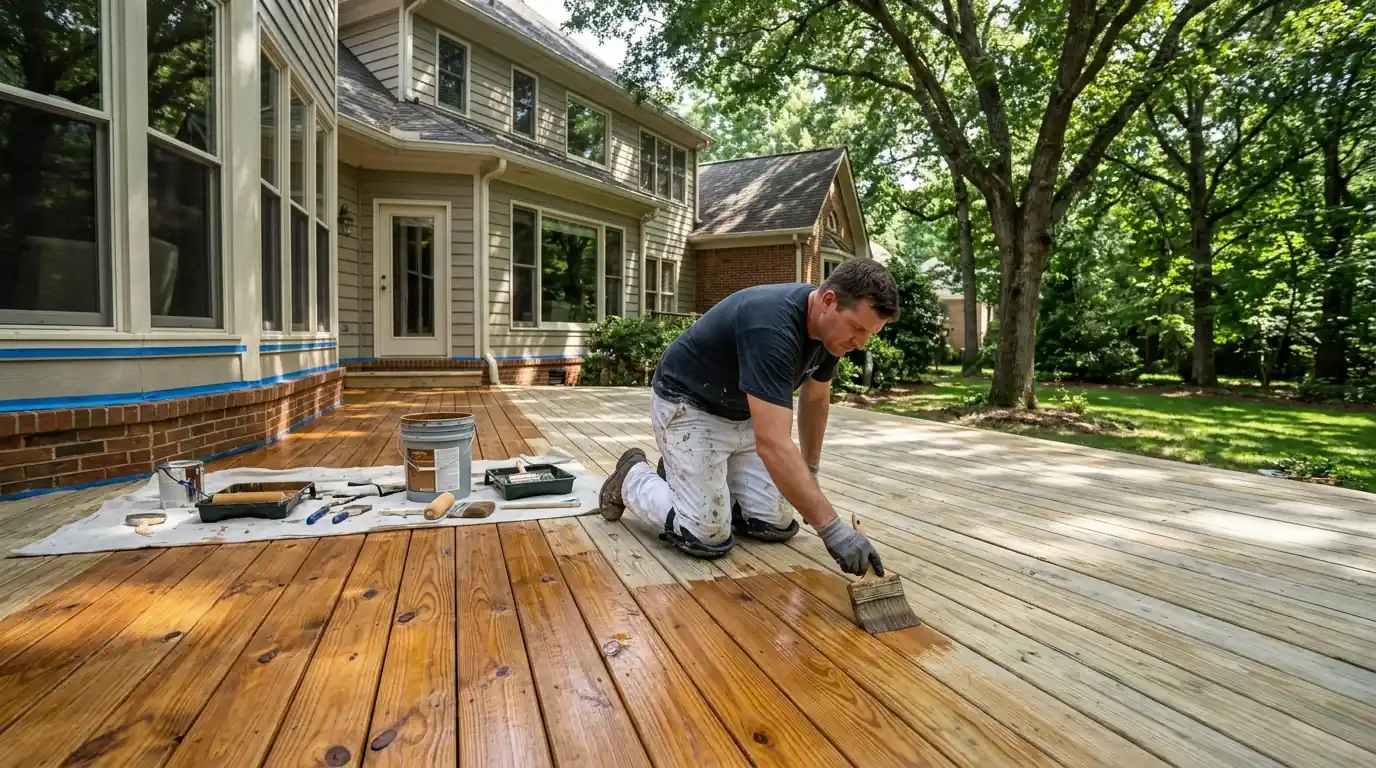
Our work starts with cleaning the wood, not stain. We strip or wash off what's left of the old finish, kill mildew, and then use an oxalic acid brightener to bring the wood back to a fresh, even tone. That step alone changes how the finished deck looks, because stain over gray wood comes out muddy. After the deck dries for a day or two we sand rough spots and raised grain, then apply stain and back-brush it in.
The choice of stain matters most. Transparent stains show the most wood grain but need recoating about every year here. Semi-transparent stains give color and more UV protection and usually last two to three years on horizontal boards. Solid stains hide graying and mismatched boards and last longer on rails, but they can peel like paint on floor boards if they're laid on too thick.
When to call
How to tell your deck is ready for new stain
Water soaks in instead of beading
Sprinkle water on the boards. If it darkens the wood within a minute instead of beading up, the finish has worn away and the wood is open to moisture and rot.
Gray, fuzzy surface
Sun breaks down the top layer of wood fibers and turns them gray and furry. Stain will not bond well to that layer until it's cleaned and lightly sanded.
Peeling solid stain on boards
Solid stain flaking off the floor boards while rails look fine is a sign it was built too thick on a walking surface. It has to come off before the deck is refinished.
Black or green spots
Mildew and algae grow in shaded corners and under planters. Left alone they hold moisture against the boards and stain the wood deep enough that brightener struggles to lift it.
Splinters and raised grain
Rough boards that snag socks mean the wood has dried and checked. Sanding plus a penetrating stain will smooth and protect them for a few more seasons.
Scope of work
What's included when we stain your deck
- Moving lightweight furniture and covering plants, siding and nearby concrete
- Stripping old stain where it is peeling or uneven across boards
- Mildew wash followed by an oxalic acid brightener to restore even wood tone
- Resetting popped nails or swapping them for coated deck screws
- Sanding raised grain, splinters and handrails smooth to the touch
- Stain applied to floor boards, rails, balusters, stairs and visible framing
- Back-brushing every section so stain soaks in instead of pooling on top
- Cleanup and a walk-around so you know the cure time before using the deck
How the job runs
Our deck staining sequence, start to finish
| Step | What happens |
|---|---|
| A1 | Inspect boards and pick a stainWe check for soft boards, loose railings and failing finish, test whether the old stain is oil or water based, and recommend a transparency level that fits the deck's age and how much shade it gets. |
| A2 | Strip and washA stripper goes on where old stain remains, followed by a low-pressure rinse. High pressure tears up pine and leaves fuzz, so we keep the tip wide and the wand moving. |
| A3 | Brighten the woodAn oxalic acid brightener neutralizes the stripper, lifts tannin and gray staining, and evens out the color. It also helps the stain penetrate evenly, so the finished tone looks consistent from board to board. |
| A4 | Dry and sandThe deck needs at least 24 to 48 dry hours before stain goes on. We then sand handrails, rough boards and any raised grain with a pole sander and an orbital sander. |
| A5 | Apply and back-brushWe stain rails and balusters first, then the floor in board-length sections to avoid lap marks. Every area gets back-brushed, and any excess is wiped so it doesn't stay tacky. |
| A6 | Cure and return the deckMost penetrating stains allow light foot traffic in about a day. We'll tell you when furniture can go back and when it's safe to grill or set down rugs and planters again. |
Atlanta conditions
Atlanta weather and the timing of a deck stain
The most reliable windows for staining here are mid-spring after the pollen drops and early fall, when afternoons are warm but storms are less constant. Staining during the heavy pine pollen weeks, roughly March into April, traps yellow dust in the finish. Midsummer has its own trouble: a deck in full afternoon sun can get too hot for stain to soak in properly, so we start early and work the shaded sections later in the day. Most labels also want several hours of dry weather after application.
Shade is the other big factor. Decks under oaks and pines in neighborhoods like Sherwood Forest or out in Roswell stay damp, collect leaf tannin, and grow mildew within a season. On those decks we lean toward semi-transparent oil stains with mildewcide and recommend a yearly wash. Sunny decks in newer subdivisions have the opposite problem, UV graying, and do better with more pigment, which shields the wood the way sunscreen protects skin.
Where we do this work most
Built pages for neighborhoods and cities we cover, with ZIP codes.
Typical costs
Typical deck staining prices in the Atlanta area
Deck pricing depends on the total square footage of walking surface, how many linear feet of railing and balusters there are, and how much old finish has to be stripped. Second-story decks with long stair runs take longer than low decks a step off the patio. These are typical 2026 Atlanta-area ranges, not quotes, and the walkthrough sets the real number.
| Work | Typical range |
|---|---|
| Clean, brighten and stain, deck boards only | $1.45 to $2.65 per sq ft |
| Full strip of failing stain before restaining | $0.95 to $2.15 per sq ft added |
| Railings and balusters | $6.40 to $11.75 per linear ft |
| Typical 300 sq ft deck with rails and one stair run | $1,380 to $2,940 |
| Second-story deck, about 400 sq ft with stairs | $2,270 to $4,610 |
Typical Atlanta ranges, not a quote. Your written estimate follows a free walkthrough. Compare other jobs on our painting price guide.
What moves the price
- Deck size and number of levels
- Railing and baluster footage
- Stripping old solid or film stain
- Board replacement or fastener work
- Stain type and transparency
- Height, access and stair runs
Stains, cleaners and tools we use on decks
On most pine decks we use a penetrating oil-based semi-transparent stain such as Cabot, Sikkens or Sherwin-Williams SuperDeck, and we switch to a water-based option when the deck was last finished that way or you want faster dry times. Cleaning is a sodium percarbonate wash followed by an oxalic acid brightener. Sanding is done with an orbital sander and a pole sander at 60 to 80 grit, enough to open the wood without polishing it closed. We apply stain with brushes, stain pads and a pump sprayer, and every section is back-brushed by hand.
Paints, primers and stains our painters work with every week, from Sherwin-Williams and Benjamin Moore to PPG and Romabio.
Questions
Deck staining & sealing questions from Atlanta homeowners
How often does a pine deck in Atlanta need to be restained?
On horizontal boards in full sun, a semi-transparent stain usually lasts two to three years before it looks worn. Transparent and toner finishes often need a maintenance coat every year. Rails and vertical parts last longer because water runs off them. A quick yearly wash in late spring after the pollen clears stretches every finish, and maintenance coats cost far less than a full strip and restain.
My deck is brand new. Do I need to wait before staining it?
Usually yes. New pressure-treated pine is wet from the treatment process and won't absorb stain well. We test with a few drops of water: if they bead on the surface, it needs more time. That's often a few weeks to a couple of months in summer. Lumber that was kiln-dried after treatment, marked KDAT on the tag, can usually be stained much sooner.
Should I pick solid stain to cover mismatched replacement boards?
Solid stain does hide new and old boards side by side, but it behaves more like paint on a deck floor and can peel in traffic areas. A middle path is a darker semi-transparent stain, which blends boards reasonably well while still soaking in. Another choice is solid stain on rails and balusters only, with semi-transparent on the floor.
Is pressure washing going to damage my deck boards?
It can, if the pressure is high and the tip is close. That's where the furry, splintered look on many decks comes from. We clean with chemistry first and use low pressure only to rinse, with a wide fan tip held well back from the wood. Any raised fibers that do appear get sanded before stain goes on.
Can you stain a composite deck?
Composite boards are not built to take stain the way wood does. Some can be cleaned and coated with a product made for composite, but results vary by brand and age, and we'll tell you honestly if it's worth it. Often a good cleaning is all a composite deck needs, while the wood railings and framing get stained.
Related work
Jobs that often go with this one
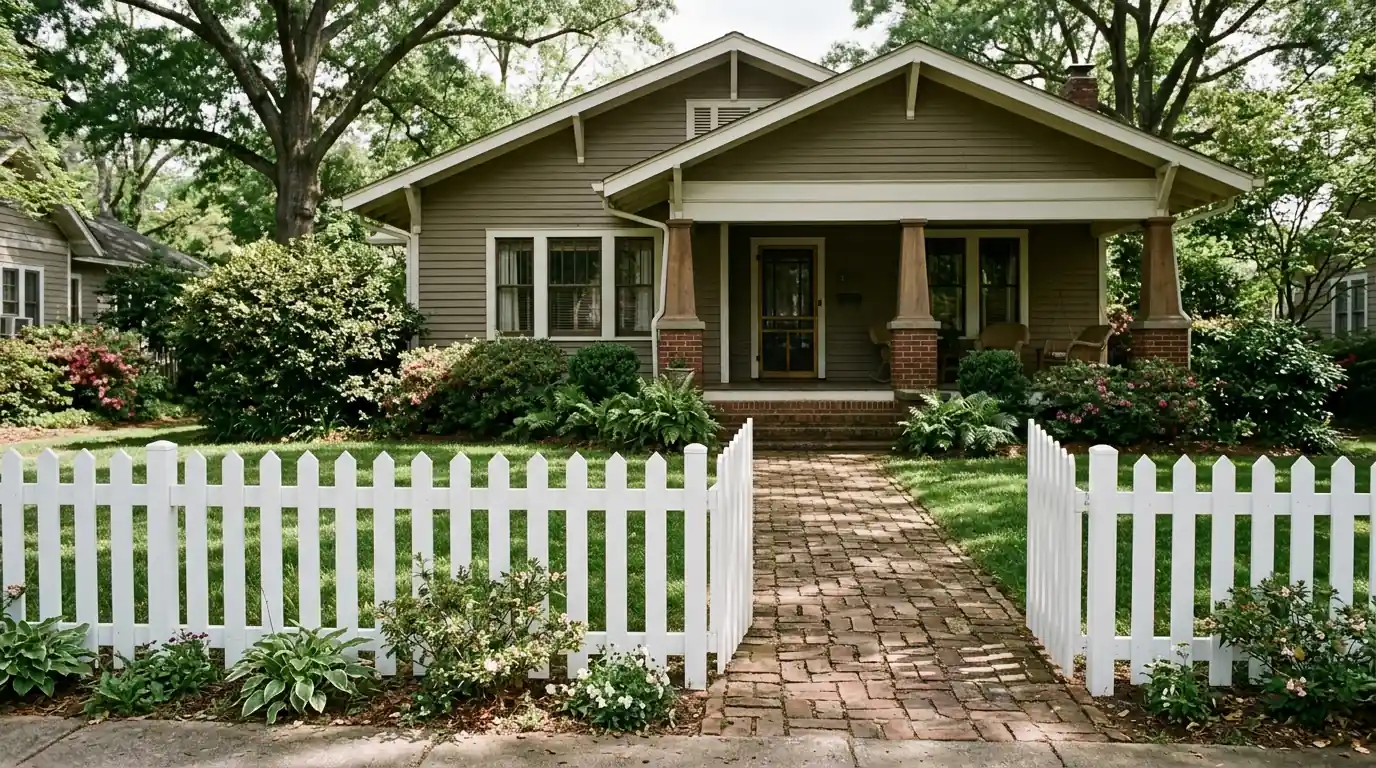
Fence Staining & Painting
Wood privacy and picket fences stained or painted with a sprayer and back-brush, with both sides finished when your neighbor agrees.
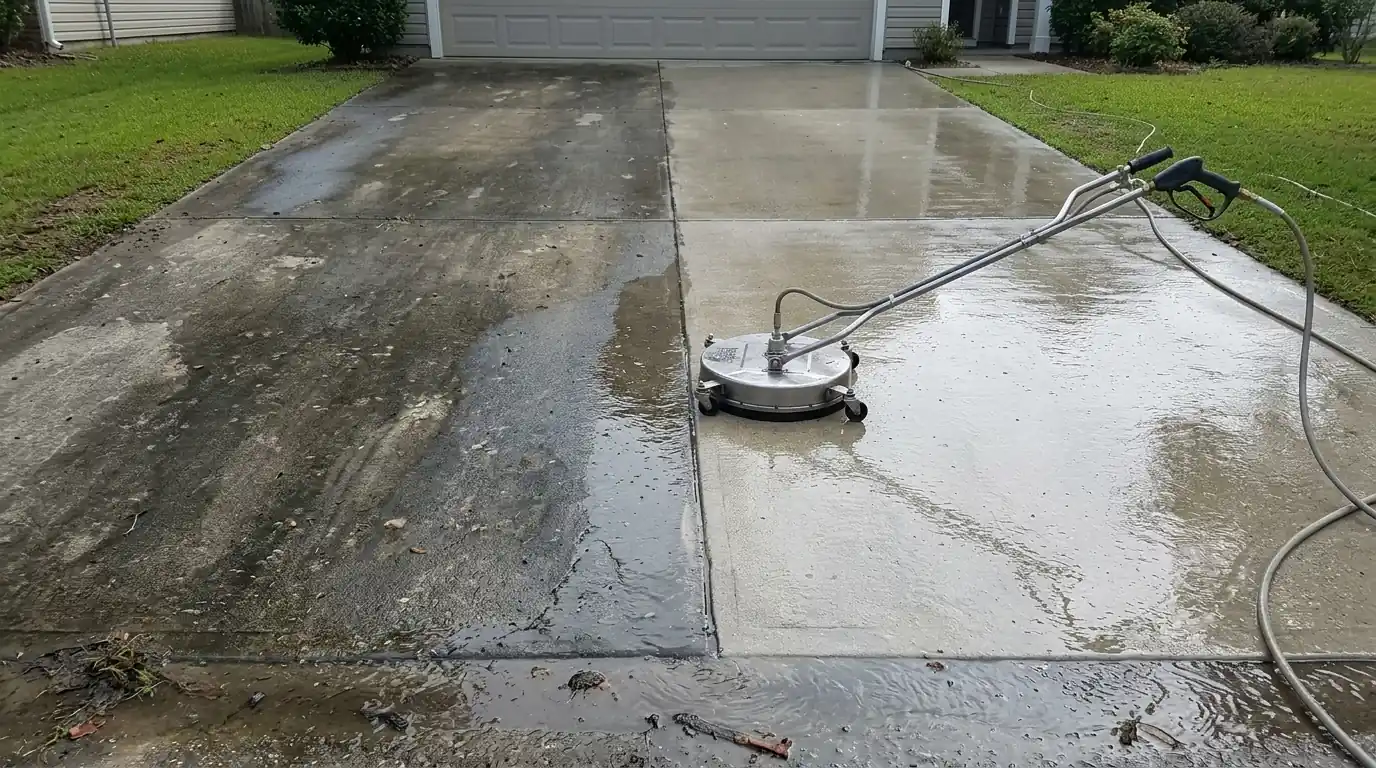
Pressure Washing
Soft wash for siding and pressure washing for concrete, clearing mildew, algae, pollen and red clay before paint or on its own.
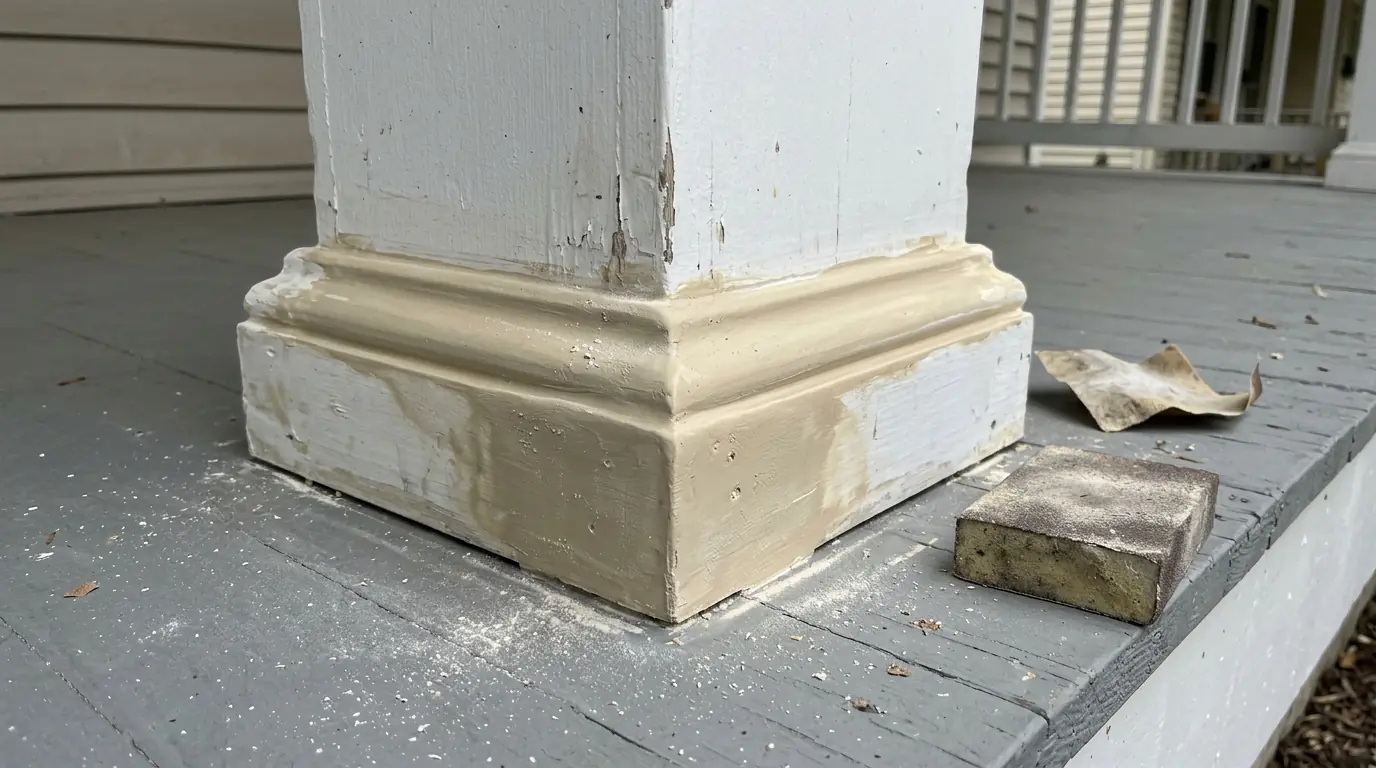
Wood Rot Repair
Rotted trim, sills, fascia, door jambs and column bases repaired with epoxy or replaced with PVC or primed wood, then painted to match.
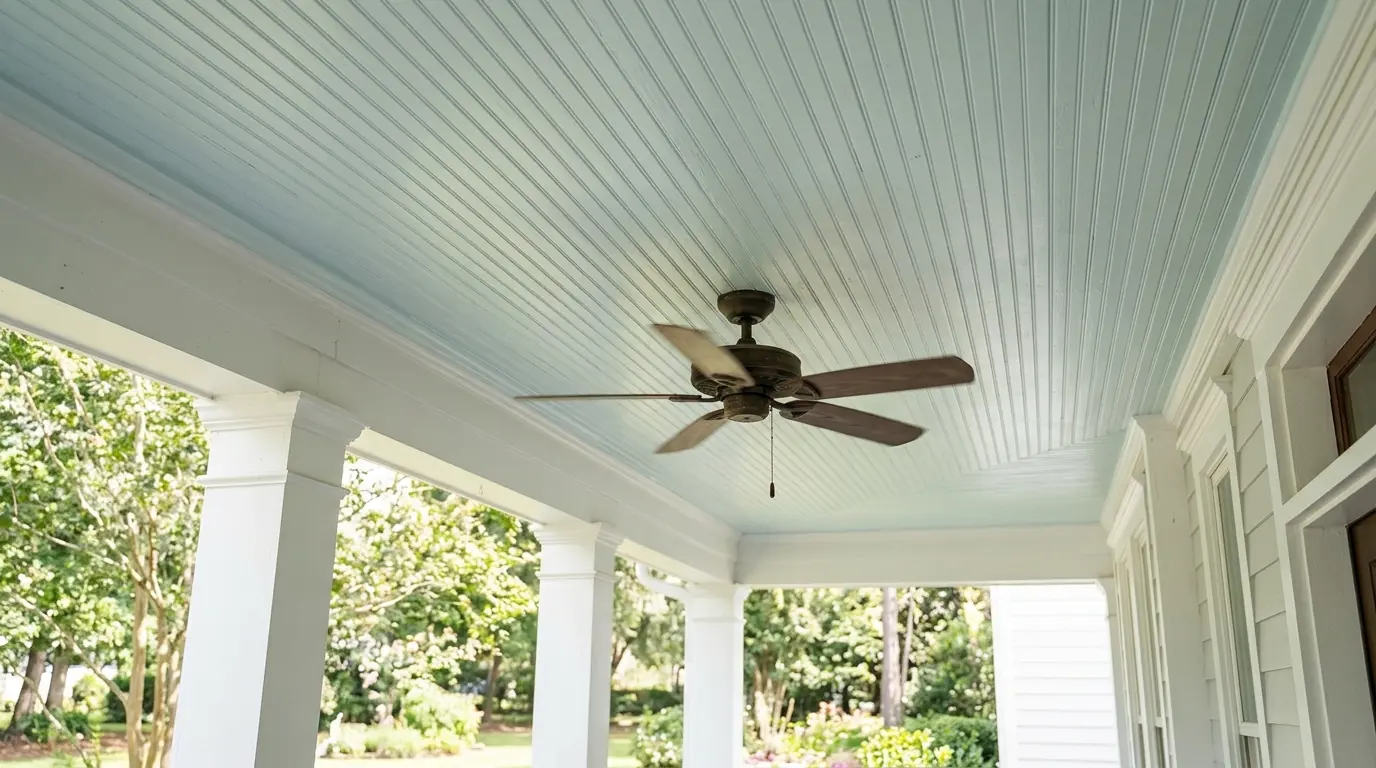
Porch & Column Painting
Porch floors, haint blue ceilings, columns and railings scraped, primed and coated with floor enamel that stands up to foot traffic and summer storms.
Talk through your deck staining & sealing job
Call any time. We will ask a few questions, set a walkthrough time and put the scope and price in writing.