Commercial painting in Atlanta
Commercial painting in Atlanta, scheduled around your business hours
Your space has to stay open while it gets painted, and the building has rules about when work can happen, where carts can go and what can be stored overnight. We plan the job around all of that before a single wall is touched.
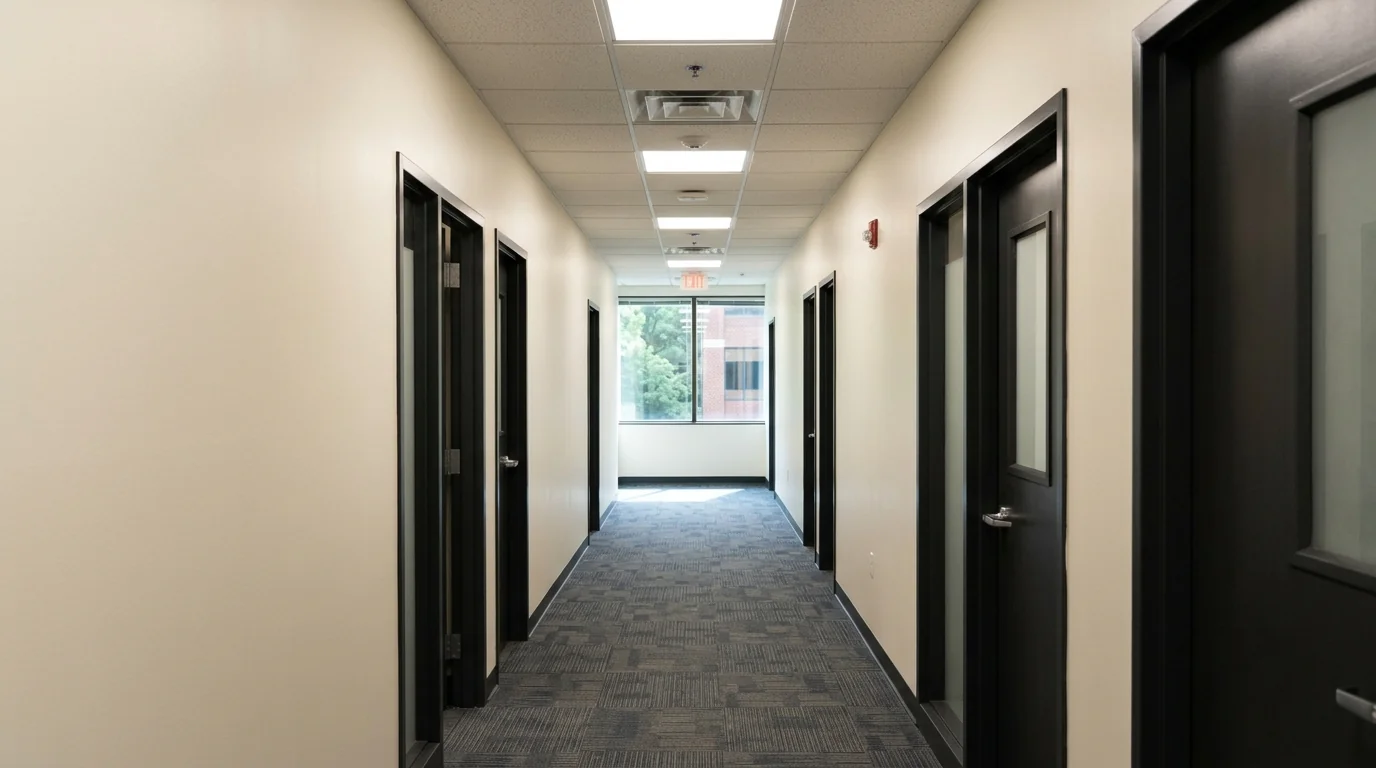
We paint offices, retail suites, restaurants, warehouses and industrial flex space across metro Atlanta, usually after hours, on weekends or in phases so the business keeps running. A 6,000 square foot office interior typically takes 4 to 7 nights. Most commercial interiors run $1.35 to $3.15 per square foot of wall, depending on height, prep and access. Call (470) 458-0461 to set up a free walkthrough.
Commercial painting is mostly a scheduling problem with a paint problem inside it. A dental suite can't lose chairs during the day, a warehouse can't have a lift parked in front of the dock door at 7 a.m., and a property manager needs the lobby finished before tenants arrive on Monday. We start every commercial job by mapping when each area is free, then size the crew and the sequence to fit those windows instead of the other way around.
The coatings are different too. Corridors and break rooms need a scrubbable finish, warehouse block walls need a filler before the topcoat, and steel columns or door frames need a primer that actually bonds to metal. We name the product system for each surface in the written estimate, so nobody is guessing at sheen or primer on night three. For tenant suites full of desks and staff, our occupied office painting page goes into the details.
Every building sets its own rules on dock hours, elevators, floor protection, debris and solvent coatings. We work within those rules and the building's schedule, and we leave the site clean enough at the end of each shift that the next morning starts normally. If the building requires a security sign-in, badge escorts or a nightly walk with the chief engineer, we build those steps into the shift times.
When to call
Signs your commercial space is due for repainting
Scuffed corridors and door frames
Cart marks, chair-back rub lines and chipped hollow metal frames along main corridors tell visitors the building is tired long before the walls actually fail.
Chalky exterior walls
If running a hand across a storefront or tilt-up panel leaves powder on your palm, the coating has broken down, and new paint will not hold well until the wall is washed and primed.
A tenant moving out
A vacant suite is the cheapest moment to repaint. There is no furniture to move and no staff to work around, and the space shows better to the next tenant.
Rust bleeding from metal
Orange streaks below handrails, bollards, door frames or rooftop equipment screens mean the coating has failed at the steel and corrosion is spreading under the paint.
Mildew on shaded elevations
Green or black growth on north walls and under tree cover is common in Atlanta. It holds moisture against the coating and shortens its life.
Scope of work
What a commercial painting job includes
- A site walkthrough with the property manager to map work zones, access hours and building rules
- A written phase plan showing which areas we paint on which nights or weekends
- Floor, furniture and fixture protection with drop cloths, plastic sheeting and taped edges
- Patching anchor holes, dents and corner damage in drywall before any paint goes on
- Spot priming repairs, stains and bare metal with a primer matched to the substrate
- Two finish coats on walls, with door frames and handrails in a harder enamel
- Exterior washing, caulking and coating of storefronts, tilt-up panels, block and metal trim
- Daily cleanup so tenants and customers walk into a normal, usable space each morning
How the job runs
How we run a commercial project from walkthrough to final punch
| Step | What happens |
|---|---|
| A1 | Walkthrough and rules reviewWe walk the property with whoever controls it, note surfaces, heights and damage, and collect the rules on access, elevators, parking, storage and noise before we price anything. |
| A2 | Written scope and phase planThe estimate lists each area, the product system per surface, sheen, color references and the night or weekend each zone is scheduled, so tenant notices can go out early. |
| A3 | Staging and protectionAt the start of each shift we bring in only what that zone needs, cover floors and furniture, and close off the work area so the rest of the building stays open. |
| A4 | Prep and repairsOur painters fill holes, sand patches, scrape loose coatings, degrease break rooms and prime bare drywall or metal. On older buildings, prep often takes as long as the painting. |
| A5 | Finish coats by zoneFinish coats go on one zone at a time, following the recoat times on the label, and each zone is left dry enough to reoccupy by the agreed morning hour. |
| A6 | Punch walk and closeoutWe walk every zone with the manager using blue tape, fix the marked spots, and hand over a color and product sheet for future touch-ups. |
Atlanta conditions
How Atlanta buildings and weather shape commercial paint work
Exterior commercial work here runs into the same weather every summer: heavy humidity in the morning and thunderstorms by midafternoon. On tilt-up warehouses and long storefront elevations we start early, follow the shade, and stop coating a wall when a storm cell is coming, because fresh latex washed off a 30-foot panel streaks the whole face. In spring, pine pollen settles on everything, so we rinse a section right before coating it rather than days ahead. Red clay splash on the bottom few feet of block buildings needs its own scrub or it shows through light colors.
Inside, the building stock varies a lot. Older intown brick and timber buildings converted to offices often have lead paint on original trim and windows, which moves the prep to EPA lead-safe methods. Suburban office parks in places like Sandy Springs tend to have long corridors of flat paint that scuff easily, where switching to eggshell or a scrubbable matte saves money over the next cycle. High-rise properties in Midtown and Buckhead set strict freight elevator windows and require floor protection on every path, so we plan material runs around those reservations.
Where we do this work most
Built pages for neighborhoods and cities we cover, with ZIP codes.
Typical costs
What commercial painting typically costs in Atlanta
Commercial pricing depends far more on access and schedule than on gallons of paint. Night and weekend shifts, lifts, phased zones and heavy prep all add labor. The ranges below are typical 2026 figures for metro Atlanta, measured on paintable surface, and your written estimate comes from what we see on the walkthrough. Our Atlanta price guide has more detail.
| Work | Typical range |
|---|---|
| Office or retail interior walls, two coats | $1.35 to $3.15 per sq ft of wall |
| Warehouse or flex space block walls, filler plus topcoat | $1.65 to $3.85 per sq ft |
| Hollow metal door and frame, both sides | $135 to $265 per opening |
| Exterior storefront or tilt-up elevation | $1.85 to $4.35 per sq ft |
Typical Atlanta ranges, not a quote. Your written estimate follows a free walkthrough. Compare other jobs on our painting price guide.
What moves the price
- After-hours, night or weekend scheduling
- Ceiling height and lift requirements
- Amount of patching and rust treatment
- Number of phases and return trips
- Coating system, from standard latex to epoxy or urethane
Coatings we use on commercial surfaces
For walls in offices and retail suites we usually specify Sherwin-Williams ProMar 200 Zero VOC or Benjamin Moore Ultra Spec 500, in eggshell for corridors and matte for private offices. Break rooms and restrooms get a scrubbable semi-gloss or a waterborne epoxy. Concrete block takes a block filler first so it doesn't soak up the topcoat unevenly. Door frames, railings and bollards get a rust-inhibitive primer and a waterborne alkyd enamel such as Sherwin-Williams Pro Industrial. Large open areas are sprayed with a Graco airless and backrolled, and we cut in by hand with Purdy brushes.
Paints, primers and stains our painters work with every week, from Sherwin-Williams and Benjamin Moore to PPG and Romabio.
Questions
Commercial painting questions from Atlanta homeowners
How do you handle building rules like freight elevator reservations and loading dock hours?
We collect the written building rules at the walkthrough and plan around them. Deliveries come through the dock during its open hours, freight elevator time is reserved through the property manager before each phase, and parking and staging spots are confirmed in advance. If the building wants floor runners, corner guards or a security sign-in every shift, that is built into the schedule and the price from the start.
Do you paint warehouses and flex space with high open ceilings?
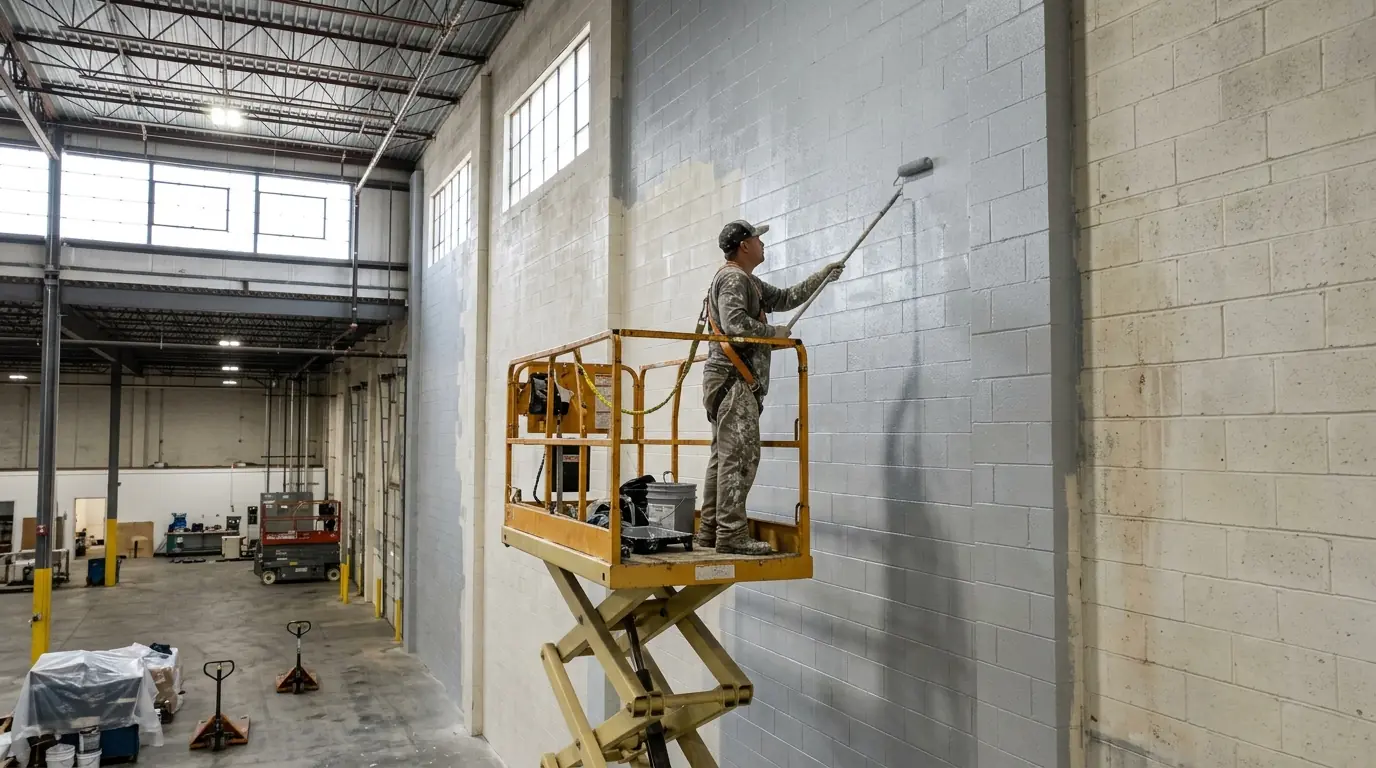
Yes. We use scissor lifts or boom lifts for tall walls, open web joists and deck ceilings, and we usually spray those areas with dryfall coatings, which land as dry dust rather than wet paint on floors and racking below. Space under the work area has to be cleared or covered, so we coordinate with your operations team on which bays can be emptied each day.
How do you keep paint odor from bothering tenants on other floors?
Interior work in occupied buildings uses zero-VOC or low-odor waterborne products, containers stay closed, and fans push air toward exhaust paths rather than into shared corridors. Solvent coatings stay out of occupied buildings unless the property manager approves them for a specific surface, and then we schedule them for a weekend with the HVAC settings arranged ahead of time.
Can you paint the outside of a commercial building in the middle of summer?
We can, with limits. Exterior latex needs the surface and air above the minimum temperature on the label and several dry hours after application. In Atlanta summers we start early, work the shaded sides as the sun moves, and watch radar for afternoon storms. If rain hits a fresh wall, we inspect it the next morning and recoat any section that washed or streaked.
What do you need from us before a commercial job starts?
A contact who can open locked spaces and answer questions after hours, the building rules or tenant handbook, approved colors or the existing color codes, and a list of any areas that can't be touched on certain dates. If there are alarm codes, keyed rooms or secure areas, we agree on the access process in writing before the first shift.
Related work
Jobs that often go with this one
Office Painting
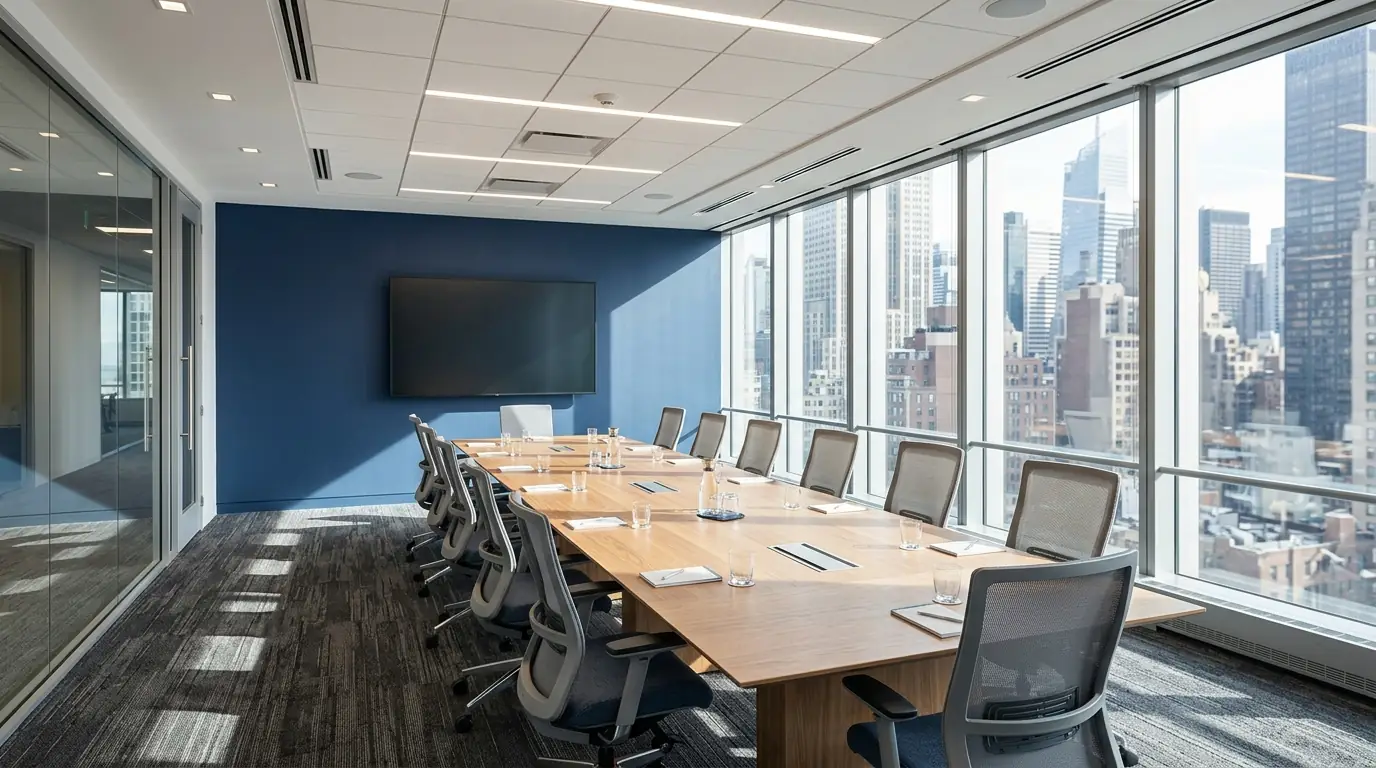
Occupied offices painted on nights and weekends with zero-VOC paint, covered workstations and rooms back in use by the next morning.
Retail & Restaurant Painting
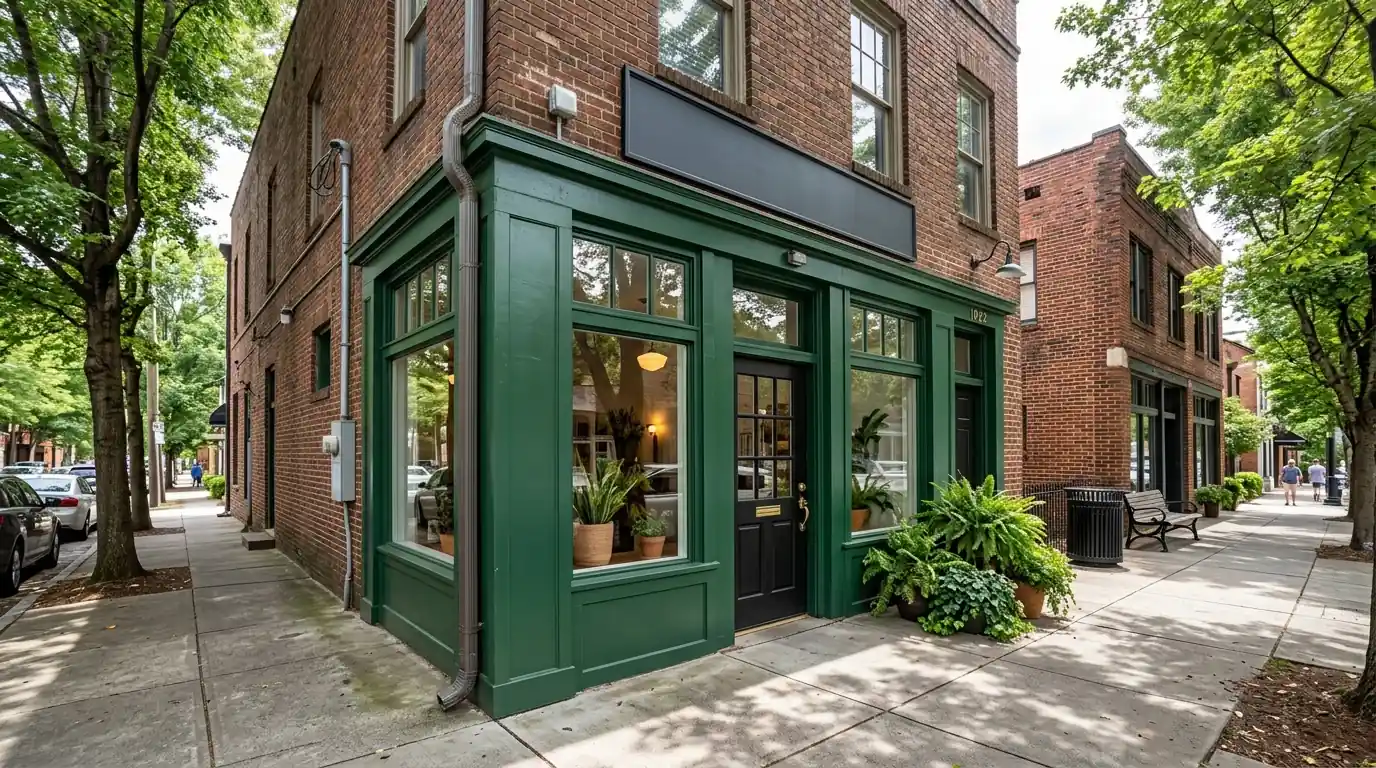
Storefronts, dining rooms and restaurant kitchens painted after closing, with washable finishes and brand colors matched to your standards.
Electrostatic Painting
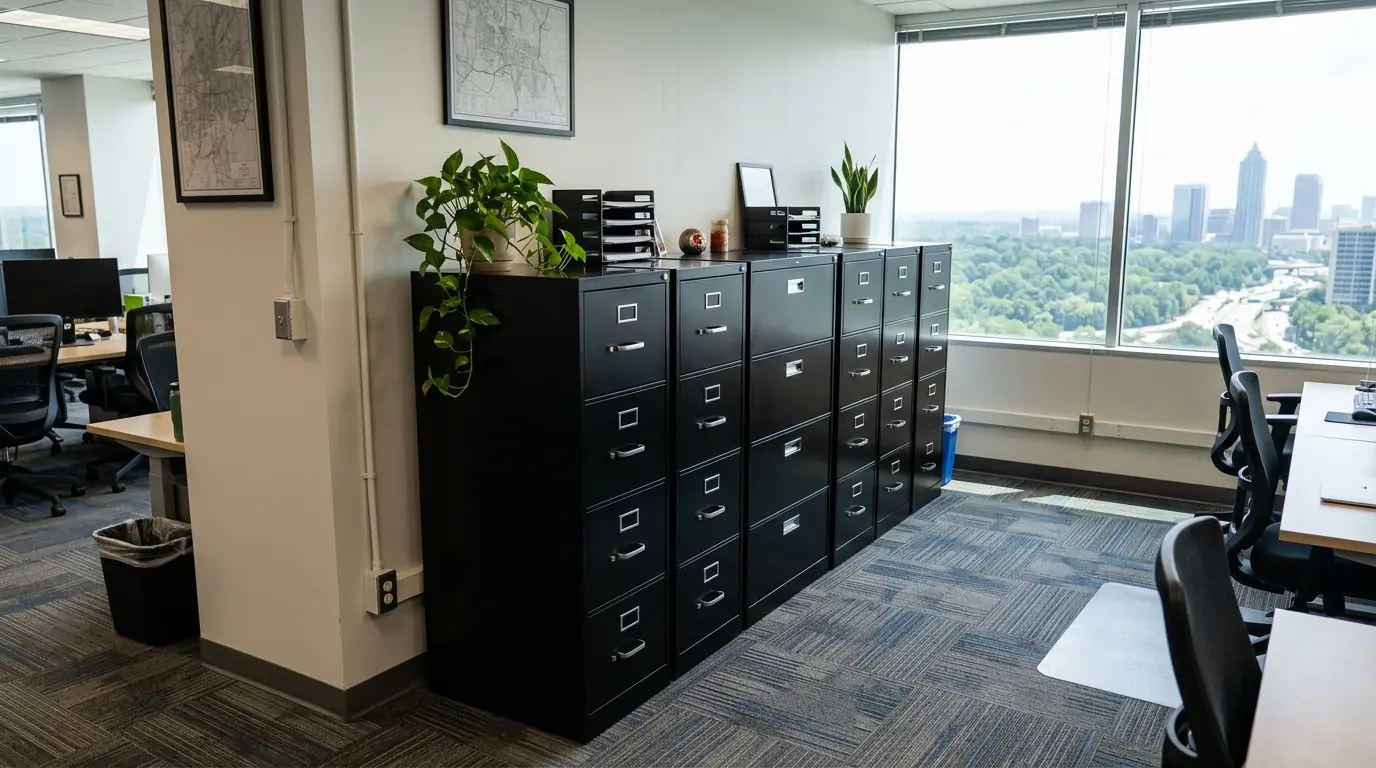
On-site electrostatic painting of metal furniture, lockers, door frames, railings and elevator doors, refinished in place without hauling items away.
Apartment & Multifamily Painting
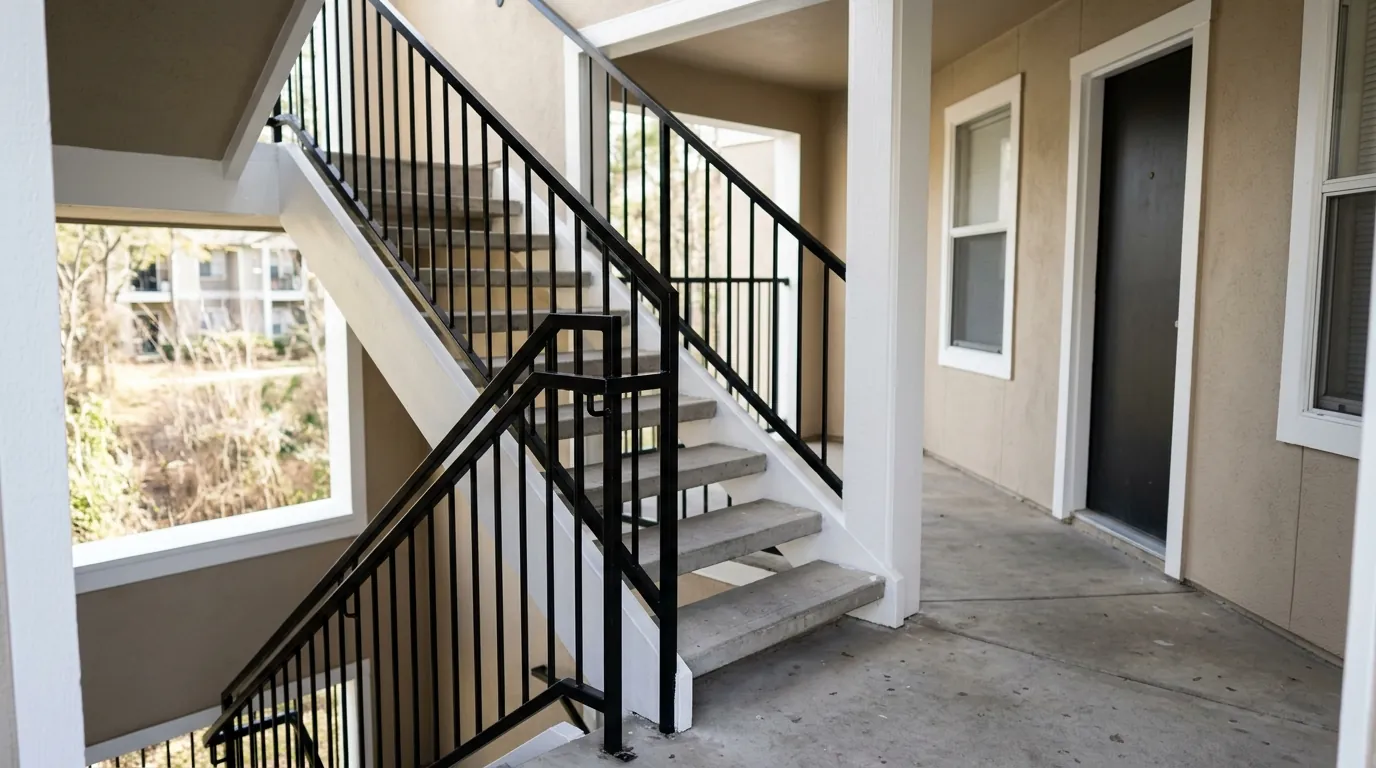
Apartment exteriors, breezeways, stairwells, corridors and unit interiors painted building by building, with resident notices planned ahead.
Talk through your commercial painting job
Call any time. We will ask a few questions, set a walkthrough time and put the scope and price in writing.