Exterior painting in Atlanta
Soffit and fascia painting in Atlanta, from gutter line to rake board
Peeling fascia behind the gutters, stained soffits and little round carpenter bee holes in the rake boards are easy to ignore from the yard. Up close, they're where water and insects get into an Atlanta roofline first.
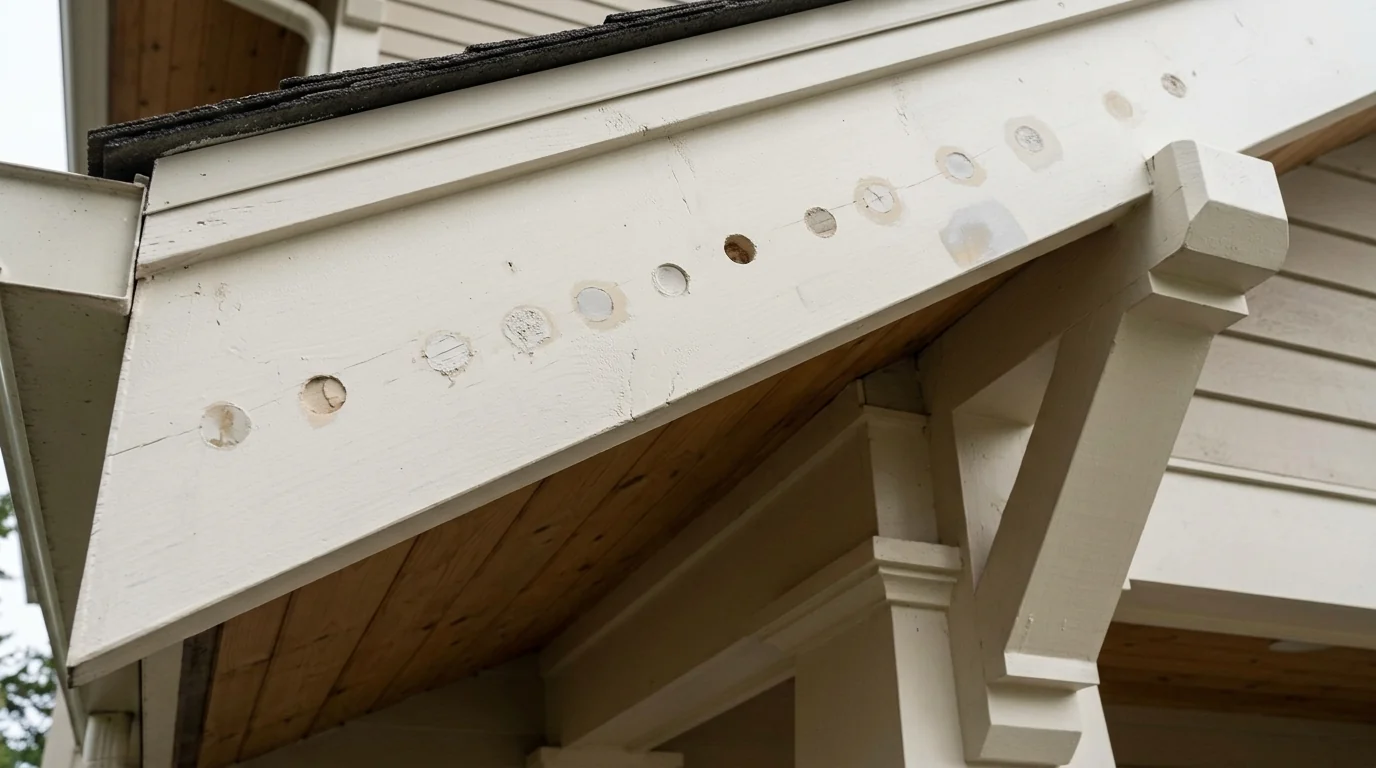
We paint soffits, fascia, rake boards and eaves across metro Atlanta, repairing rot behind gutters and sealing carpenter bee holes before priming and two finish coats. Most homes take 2 to 4 working days. Typical pricing runs $1,380 to $3,760 for a whole-house soffit and fascia repaint, depending on height and repairs. Call (470) 458-0461 for a free walkthrough.
The roofline trim is the hardest-working wood on most houses. Fascia boards sit right behind the gutters, so every clog or overflow soaks them. Rake boards on the gable ends take direct sun and blowing rain. Soffits stay shaded but collect moisture from below and stains from leaking gutters above. When paint fails up there, it fails fast, and the wood underneath is often softer than it looks from the ground.
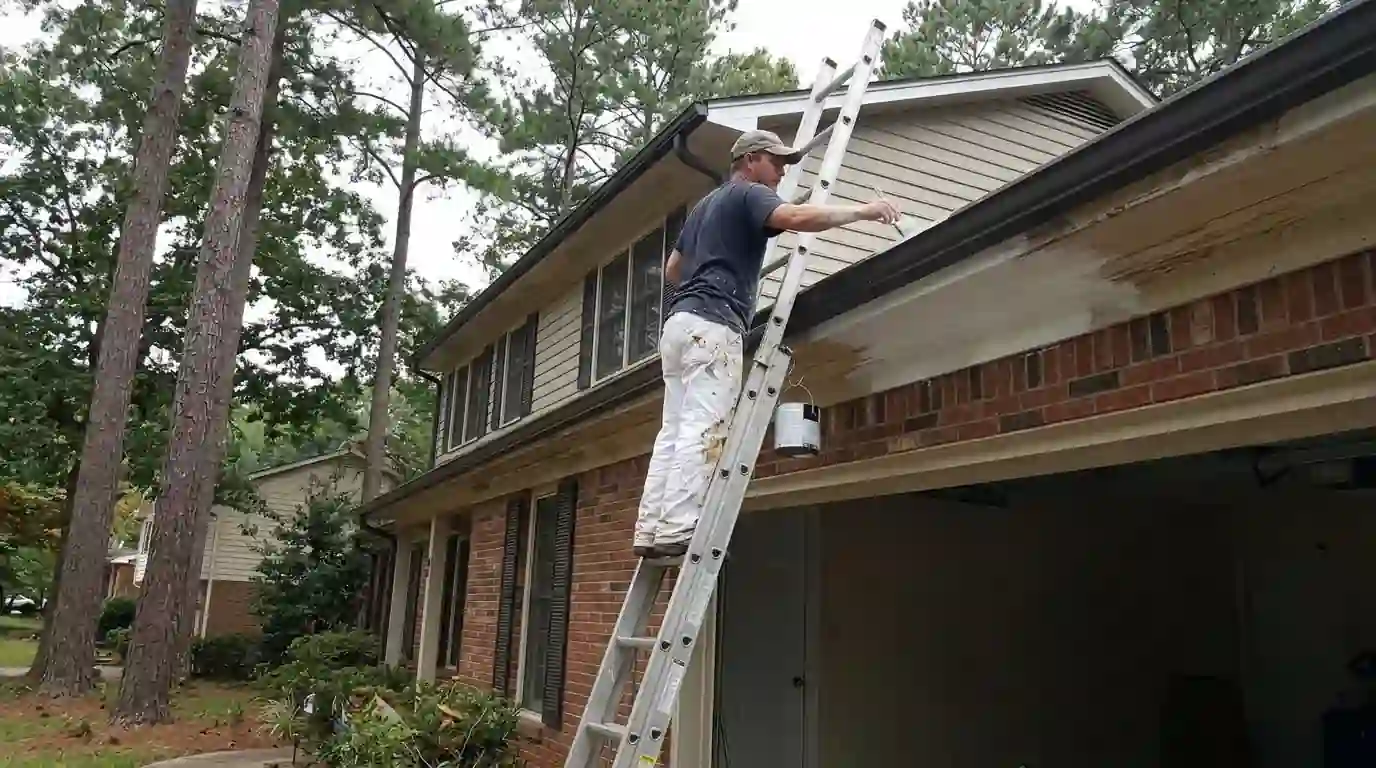
We start every roofline job by working along the gutter line with a probe and a scraper. Gutter spikes or hangers sometimes have to come loose so we can reach the fascia behind them, and we reattach them when the paint has cured. Soft spots get cut out and replaced or consolidated, not painted over. Carpenter bee holes get cleaned, treated, plugged and sealed so the next generation has nothing to reopen.
Height decides a lot about this work. Single-story ranches are reachable from ladders; tall two-stories, steep lots and three-story townhomes may need ladder stabilizers, roof work or a small lift. We plan access on the walkthrough and fold it into the estimate. This trim is often painted alongside a full exterior repaint, but on its own it's a sensible way to protect the roofline between full jobs.
When to call
Signs your soffits and fascia need attention
Peeling paint behind the gutters
Paint lifting along the top edge of the fascia usually means water has been sitting behind the gutter. That wood is the first to soften, so it should be probed before painting.
Round holes in rake boards
Clean, half-inch holes on the underside of rake boards and fascia are carpenter bee galleries. Woodpeckers often follow, tearing open the wood to reach the larvae.
Sagging or stained soffit panels
Brown water stains, sagging panels or gaps at the soffit edge point to a gutter or roof leak above. Fixing the source comes before paint.
Mildew along the eaves
Dark patches on soffits under trees mean the surface stays damp. A clean and a mildew-resistant coating keep the eaves brighter longer.
Bare wood at miter joints
Fascia corners and rake returns open up as boards shrink. Exposed end grain soaks up water like a straw and rots quickly.
Paint chips on the roof or driveway
Flakes of trim color on shingles, decks or the drive are a clear sign the roofline coat has lost adhesion.
Scope of work
What our soffit and fascia painting includes
- Probing fascia, rake boards and soffits for soft wood, especially along gutter lines
- Loosening gutter hangers where needed to paint the full fascia face
- Cleaning, treating and plugging carpenter bee holes, then sealing with wood filler
- Replacing or consolidating rotted fascia and soffit sections, with your approval first
- Scraping, sanding and washing eaves to remove loose paint, mildew and pollen
- Priming bare wood, end grain and repairs with an exterior oil or bonding primer
- Two finish coats on fascia, rake boards, soffits and frieze boards
- Keeping soffit vents clear of paint so attic ventilation still works
How the job runs
How we work a roofline from end to end
| Step | What happens |
|---|---|
| A1 | Plan accessWe check heights, roof pitch and ground conditions. Ladders work on most ranches; tall gables or slopes may need stabilizers, roof anchors or a lift. Access affects both the schedule and price. |
| A2 | Probe and markWe run a probe along every fascia board and rake, especially behind gutters and at corners. Soft areas get marked and photographed so you can see what we found. |
| A3 | Repair wood and bee damageRotted sections are cut out and replaced with primed lumber or PVC trim. Bee holes are treated, plugged with dowels or filler and sanded flush. |
| A4 | Scrape, clean and primeLoose paint comes off, surfaces are washed of mildew and pollen, and all bare wood and end grain gets primer the same day it's exposed. |
| A5 | Caulk and coatSeams and miter joints are caulked. Two finish coats go on with brushes and small rollers, keeping vent openings in soffits clear. Gutters are refastened after curing. |
| A6 | Walk the lineWe walk the perimeter with you, checking from the ground and ladder for holidays or drips, and touch up before taking down equipment. |
Atlanta conditions
Atlanta rooflines, carpenter bees and leaf-clogged gutters
Carpenter bees are a real Atlanta problem. Every spring they bore into unpainted or thinly painted softwood, and rake boards, fascia ends and porch ceilings are favorite targets. They prefer bare or weathered wood, so a well-sealed, painted surface is the most practical defense. We fill old holes rather than leaving them open, since bees reuse existing galleries. Pine-heavy neighborhoods across Cobb County and DeKalb see the most activity, and woodpecker damage often follows close behind.
The tree canopy that keeps Atlanta streets shady also fills gutters with oak leaves, pine needles and seed pods several times a year. Clogged gutters overflow behind the fascia, and that steady soaking is the top reason we find rot along rooflines here. We'll recommend gutter cleaning before the paint goes on, and where the fascia is repeatedly wet, a PVC replacement board can be a better choice. Afternoon storms mean we prime each repaired board before leaving it overnight.
Where we do this work most
Built pages for neighborhoods and cities we cover, with ZIP codes.
Typical costs
What soffit and fascia painting costs
Roofline painting is priced mostly by linear feet and height. Rot repair and bee hole work are the swing factors, since we can't see their full extent until we're on a ladder. These 2026 metro Atlanta ranges cover typical homes; your estimate will itemize repairs separately once we've probed the boards. Our painting cost guide lists more projects.
| Work | Typical range |
|---|---|
| Soffit and fascia repaint, one-story home | $1,380 to $2,470 |
| Soffit and fascia repaint, two-story home | $2,190 to $3,760 |
| Fascia or rake board painting, per linear ft | $3.85 to $7.40 per linear ft |
| Fascia rot replacement, per linear ft installed | $14.50 to $31.25 per linear ft |
| Carpenter bee hole repair, per hole | $18 to $43 per hole |
Typical Atlanta ranges, not a quote. Your written estimate follows a free walkthrough. Compare other jobs on our painting price guide.
What moves the price
- Roof height, pitch and need for a lift
- How much rot is behind the gutters
- Number of carpenter bee holes to repair
- Gutter removal and refastening
- Vented vs solid soffit material
Primers, paints and repair materials for eaves
Bare fascia and end grain get an oil-based exterior primer such as Zinsser Cover Stain or Sherwin-Williams Exterior Oil-Based Wood Primer, which seals tannins and soaks into weathered wood. Rot repairs use epoxy consolidant and filler for small areas, or primed pine, cedar or cellular PVC boards for larger sections. Finish coats are 100% acrylic exterior paint like Sherwin-Williams Duration or Benjamin Moore Regal Select, typically satin or semi-gloss so water beads off. Angled Purdy sash brushes handle the tight areas around gutters and vents.
Paints, primers and stains our painters work with every week, from Sherwin-Williams and Benjamin Moore to PPG and Romabio.
Questions
Soffit & fascia painting questions from Atlanta homeowners
Do you take the gutters off to paint the fascia?
Not entirely, but we often loosen hangers or spikes so we can reach the full face of the fascia behind the gutter. Painting around a mounted gutter leaves the hidden strip bare, and that strip is where rot starts. We reattach the gutters once the paint has cured, checking pitch so water still drains to the downspouts.
Will painting stop carpenter bees from coming back?
It helps a lot. Carpenter bees prefer bare or weathered wood, and a sealed, painted surface is much less attractive. We clean out and fill existing holes because bees reuse old galleries. Painting won't deter every bee, especially near unpainted wood elsewhere on the property, but it removes the easiest targets on your roofline.
Can vented soffits be painted without blocking airflow?
Yes. We paint vented panels with a brush and light roller passes, keeping coats thin around the perforations or slots. Where a fine spray works better, we use low pressure and check that vent openings stay clear. Blocked soffit vents reduce attic ventilation, which raises attic heat and moisture, so we take care with them.
Should rotted fascia be replaced with wood or PVC?
Both work. Primed wood matches existing trim and paints easily, but it can rot again if gutters keep overflowing. Cellular PVC doesn't rot and holds paint well with the right acrylic, though it costs more and expands with heat, so joints need care. On chronically wet sections, we usually recommend PVC.
Related work
Jobs that often go with this one
Wood Rot Repair
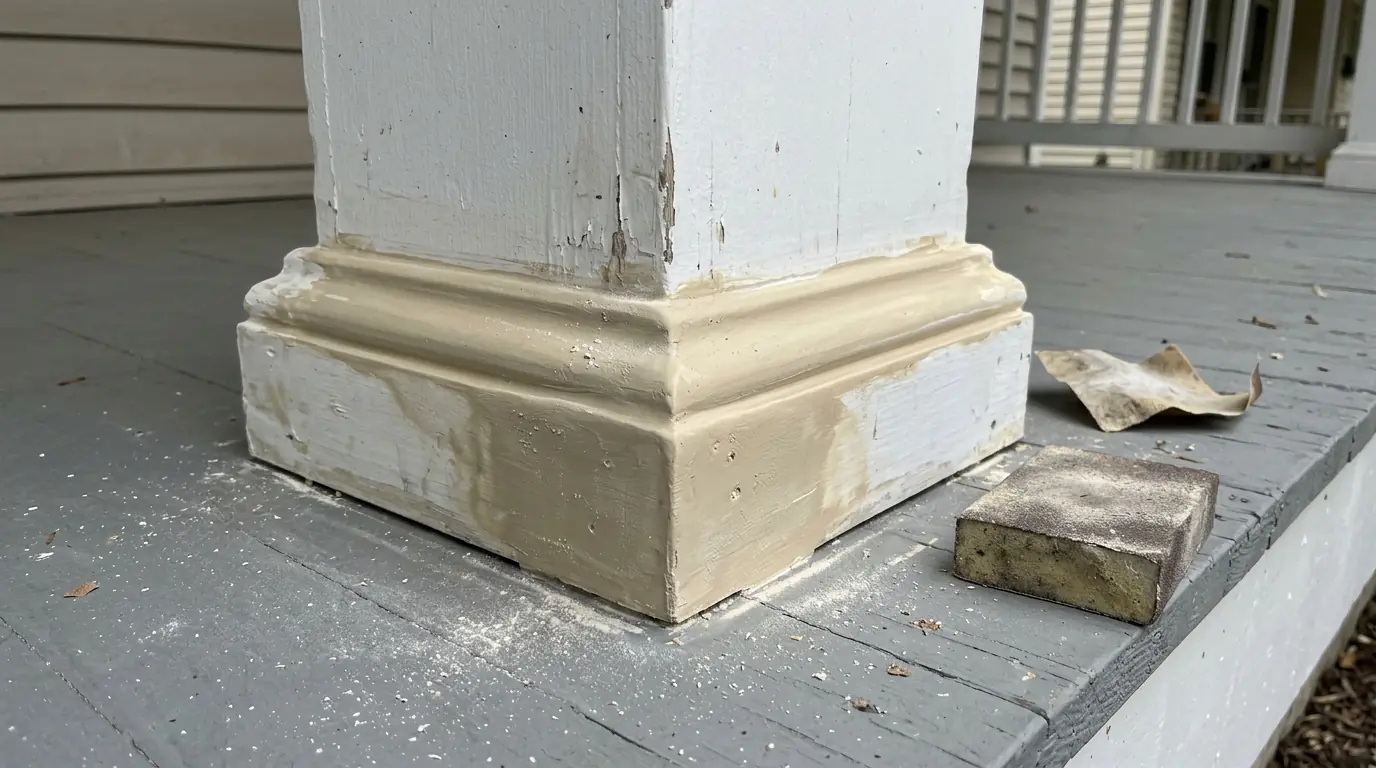
Rotted trim, sills, fascia, door jambs and column bases repaired with epoxy or replaced with PVC or primed wood, then painted to match.
Exterior House Painting
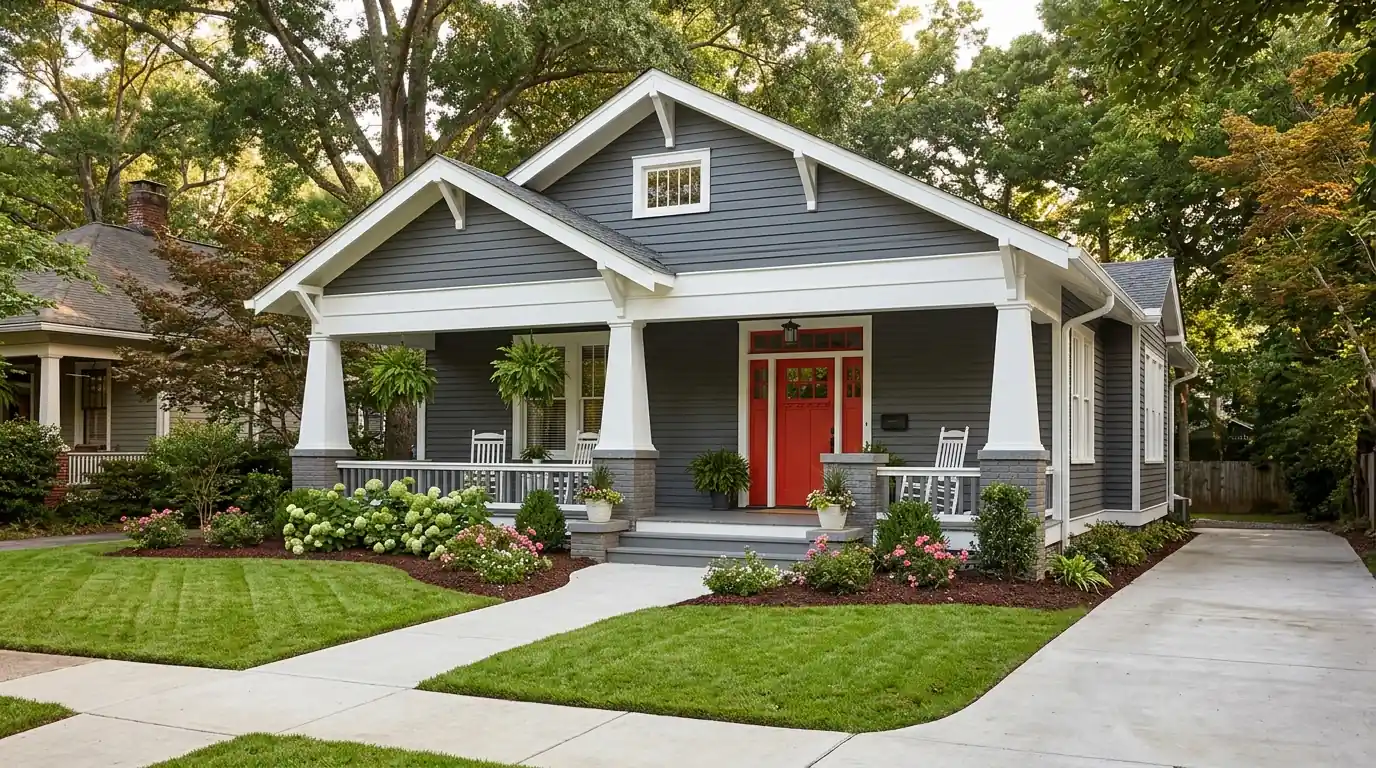
Full exterior repaints on wood, fiber cement and mixed-material Atlanta homes: wash, scrape, sand, caulk, spot prime and two finish coats.
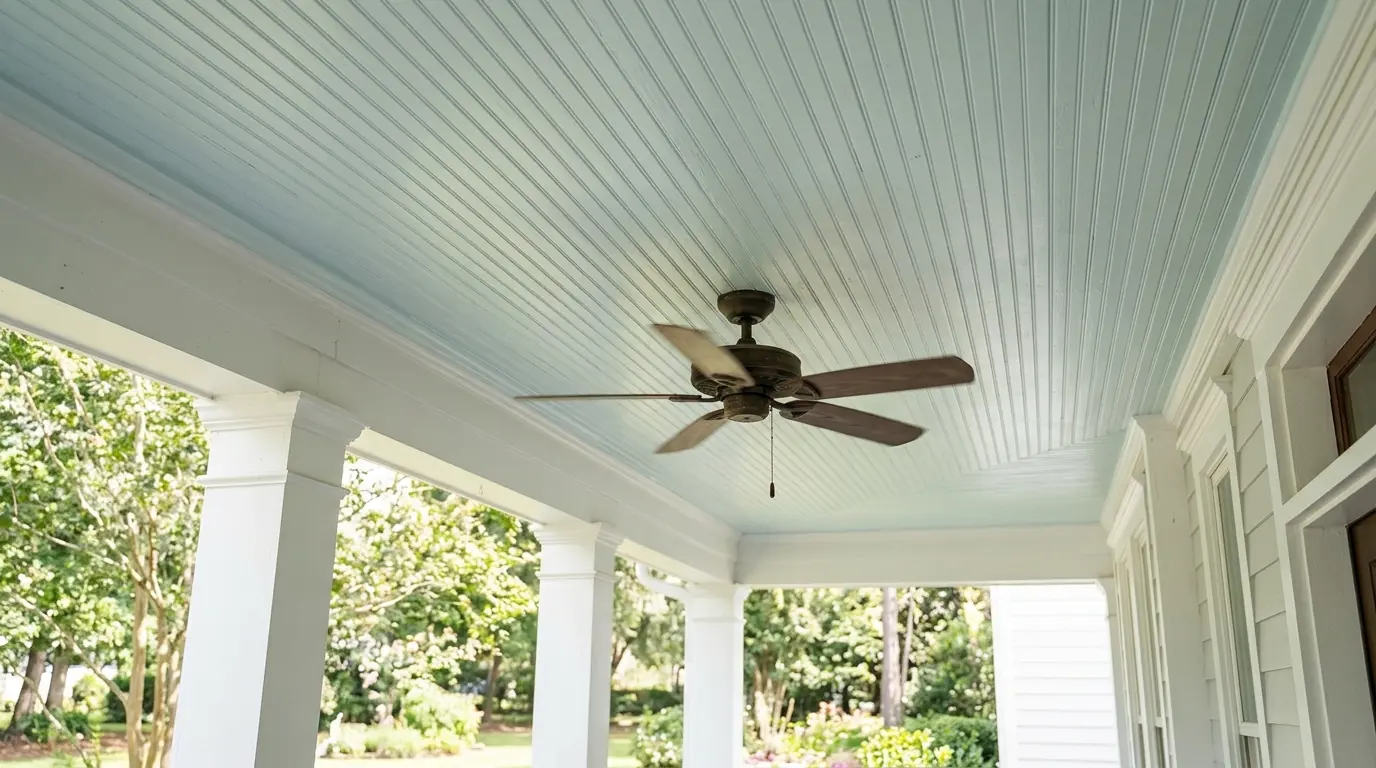
Porch & Column Painting
Porch floors, haint blue ceilings, columns and railings scraped, primed and coated with floor enamel that stands up to foot traffic and summer storms.
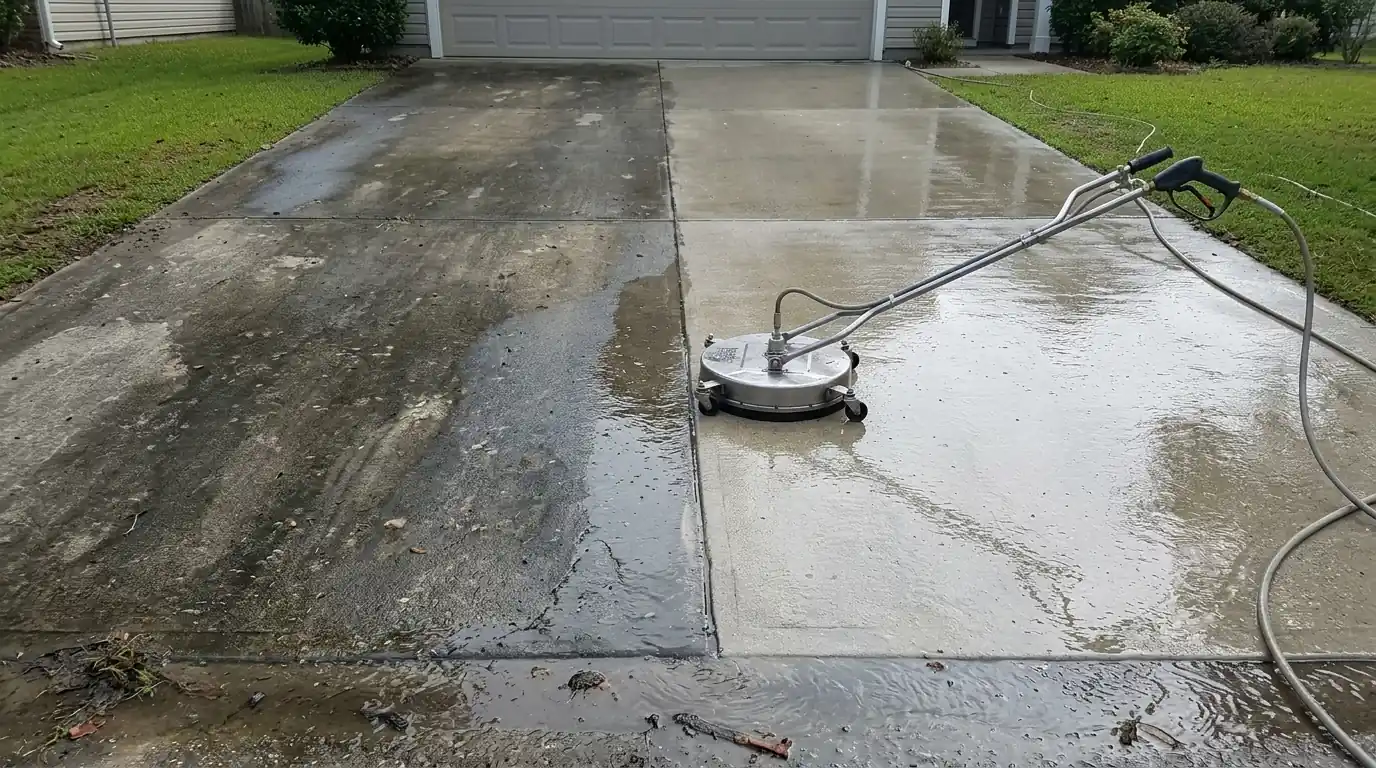
Pressure Washing
Soft wash for siding and pressure washing for concrete, clearing mildew, algae, pollen and red clay before paint or on its own.
Talk through your soffit & fascia painting job
Call any time. We will ask a few questions, set a walkthrough time and put the scope and price in writing.