Exterior painting in Atlanta
Stucco and EIFS painting in Atlanta, with cracks and moisture handled first
Faded, chalky stucco with hairline cracks around windows is common on Atlanta homes, especially 1990s synthetic stucco in the north suburbs. Painting it well means knowing which type you have and what's behind it.
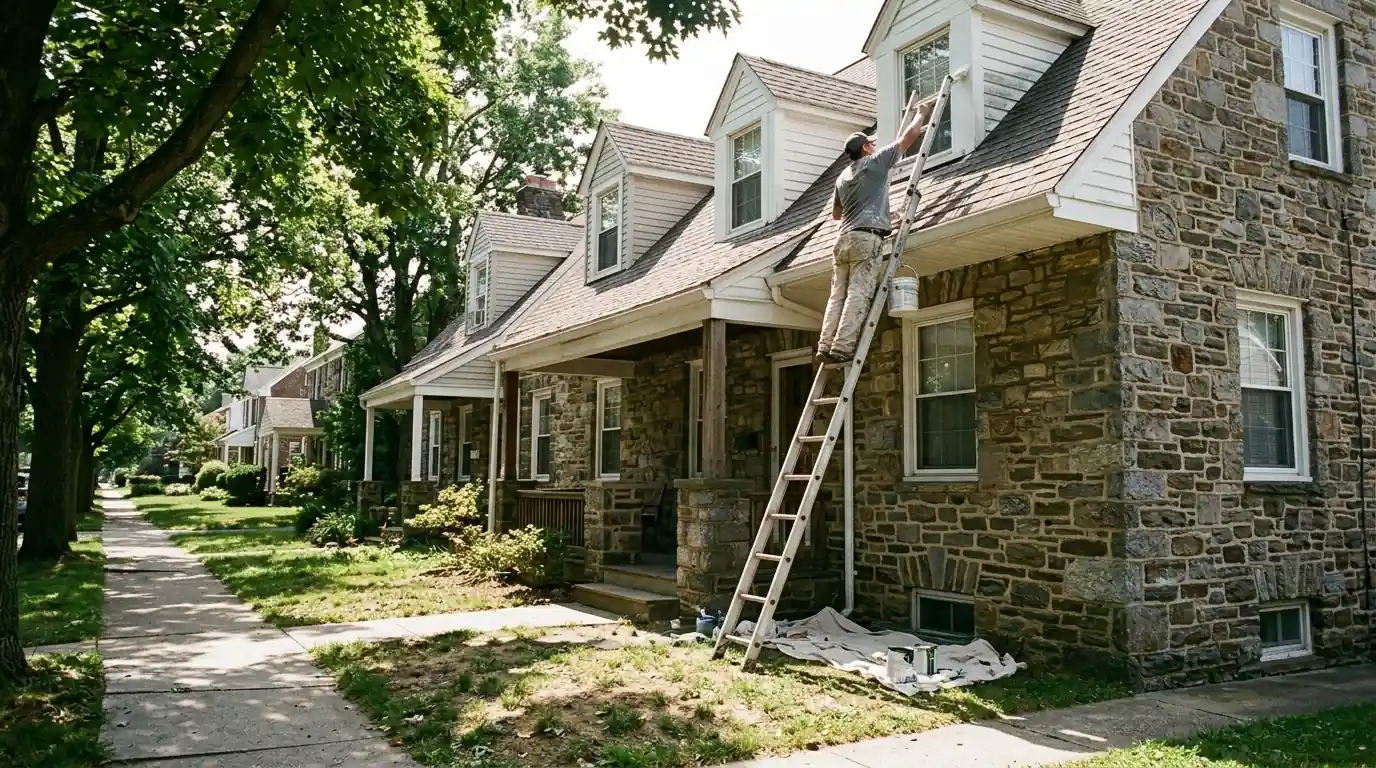
We paint traditional cement stucco and synthetic stucco (EIFS) across metro Atlanta, starting with a moisture check, crack repair and washing, then two coats of acrylic or elastomeric. Most homes take 4 to 8 working days. A typical two-story stucco home runs $7,240 to $13,680. Call (470) 458-0461 for a free walkthrough and written estimate.
Stucco isn't one material. Traditional hard-coat stucco is a cement plaster troweled over lath, often on older intown houses and plenty of newer custom homes. Synthetic stucco, or EIFS, is a thin acrylic finish over foam insulation board, and it was widely used on 1990s homes in north Fulton, Gwinnett and Cobb. They look similar from the street, but you can tell by tapping: hard-coat rings solid while EIFS sounds hollow and gives slightly under pressure.
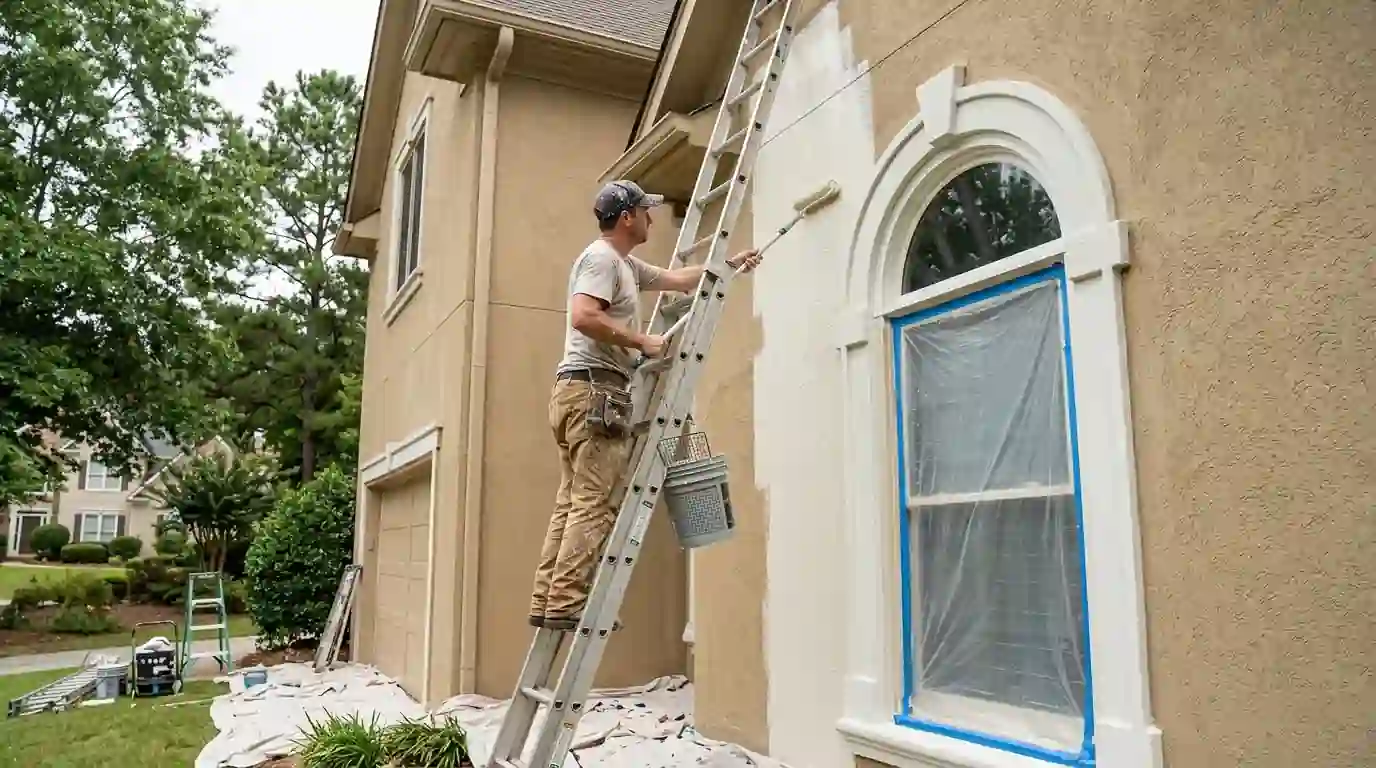
The type changes the job. Cement stucco cracks as it shrinks and the house settles, and those hairline cracks let rain in. We fill and bridge them, and an elastomeric coating can flex over small movement. EIFS doesn't usually crack the same way, but water that gets behind it through joints and window edges has nowhere to drain on older barrier systems. Paint can't fix that; it can only hide it.
So every stucco estimate starts with a look at sealant joints, window perimeters, kick-out flashing and the bottom edge near grade. We'll point out anything that worries us before you spend money on paint. Trim and fascia around the stucco are usually part of the same job, often alongside soffit and fascia work on the eaves above.
When to call
Signs your stucco is due for paint
Hairline cracks around windows and corners
Thin diagonal cracks off window corners and along control joints are typical of cement stucco. Small ones bridge well with elastomeric products; wide or growing ones need repair first.
Chalky, faded color
Stucco and EIFS finishes fade unevenly, and wiping a hand across them leaves pigment behind. That powder means the finish has stopped shedding water well.
Dark streaks under sills and ledges
Water running off window sills and trim bands carries dirt and feeds mildew. Streaks that return after washing show the surface is absorbing more than it should.
Failed sealant at windows and penetrations
Cracked or pulled-away caulk where stucco meets windows, doors, vents and hose bibs is the most common water entry point, especially on EIFS.
Mismatched patches
Past repairs that never got painted, or got painted in a slightly different color, show as blotches. A full coat blends patches into one even surface.
Green or black growth on shaded walls
Algae and mildew on north-facing stucco under trees hold moisture against the finish. Cleaning plus a mildew-resistant coating slows the return.
Scope of work
What our stucco painting scope covers
- Identifying cement stucco vs EIFS and noting any visible moisture warning signs
- Moisture meter readings at window corners, kick-outs and lower walls
- Gentle washing with a mildew cleaner, never high pressure on EIFS
- Routing and filling hairline cracks with a stucco-compatible patch or elastomeric filler
- Cutting out failed sealant and installing new backer rod and sealant at joints
- Masonry primer on patches and raw cement stucco where the coating system calls for it
- Two coats of 100% acrylic or elastomeric coating, rolled and brushed into texture
- Painting trim bands, foam moldings, fascia and doors in the scheduled colors
How the job runs
How we paint stucco and synthetic stucco
| Step | What happens |
|---|---|
| A1 | Identify and inspectWe confirm stucco type, check sealant joints and flashings, and take moisture readings at the likely trouble spots. If readings are high on EIFS, we recommend an EIFS moisture inspection before painting. |
| A2 | Wash carefullyStucco gets a low-pressure wash with a mildew cleaner and a thorough rinse. EIFS is soft and can be gouged or forced wet by pressure, so it's cleaned at garden-hose pressure only. |
| A3 | Repair cracks and patchesHairline cracks are cleaned and filled; larger ones are routed and patched to match the texture. Damaged EIFS spots are cut out and patched with matching base coat and finish. |
| A4 | Reseal jointsOld sealant at windows, doors and control joints comes out. We install backer rod and a quality sealant so joints can flex without tearing, which is where most stucco leaks start. |
| A5 | Prime and coatPatches and raw cement get primer. Then two coats of acrylic or elastomeric finish go on, back-rolled into the texture so there are no thin spots or pinholes. |
| A6 | Detail and reviewTrim, foam bands and doors are finished. We walk the house with you, check that every crack we marked has been covered, and touch up before we clean up. |
Atlanta conditions
Atlanta's 1990s stucco homes and what to watch for
Many of the large two-stories built across Alpharetta, Johns Creek, Roswell and Dunwoody in the late 1980s and 1990s were clad in barrier-style EIFS. These systems depend on sealant joints to keep water out, and after decades of Atlanta thunderstorms, a lot of those joints have failed. Before we paint one of these homes in Johns Creek or nearby, we look closely at window corners and roof-wall intersections. A fresh coat on a wet wall can trap moisture and hide damage that keeps spreading.
Hard-coat stucco around intown Atlanta and newer custom builds faces a different problem: our heat and humidity swings make it expand and contract, so hairline cracks keep forming. Elastomeric coatings flex over that movement, but they're thick and less breathable, so we only use them on walls that test dry. North walls shaded by oaks and pines stay damp and green; we clean them with extra dwell time and schedule the coating after several dry days, not the morning after a storm.
Where we do this work most
Built pages for neighborhoods and cities we cover, with ZIP codes.
Typical costs
What stucco painting costs in metro Atlanta
Stucco painting is priced by wall area, with crack repair and joint resealing as the main variables. Elastomeric coatings use more material per square foot than standard acrylics, which raises the price. These are typical 2026 ranges for Atlanta homes and don't include EIFS moisture remediation, which is separate work.
| Work | Typical range |
|---|---|
| One-story stucco home, full exterior | $4,690 to $8,370 |
| Two-story stucco or EIFS home | $7,240 to $13,680 |
| Stucco wall area, acrylic finish | $2.25 to $4.15 per sq ft |
| Elastomeric coating upgrade | $0.65 to $1.35 per sq ft extra |
| Sealant replacement at windows and joints | $4.45 to $8.90 per linear ft |
Typical Atlanta ranges, not a quote. Your written estimate follows a free walkthrough. Compare other jobs on our painting price guide.
What moves the price
- Cement stucco vs EIFS and its condition
- Number and width of cracks to repair
- Standard acrylic vs elastomeric coating
- Linear feet of sealant joints to replace
- Height, roof lines and lift or ladder access
Stucco coatings, fillers and sealants we use
On cement stucco we often use Sherwin-Williams Loxon primer and Loxon XP or SherLastic Elastomeric, or Benjamin Moore Super Spec Masonry, depending on crack activity and how breathable the wall needs to be. On EIFS we use 100% acrylic coatings the finish maker allows, since some heavy elastomerics are not recommended over foam systems. Cracks get a brushable elastomeric patch or matching stucco patch. Joints get closed-cell backer rod and a low-modulus sealant. Thick-nap rollers and stiff brushes push coating into the texture.
Paints, primers and stains our painters work with every week, from Sherwin-Williams and Benjamin Moore to PPG and Romabio.
Questions
Stucco painting questions from Atlanta homeowners
How can I tell if my house has EIFS or real stucco?
Tap the wall with your knuckle. Hard-coat cement stucco feels solid and rings, while EIFS sounds hollow and feels slightly soft, almost like you could dent it. You can also look at the bottom edge near the ground: EIFS often shows foam board or a thin mesh edge. We'll confirm on the walkthrough before quoting.
Will elastomeric paint stop my stucco cracks from coming back?
It bridges hairline cracks and flexes as the wall moves, so small cracks usually stay covered for years. It won't hold back a crack caused by settling or structural movement, which keeps widening. We fill and repair cracks first, then use elastomeric where cracking is the main issue and the wall is dry enough.
Can painting EIFS hide water damage?
Yes, and that's the risk. Fresh paint covers stains and soft spots that signal water behind the foam. We take moisture readings at known trouble areas before painting. If we find high readings, we'll recommend having the wall evaluated before any coating goes on, because painting over trapped water only lets it do more damage.
Is it safe to pressure wash stucco?
Cement stucco tolerates low-pressure washing with a wide fan tip. EIFS does not: high pressure can gouge the soft finish and drive water behind it. We clean EIFS with a mild mildew cleaner, soft brushes and garden-hose pressure. Either way, the wall needs at least a day of drying before patching or primer.
Related work
Jobs that often go with this one

Exterior House Painting
Full exterior repaints on wood, fiber cement and mixed-material Atlanta homes: wash, scrape, sand, caulk, spot prime and two finish coats.
Pressure Washing
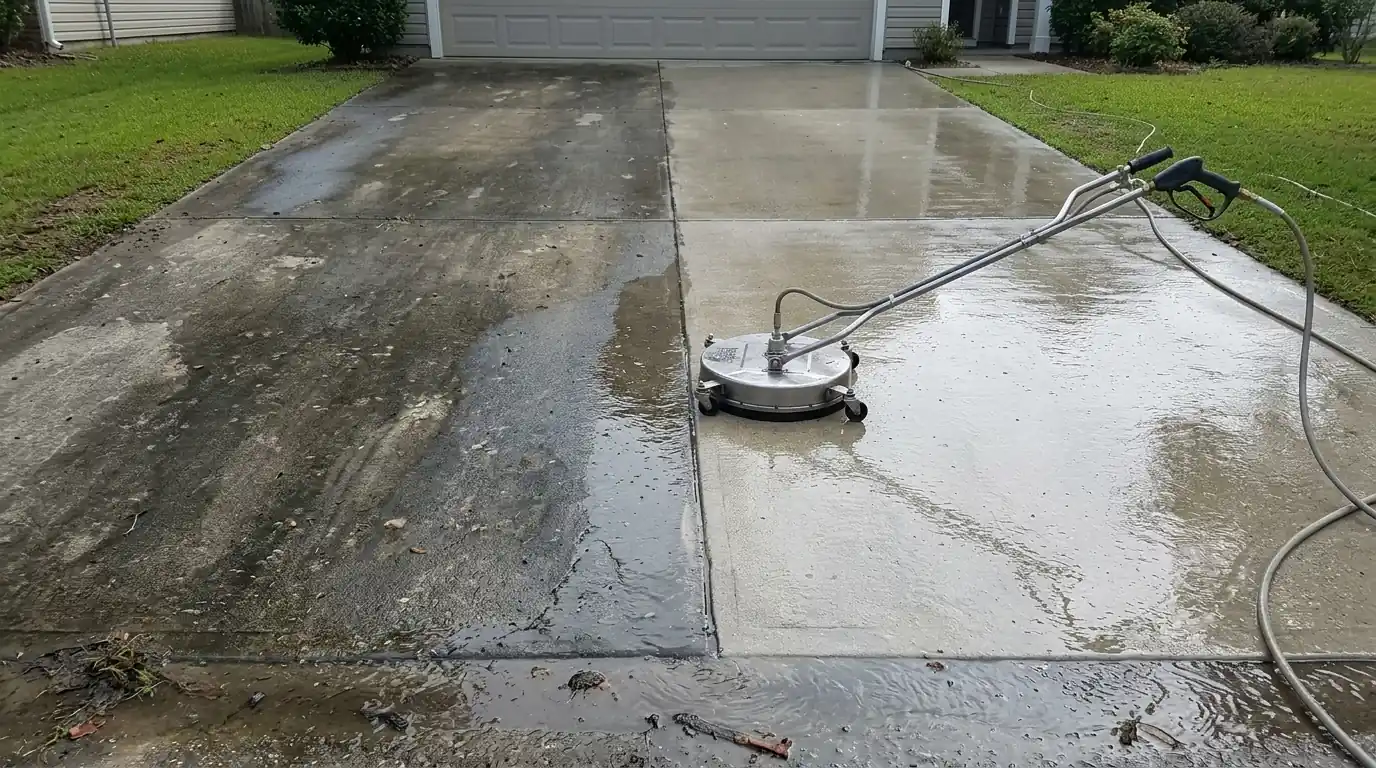
Soft wash for siding and pressure washing for concrete, clearing mildew, algae, pollen and red clay before paint or on its own.
Soffit & Fascia Painting
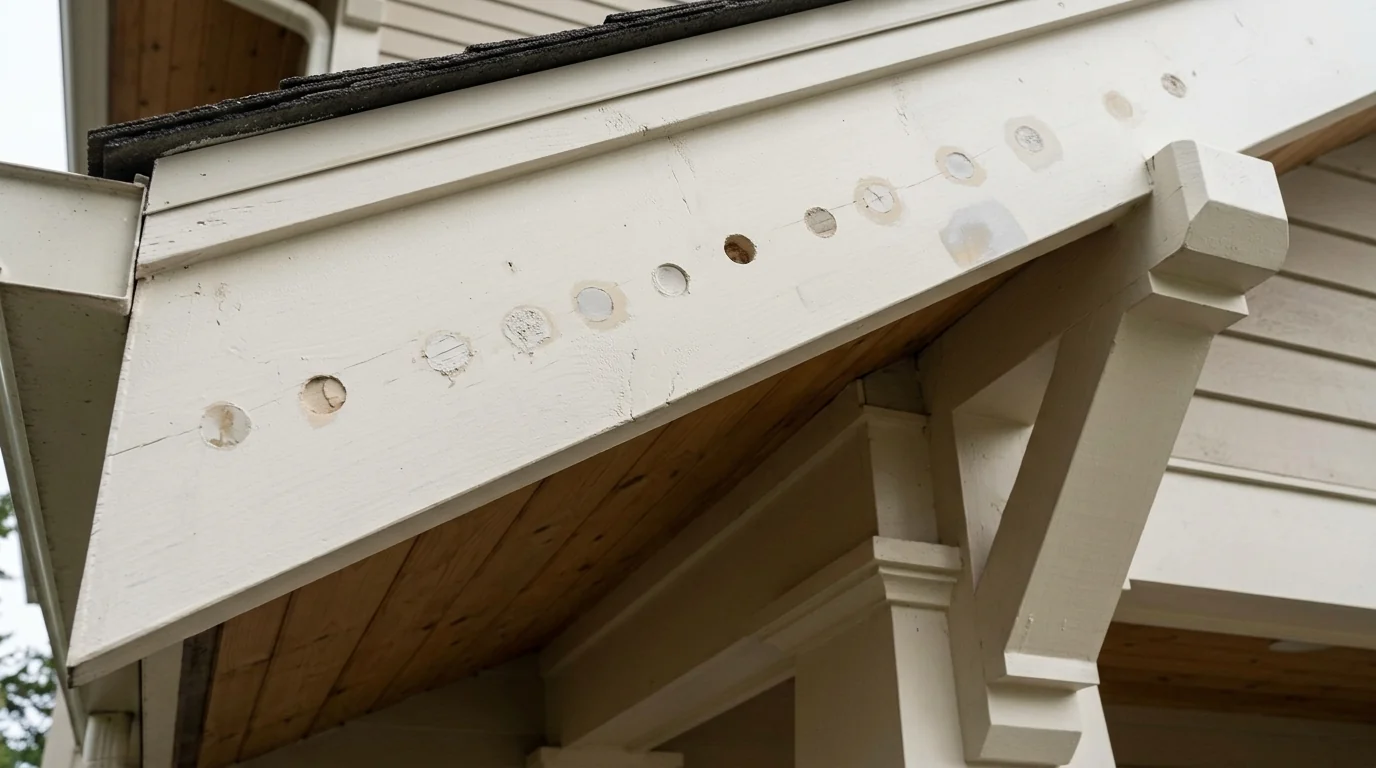
Painting soffits, fascia, rake boards and eaves, with rot repair at gutter lines and carpenter bee holes sealed before the finish coats.
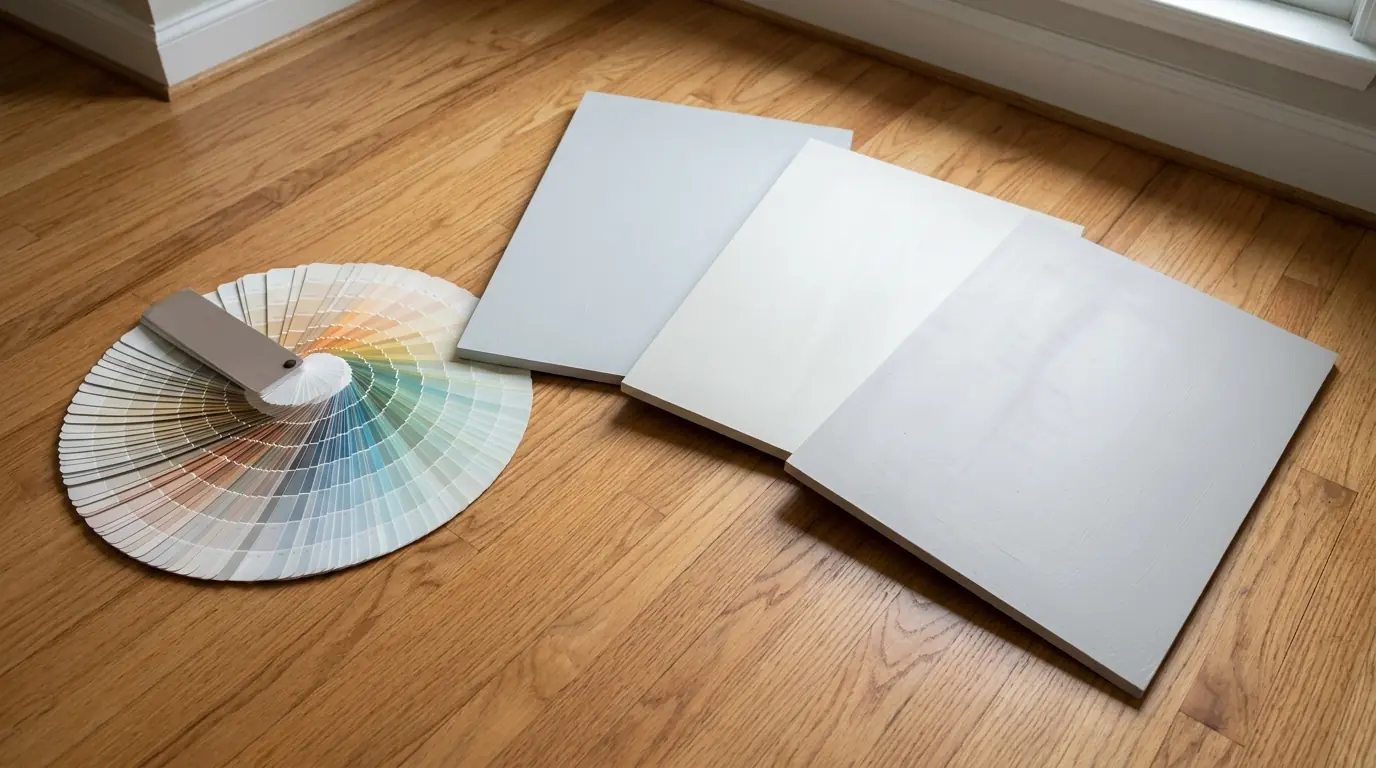
Color Consultation
Interior and exterior color selection with large sample boards, undertone and LRV checks, and whole-house palettes that work with your fixed finishes.
Talk through your stucco painting job
Call any time. We will ask a few questions, set a walkthrough time and put the scope and price in writing.