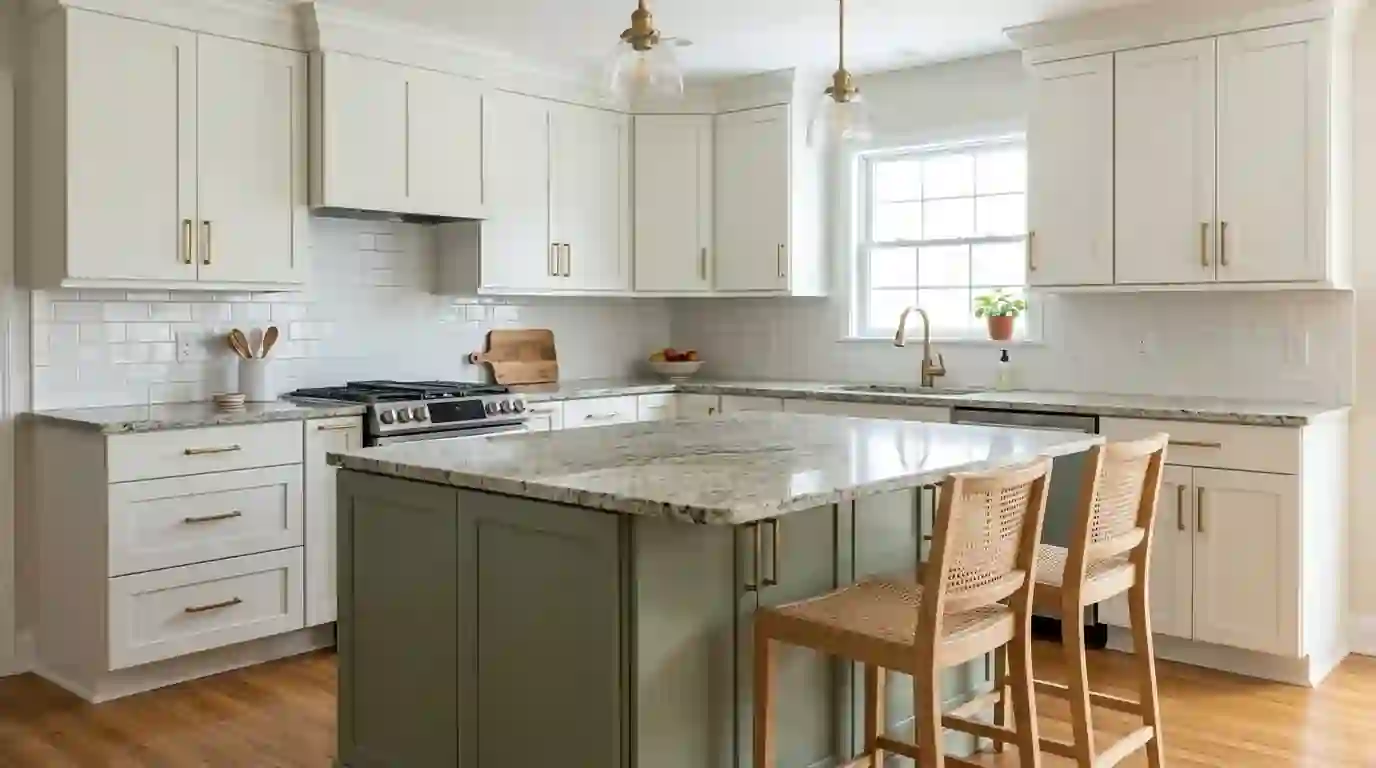
Painting makes sense when the cabinet boxes are solid wood or plywood, the layout works and you mainly want a new color. In Atlanta it typically runs $3,850 to $7,950 for an average kitchen, versus $14,650 to $38,900 or more to replace. Replacement wins when boxes are water-damaged, the doors are peeling laminate or thermofoil, or you want to change the layout.
What each option costs in a typical Atlanta kitchen
For a medium kitchen with 25 to 35 doors and drawer fronts, professional cabinet painting around the metro typically lands between $3,850 and $7,950. The spread comes from the number of pieces, whether the cabinets are stained oak with heavy grain, glazed or previously painted, the number of colors, and whether islands or built-ins are included.
Replacement sits in another bracket. Stock cabinets installed with new hardware often start around $14,650 for a similar kitchen, and semi-custom lines climb past $38,900 before countertops. New boxes usually mean new countertops, a backsplash and plumbing work, which is where kitchen budgets swell. For an itemized look at interior pricing, our price guide lays out the factors in more detail.
When painting makes the most sense
The ideal candidate is a kitchen built in the 1980s through 2000s with solid oak or maple doors and plywood or sturdy particleboard boxes that are still square and dry. Plenty of homes in the Atlanta suburbs fit that description: a good layout, quality wood, and a honey oak or cherry stain that feels dated.
Painting also fits when you plan to keep the countertops. Granite and quartz installed in the last fifteen years usually look fine against freshly painted cabinets, and painting avoids the risk of damaging stone during a tear-out. New hinges, soft-close hardware and pulls can be added during the job for a small extra cost.
- Solid wood or plywood boxes in good shape
- Layout that works for how you cook
- Countertops you want to keep
- Doors with a style you like, or a simple shaker profile
- A budget under about a third of replacement cost
When replacement is the smarter spend
Paint can't fix structural problems. If the sink base has swollen particleboard from a slow leak, if drawer boxes are falling apart, or if face frames have pulled loose, those issues stay after painting. Some of it can be repaired, but when several boxes are failing, new cabinets are usually the better investment.
Material matters too. Thermofoil doors, the vinyl-wrapped type common in 1990s kitchens, peel near the oven and dishwasher, and paint over them peels right along with the foil. High-gloss laminate is similar. Finally, if you want to move the sink, add an island or change the footprint, you're replacing cabinets regardless of their condition.
How a painted cabinet finish holds up
A cabinet finish depends on prep. We remove doors and drawer fronts, label each one, clean every surface with a degreaser, sand, and apply a bonding primer. For oak, a grain filler is an option if you want a smooth look instead of visible texture. Doors are sprayed in a controlled area, and boxes are brushed and rolled or sprayed in place with the kitchen masked off.
We use waterborne alkyd or urethane-modified enamels designed for cabinets, such as Sherwin-Williams Emerald Urethane or Benjamin Moore Advance. These level out smoothly and harden over a few weeks. Expect light care during the first month: gentle cleaning, no harsh scrubbing, and patience with doors that feel slightly tacky in humid weather.
Timeline and disruption compared
A cabinet painting job in an average kitchen usually takes five to eight working days. The kitchen stays usable in a limited way, and most families manage with a coffee maker and the microwave moved to another room. Doors go back on near the end, once the finish has hardened enough to handle hinges.
Replacement typically takes several weeks from tear-out to final trim, longer if countertops need templating or cabinets are back-ordered. Plumbing and electrical shutoffs, dust from demolition and a kitchen that's out of service for a month or more are normal parts of the process.
Making the decision for your kitchen
Start by checking the sink base. Open it, press on the bottom panel and look for swelling, soft spots or a musty smell. Then open and close every drawer and check whether doors hang straight. If the boxes pass, painting is likely a strong option.
Next, think about the whole room. Freshly painted cabinets can make tired walls and trim look worse, so many homeowners pair the cabinet job with repainting the kitchen walls or adjoining rooms. We'll walk through the kitchen with you, check the boxes and doors, and give a written estimate that spells out prep, products and the number of coats.