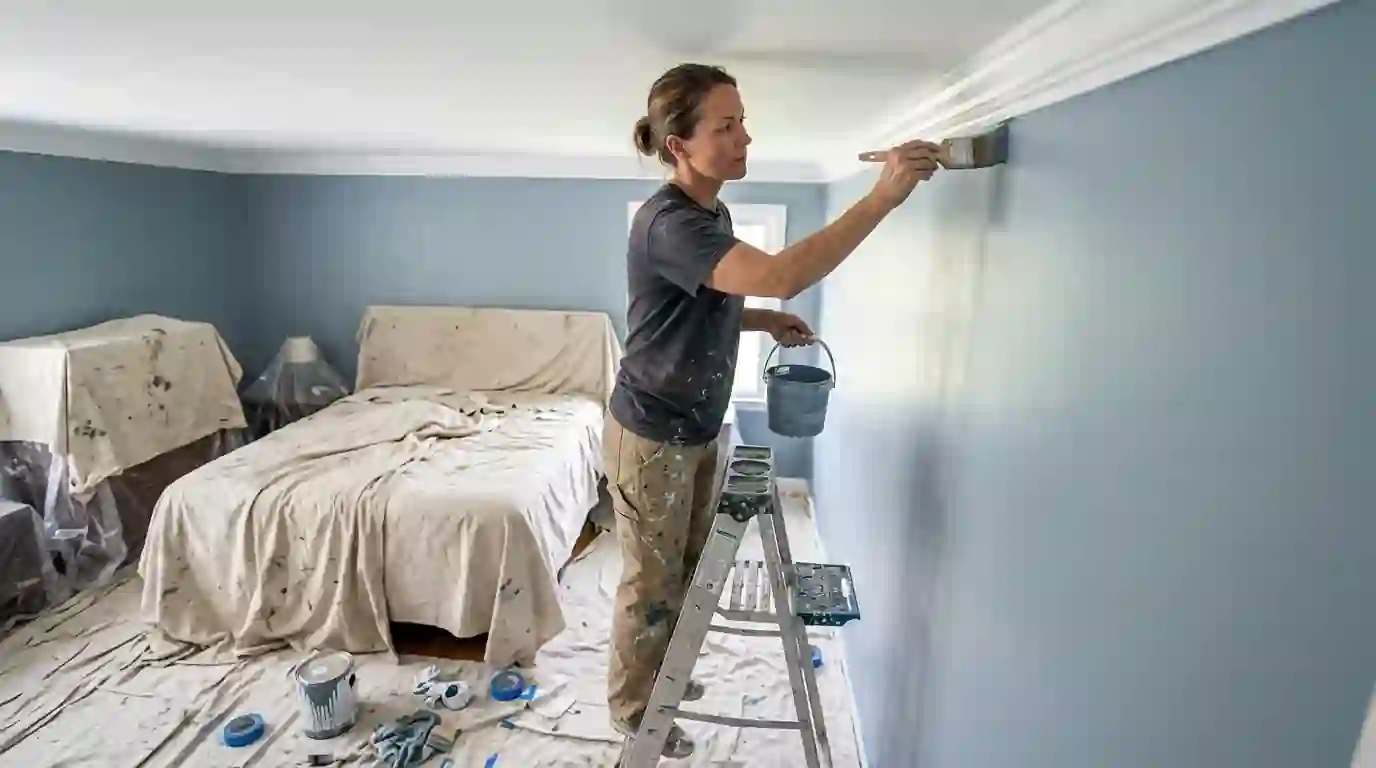
In 2026, painting a typical Atlanta bedroom of about 12 by 13 feet costs roughly $485 to $965 for walls only, and $865 to $1,690 with ceiling, trim and doors. Larger living rooms run higher. Price moves with ceiling height, wall repair, color changes, trim detail and how much furniture needs moving. A good estimate lists each item and the number of coats.
Typical price ranges for common rooms
Every room is different, but most fall into familiar ranges. These figures are what homeowners around the metro typically pay in 2026 for two coats of a quality paint with normal prep. They're not quotes, since your walls, trim and access all affect the number. For a fuller look at what goes into pricing, see our painting price guide.
Walls-only pricing assumes the ceiling and trim are in decent shape and staying the same color. Full-room pricing includes ceiling, baseboards, window and door casings, and doors.
- Small bedroom or office, walls only: $485 to $965
- Small bedroom, walls, ceiling, trim and door: $865 to $1,690
- Primary bedroom, full room: $1,240 to $2,385
- Living or family room, full room: $1,385 to $3,140
- Two-story foyer or great room: $1,875 to $4,460
What drives the price up or down
Labor is most of the cost, so anything that adds hours moves the price. Ceiling height is a big one: a room with 9 foot ceilings paints faster than one with a vaulted ceiling that needs planks or a lift. Trim detail matters, too. A room with crown molding, wainscoting and six-panel doors takes far more brush time than a room with plain baseboards.
Color changes add coats. Going from beige to a soft white usually takes two coats, but covering a deep red or navy may need a tinted primer and two finish coats. Furniture also counts. If we're moving a full bedroom set, a piano and a wall of shelves, that's real time compared to an empty room.
- Ceiling height and stair or vault access
- Amount of trim, crown and doors
- Drywall patching and caulking needed
- Big color changes or dark colors
- Furniture to move and cover
- Paint line chosen
Wall repair is the hidden variable
A wall can look fine until the lights are turned sideways. Nail pops, settled seams, old anchor holes and dents from doorknobs all need patching, sanding and priming before paint. In many Atlanta homes built in the 1990s and 2000s, we find nail pops along ceilings and corner cracks over doors as framing has settled.
Small repairs are part of normal prep. Larger work, like a water-stained ceiling, a cracked plaster wall in an older intown home or a big hole from a moved TV mount, is priced separately. If your room needs more than basic patching, drywall repair is listed as its own line so you can see what it adds.
How the paint line affects the total
Paint itself is a modest share of a room's price. Moving from a mid-grade line to a premium one like Benjamin Moore Regal or Sherwin-Williams Emerald might add $45 to $135 for a typical bedroom. That's small next to labor, and better paint often covers more evenly, cleans better and lasts longer.
Specialty finishes cost more. Bathroom paints with extra moisture resistance, scrubbable matte lines and deep accent colors that need special bases all add a little. For a single feature wall in a deep color, see our notes on accent walls, since those are often priced on their own.
How to read a painting estimate
A clear estimate tells you what's included and what isn't. Look for the rooms listed by name, which surfaces are being painted, the number of coats, the paint line and sheen, and what prep is included. If the estimate just says paint living room with a single number, ask for the details.
When comparing two estimates, line them up item by item. One may include ceilings and trim while the other covers walls only, or one may assume one coat where the other assumes two. Those differences explain most price gaps.
- Surfaces included: walls, ceiling, trim, doors
- Number of coats and whether primer is included
- Paint brand, line and sheen
- Prep: patching, caulking, sanding
- Furniture moving and cleanup
- What is not included
Ways to keep the cost reasonable
Bundling rooms brings the per-room price down, because setup, travel and cleanup are shared. Painting three bedrooms and a hallway at once usually costs less per room than painting them one at a time across a year. Keeping the same ceiling and trim color across the house speeds things up, too.
Clearing small items before we arrive saves time: pictures, lamps, shelf contents and anything fragile. Picking colors before the start date also helps. If the room's trim is in good shape and the color isn't changing, leaving it out is a fair way to save.
Timing can help, too. Interior work is busiest in the weeks before the holidays and in late summer when families prepare for school. Winter and early spring often have more open dates, and pollen season is a natural time to keep work indoors. Ask about scheduling flexibility during the walkthrough if your dates are open.