Use flat on ceilings, matte or eggshell on living rooms and bedrooms, satin on hallways, kids' rooms and bathrooms, and semi-gloss on trim, doors and cabinets. Gloss suits front doors, railings and furniture. Higher sheen cleans more easily but shows wall flaws and touch-ups, while lower sheen hides imperfections. Atlanta humidity pushes bathrooms and basements toward satin with mildew-resistant paint.
How sheen changes durability and what you see
Sheen describes how much light a dried paint film reflects. Flat paint scatters light, so it looks soft and hides bumps, patches and uneven drywall. As the sheen climbs through matte, eggshell, satin, semi-gloss and gloss, the film becomes tighter and smoother, which makes it easier to wipe clean but also makes every flaw underneath more visible.
One thing that surprises homeowners: sheen names aren't standardized. One brand's eggshell can look close to another brand's satin. When we match an existing wall, we read the label on the old can if you have it, or we test a small area, because guessing by name alone often leaves a touch-up that shines differently from the rest of the wall.
Flat and matte for ceilings and calm rooms
Ceilings get flat paint in nearly every house we paint. Light from windows and fixtures rakes across a ceiling at a low angle, and any shine would light up every seam, nail pop and roller lap. Flat also hides the slight waves that are common in older plaster. If your ceiling has water stains or patches, we prime those first, then roll the ceiling in a flat finish.
Matte is our usual choice for living rooms, dining rooms and adult bedrooms. Newer matte lines from Benjamin Moore and Sherwin-Williams clean up far better than the flat wall paints of twenty years ago, so a scuff from a chair can come off with a damp cloth. Matte also looks rich in deep colors without the plastic shine that higher sheens give them.
Eggshell and satin for busy living spaces
Eggshell sits one step up from matte, with a faint glow when light hits it. It's a good middle ground for family rooms, home offices and dining rooms that see real use. Fingerprints and light marks wipe off easily, yet the wall still looks soft. Most of the interior walls we repaint in Atlanta homes end up in either matte or eggshell.
Satin is tougher and a bit shinier. We recommend it for hallways, mudrooms, stairwells, laundry rooms and children's bedrooms, where hands, backpacks and toys hit the walls every day. Satin stands up to regular scrubbing. The tradeoff is that it shows drywall texture, patches and roller marks more than eggshell, so the wall prep has to be good.
Semi-gloss and gloss for trim, doors and cabinets
Trim, baseboards and interior doors take a beating from vacuums, shoes and pets, and they need a finish that can be wiped down repeatedly. Semi-gloss is our default for trim and doors. It also gives a crisp line where the trim meets a flatter wall, which makes the woodwork stand out the way most homeowners want.
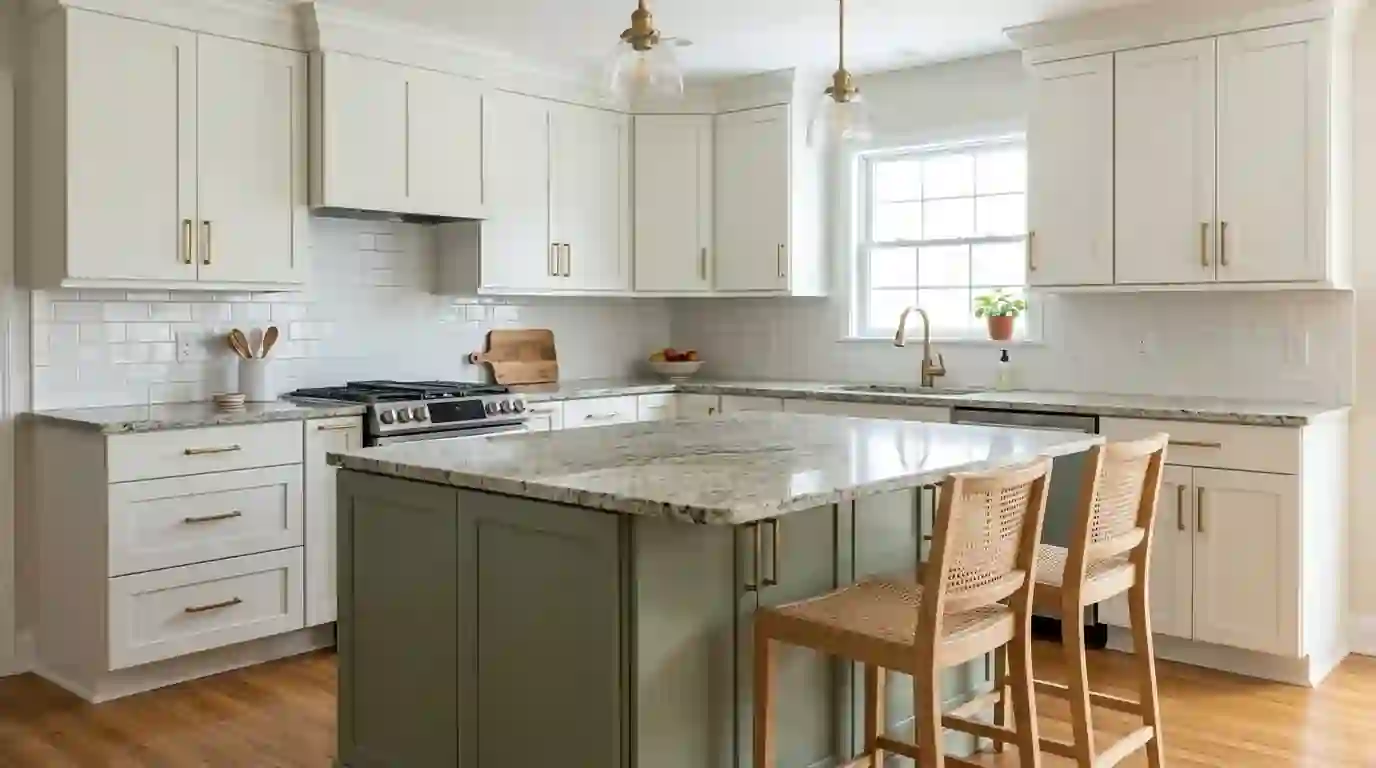
Gloss is the most reflective and hardest finish. It works on front doors, stair railings and painted furniture, where a rich, lacquer-like look is the goal. It's unforgiving, though, since every brush mark and dent shows. For kitchen cabinets, we typically use a satin or semi-gloss in a waterborne enamel built for hard use rather than a full gloss.
Kitchens, bathrooms and basements in humid Atlanta houses
Moisture changes the sheen choice. A bathroom with a shower runs warm and damp for part of every day, and Atlanta summers add humidity on top of that. Satin or semi-gloss sheds water better than flat, and we pair it with a paint that carries mildew resistance. Kitchens get the same thinking around the stove and sink, where grease and splashes need to wipe off cleanly.
Basements sit in their own category. Concrete and block walls can carry moisture from the soil, and finished basements in Atlanta often feel damp in July. For basement walls, we look at moisture first, then pick a product and sheen suited to the surface. A satin in a finished basement is easy to clean, while bare masonry may need a breathable coating instead.
Mixing sheens without a patchy look
Using several sheens in one room is normal: flat ceiling, eggshell walls, semi-gloss trim. Trouble starts when two sheens end up on the same wall, usually from a touch-up with a different can. The patch catches light differently and flashes, even if the color is a perfect match. The fix is to repaint the wall corner to corner in a single sheen.
Here's a simple starting point we use with homeowners, adjusted to each house and how the family lives in it.
- Ceilings: flat
- Living and dining rooms, adult bedrooms: matte or eggshell
- Hallways, kids' rooms, laundry: satin
- Bathrooms and kitchens: satin with mildew resistance
- Trim, doors, baseboards: semi-gloss
- Front door, railings, furniture: semi-gloss or gloss