In Georgia, wood siding typically needs repainting every 5 to 8 years, fiber cement every 10 to 15, painted brick and stucco every 8 to 15, and exterior trim and doors every 4 to 7. South and west walls fade and crack first, while shaded north walls grow mildew. Chalking, peeling, open caulk joints and bare wood are the clearest signs it's time.
Typical repaint cycles by surface
No two houses age at the same rate, but after enough Atlanta jobs, patterns show up. The surface underneath matters most, followed by sun exposure, the quality of the last paint job and how well water is kept off the walls. The ranges below are what we commonly see on homes around the metro when a quality acrylic was applied over good prep.
If your home is at the short end of these ranges, the cause is usually something we can see: thin coats, skipped primer on bare wood, missing caulk or water from gutters and sprinklers. A well-prepped repaint often lasts longer than the one before it.
- Wood lap siding and shakes: 5 to 8 years
- Fiber cement siding: 10 to 15 years
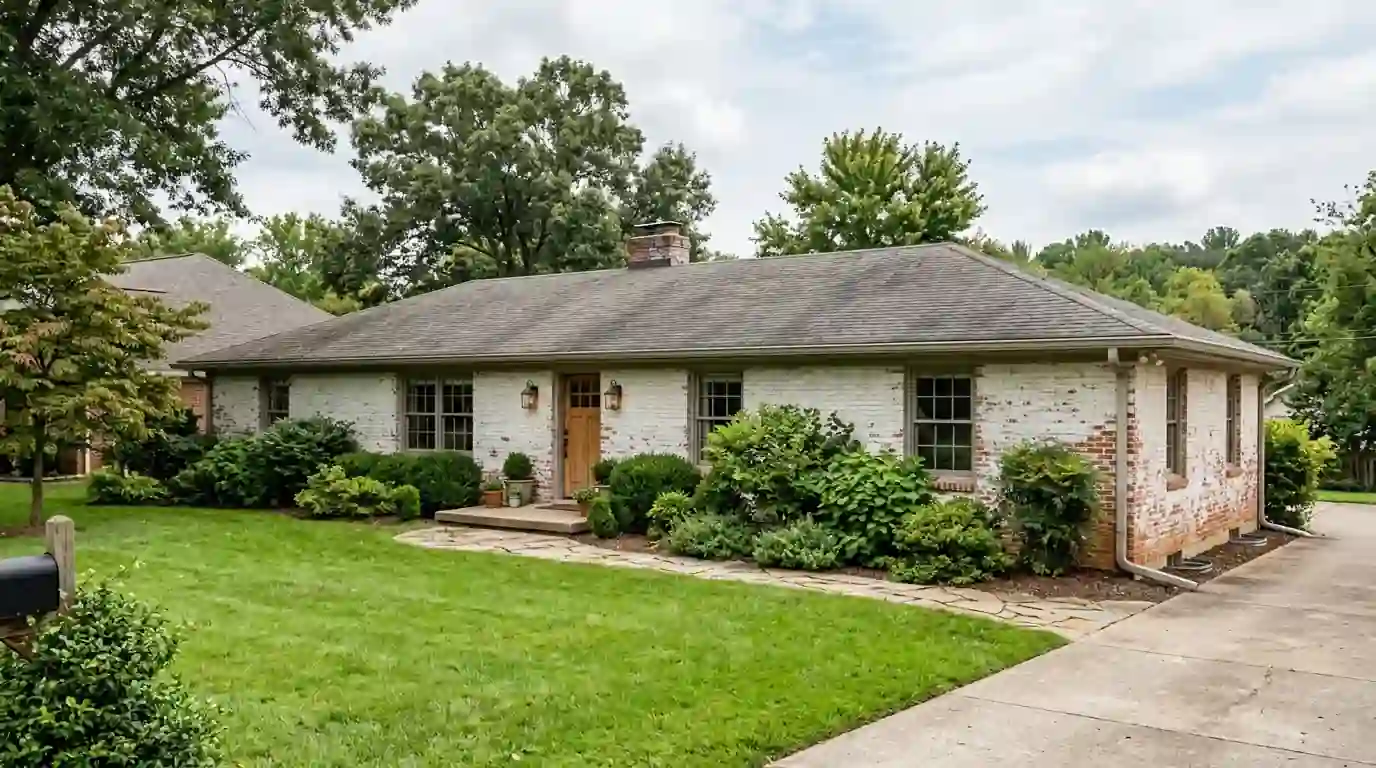
- Painted brick: 10 to 15 years
- Stucco and EIFS: 8 to 12 years
- Painted vinyl siding: 8 to 12 years
- Trim, fascia and doors: 4 to 7 years
Sun exposure matters more than the calendar
Walk around almost any Atlanta house that's due for paint and you'll see two different houses. The south and west sides look faded and chalky, with cracking on trim and window sills. The north side may still look decent apart from some mildew. Ultraviolet light breaks down the binder in paint, and the afternoon sun in a Georgia summer is relentless on west-facing walls.
Color plays a part too. Dark blues, greens and charcoals absorb more heat and fade faster than light neutrals, and their fading is easier to spot. That doesn't mean you should avoid dark colors. It means picking a paint line with strong fade resistance, and expecting those sunny walls to need attention a little sooner than the shaded ones.
Humidity, shade and red clay at the base of the wall
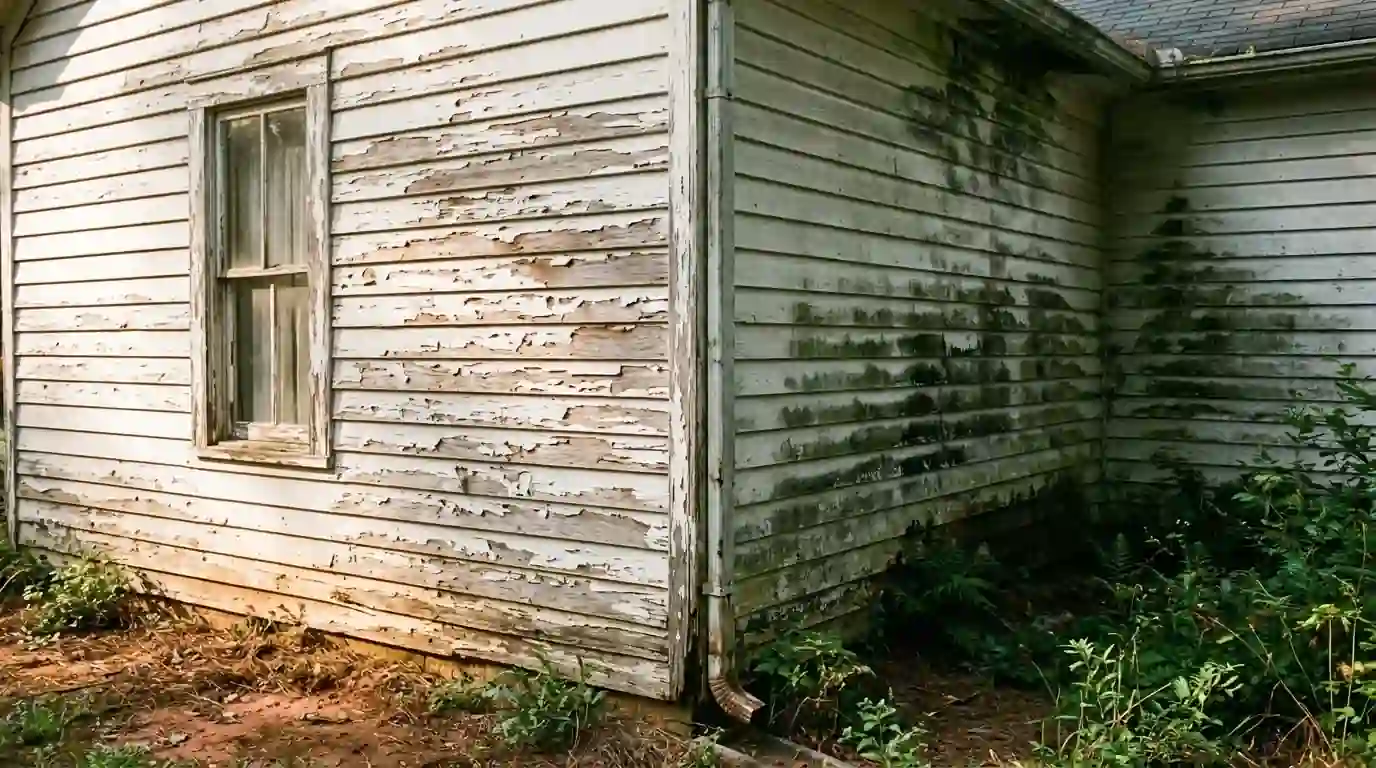
Shade brings different problems. Under Atlanta's tree canopy, north and east walls can stay damp for most of the day, and that moisture feeds mildew and algae. Paint on a constantly damp wall loses adhesion faster, and wood trim stays wet long enough to start rotting at joints and sills.
The bottom few feet of a house take their own beating. Rain splashes red Georgia clay onto lower siding and foundation trim, staining light colors and holding moisture against the surface. Sprinklers aimed at the house do the same. When we see peeling only along the bottom courses of siding, water from splash or irrigation is almost always the reason, and carpenter bees in nearby trim often add to the damage.
Signs it's time to repaint
Waiting too long is the expensive mistake. Once paint fails and bare wood is exposed, water gets in, and a straightforward repaint turns into a repaint plus carpentry. The signs below are worth checking each spring, ideally after you've rinsed off the pollen.
One easy test is to rub your palm across a sunny wall. If it comes away coated in powdery color, the paint is chalking, which means the binder is breaking down and the film is getting thin. Light chalking can be washed and painted over. Heavy chalking needs a bonding primer, or the new coat won't stick.
- Heavy chalking that coats your hand
- Cracking or peeling on trim, sills and fascia
- Open or split caulk around windows and corners
- Bare or gray wood showing through
- Mildew that returns within weeks of a wash
- Faded patches on south and west walls
How prep and product choice stretch the cycle
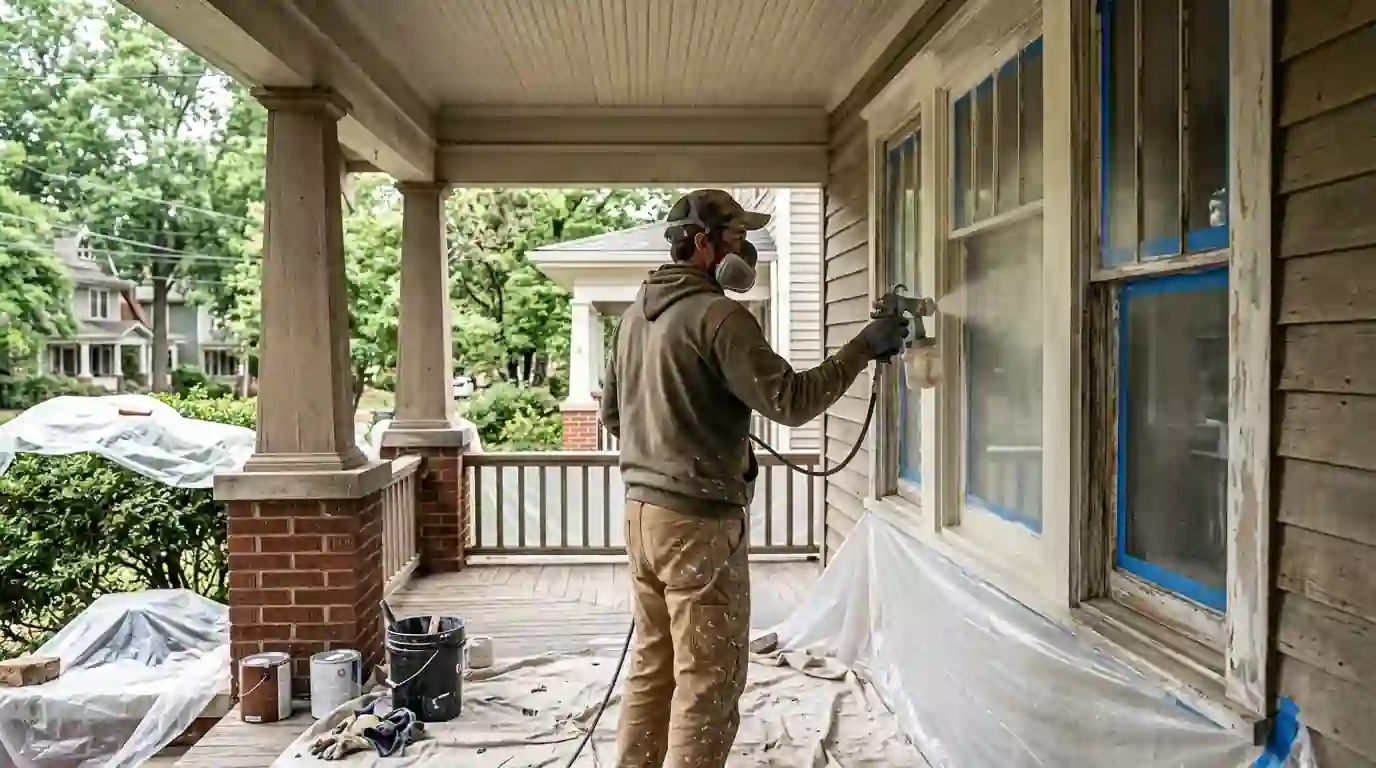
Most of a paint job's lifespan is decided before the finish coat goes on. We wash the house, scrape and sand loose paint, spot-prime bare wood, replace failed caulk and swap out rotten boards. On an exterior repaint, two finish coats of a quality 100 percent acrylic give a much thicker film than one, and film thickness is a big part of how long paint lasts in the sun.
Rotten wood can't be painted back to health. When a probe sinks into a sill or fascia board, we cut it out and replace the soft section before priming. Fiber cement and brick have their own needs, such as alkali-resistant primers on new masonry and breathable coatings where moisture moves through the wall.
Small maintenance between full repaints
A full repaint every few years isn't the only option. A gentle house wash each year or two removes pollen, clay and early mildew before they shorten the paint's life. Around year four or five, a trim-only repaint of the sunny sides often buys several more years before the body of the house needs attention.
Keep gutters clear, point downspouts away from the foundation and aim sprinklers at the lawn instead of the siding. Recaulk small gaps as they open. These small habits are cheap, and they're the difference between a paint job that lasts seven years and one that lasts ten.