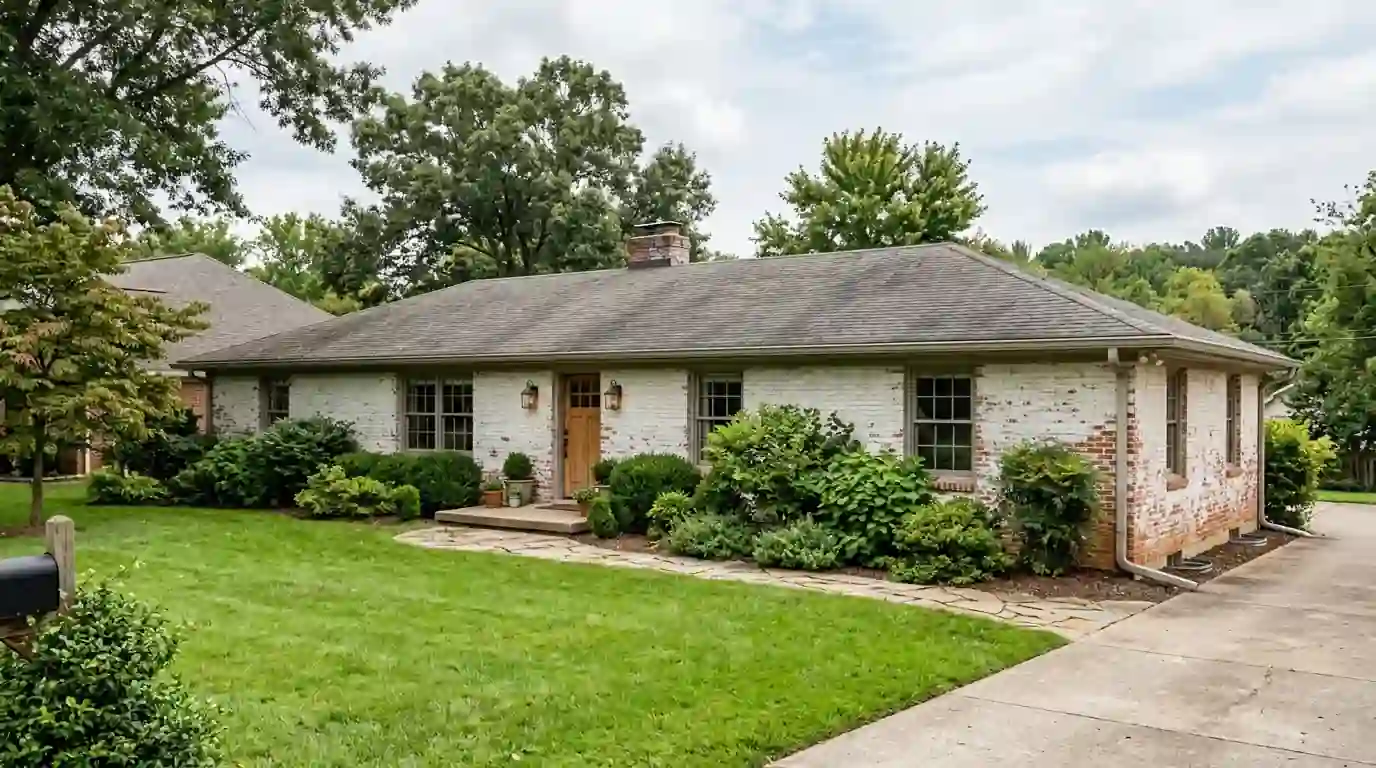
Painted brick gives solid, even color and the most change, but it's permanent and needs repainting every 10 to 15 years. Limewash soaks into the brick, wears into a soft, aged look and can be partly removed when fresh. Mortar wash leaves a rough, partial cover that's close to permanent. Choose based on how much brick you want showing and how much upkeep you'll accept.
Three ways to change the color of brick
A lot of Atlanta homes have brick that works hard but doesn't look the way the owners want: orange 1960s ranch brick, a mismatched addition, or a dark red front that clashes with a newer roof. Homeowners who want a change usually land on one of three approaches, and they behave very differently over time.
Paint forms a film on the surface and covers the brick completely. Limewash is absorbed into the brick and wears away slowly, letting some original color show through. Mortar wash, often called German smear, spreads a thin layer of mortar over the face and leaves patches of brick exposed. The look you want and how permanent you're willing to go should decide the method.
Painted brick gives full coverage and a long commitment
Painting gives the most dramatic change. A white, gray or deep charcoal brick house reads as a completely different home, and the color is even from corner to corner. For painting the brick, we use breathable masonry coatings, often a mineral-based paint or a masonry acrylic made to let water vapor escape. Sealing moisture inside brick is how you get peeling and spalled faces later.
The tradeoff is permanence. Once paint goes into the pores and mortar joints, getting back to bare brick takes chemical stripping that is messy, slow and rarely perfect. Painted brick also joins the repaint cycle, usually every 10 to 15 years on our sunny walls, plus touch-ups where gutters overflow or sprinklers hit.
Limewash is soft, mottled and meant to wear
Limewash is lime mixed with water and natural pigments. It soaks into porous brick rather than sitting on top, so the finish looks chalky, matte and slightly uneven. Over the years, rain wears it back in places and the brick shows through more, which many people want. Products like Romabio's limewash line are common choices for this look.
One advantage is control. For the first few days, fresh limewash can be partly washed back with water to show more brick, so the final look can be adjusted while it's still curing. It needs bare, unsealed brick to bond, though, so limewash won't work over old paint or water-repellent sealers without stripping first.
Mortar wash and the German smear look
Mortar wash spreads a thin coat of mortar across the brick face, then knocks some of it back so patches of brick show through. The finished look is heavier and more textured than limewash, a little like old-world stone. It works well at hiding mismatched brick from an addition or rough patches where the brick was repaired.
Because it's a cement-based layer fused to the brick, mortar wash is close to permanent. Removing it means grinding or heavy chemical work. On the plus side, it needs little upkeep once cured. We usually do a test panel first so you can see how much brick you want left showing.
Moisture, upkeep and Atlanta brick
Brick in Atlanta deals with a lot of water: humid summers, heavy storms, and clay soil that stays wet against foundations. Whatever you choose has to let moisture move out of the wall. White powdery deposits called efflorescence mean water is coming through the brick, and the cause should be fixed before any coating goes on.
Upkeep differs a lot by method. Paint asks for a full repaint every decade or so. Limewash asks for a refresh coat on worn spots every 5 to 7 years if you want to keep the same look. Mortar wash asks for almost nothing.
Cost follows the same pattern. Painting and limewash usually land in a similar range per square foot, because both need washing, joint repair and two coats, while mortar wash takes more hand labor and often runs higher. On a typical one-story brick ranch, the difference between methods is smaller than the difference made by how much repair the brick needs first, so that walkthrough matters more than the product.
- Painted brick: full coverage, permanent, repaint every 10 to 15 years
- Limewash: soft and aged, adjustable when fresh, refresh every 5 to 7 years
- Mortar wash: textured partial cover, close to permanent, minimal upkeep
- All three: need clean, dry brick and good drainage first
Test panels before you commit
We almost always start with a test area on a less visible wall, often beside the garage or on the back corner. Seeing limewash next to paint on your actual brick, in your own light, settles more questions than any photo online. Brick color, texture and porosity change how each product looks.
If you're still torn between colors, a color consultation helps narrow choices against your roof, windows and landscaping. Then we wash the brick, let it dry fully, repair cracked mortar joints and apply the method you've picked.