Shaded Atlanta walls grow mildew and algae because they stay damp after rain, dew and humid nights, and pollen and dirt give spores something to feed on. Before painting, we kill growth with a diluted bleach or mildewcide wash, rinse at low pressure and let the siding dry. Mildew-resistant paint helps, but cutting back shade and fixing water sources matters most.
Why shaded walls in Atlanta grow mildew and algae
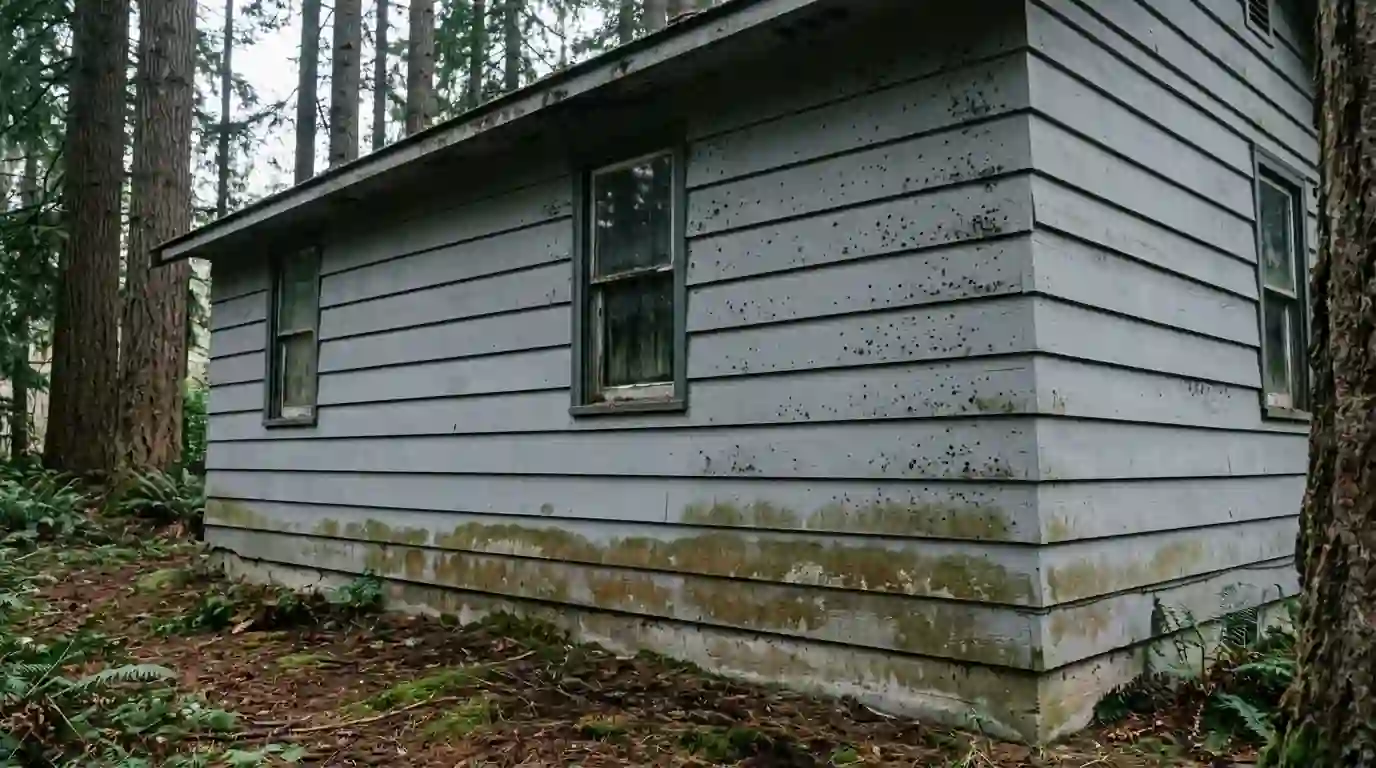
Atlanta's tree canopy is one of the reasons people love living here, and it's also why so many north and east walls turn black or green. A wall that sits in shade under oaks and pines dries slowly after rain, holds dew into the late morning and stays damp on humid summer nights. Mildew and algae need moisture and a bit of food, and that wall gives them both.
The food comes from what settles on the paint: pine pollen in spring, dust, sap and organic debris dropping from branches. Wall areas behind shrubs, near downspouts and above sprinkler heads stay wettest and grow the most. Some paints also contain ingredients that growth can feed on, especially older flat finishes that hold dirt.
Mildew, algae or dirt: how to tell them apart
Mildew is usually black or dark gray and appears in speckled patches, often starting on the bottom edges of siding laps and under eaves. Algae is green, soft and filmy, and it tends to spread evenly across damp, shaded walls. Plain dirt and red clay splash are concentrated near the ground and wipe off with soap and water.
A quick test helps. Put a few drops of diluted household bleach on the dark spot. If it lightens within a minute or two, it's mildew or algae. If it doesn't change, you're looking at dirt, soot or a stain in the paint. Knowing which one you have decides how we clean.
Surface type changes the picture too. Rough cedar shakes and textured stucco hold spores in every crevice, so they grow back faster than smooth fiber cement or vinyl. Synthetic stucco (EIFS) on 1990s and 2000s homes often shows green streaks below windows where water runs off the sills. On those walls we use softer brushes and lower pressure, since the finish coat on EIFS is thin and easy to damage.
- Black or gray specks: mildew
- Green or yellow-green film: algae
- Reddish-brown band near the ground: clay splash
- Dark streaks below gutters: runoff and dirt
How we clean siding before painting
Paint applied over live mildew doesn't stop it. The growth keeps spreading underneath and shows through within months, and it weakens the bond between the new paint and the wall. That's why cleaning comes first on every exterior paint job we do on shaded houses.
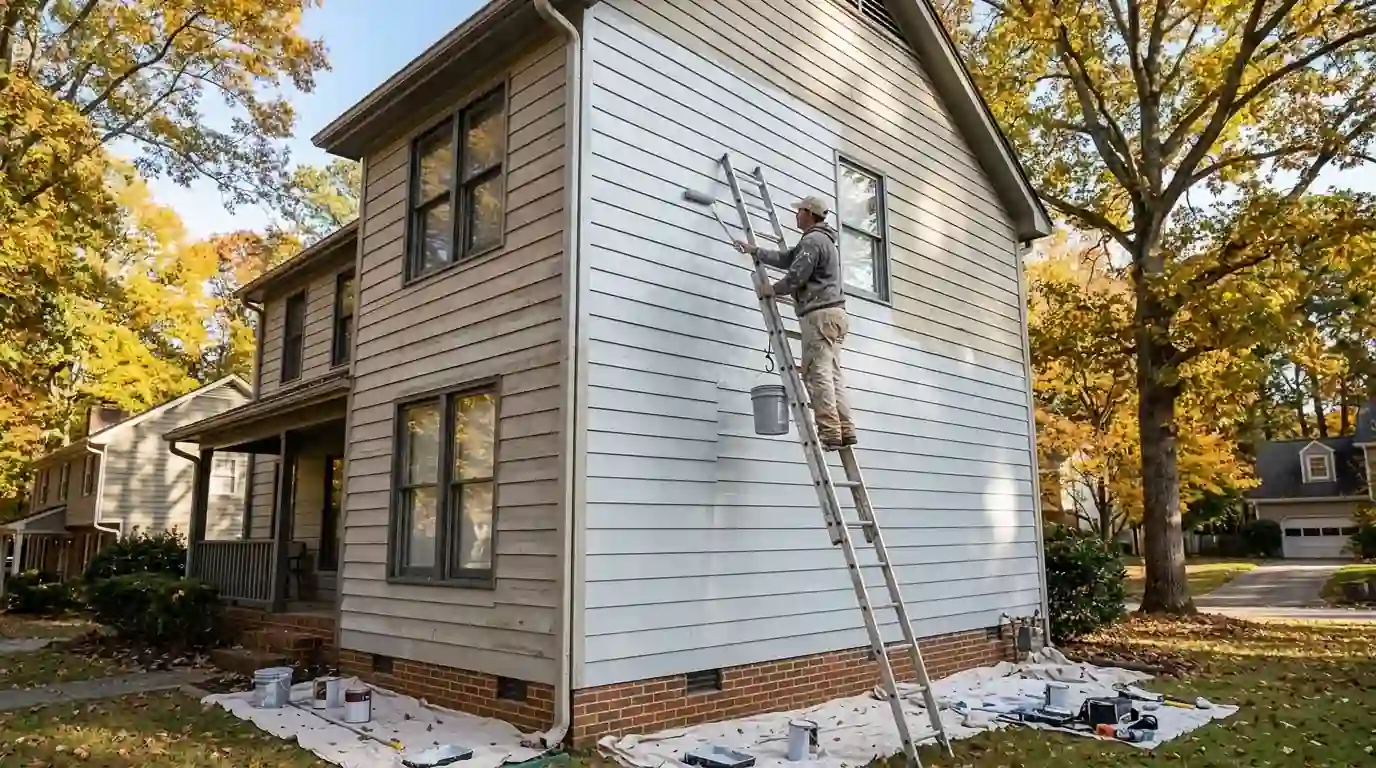
We apply a cleaning solution of diluted sodium hypochlorite, which is bleach, with a mild detergent, or a dedicated mildewcide cleaner, then let it dwell for several minutes. Plants are wet down before and after so they aren't harmed. Then we rinse with a low-pressure wash from the top down, which is gentler on siding and caulk than high-pressure blasting.
Drying time and prep after the wash
Shaded walls are slow to dry, which is the whole reason they grow mildew. After washing, we give them at least one full dry day, often two in humid weeks. Painting on damp siding traps moisture under the film and invites both peeling and new growth.
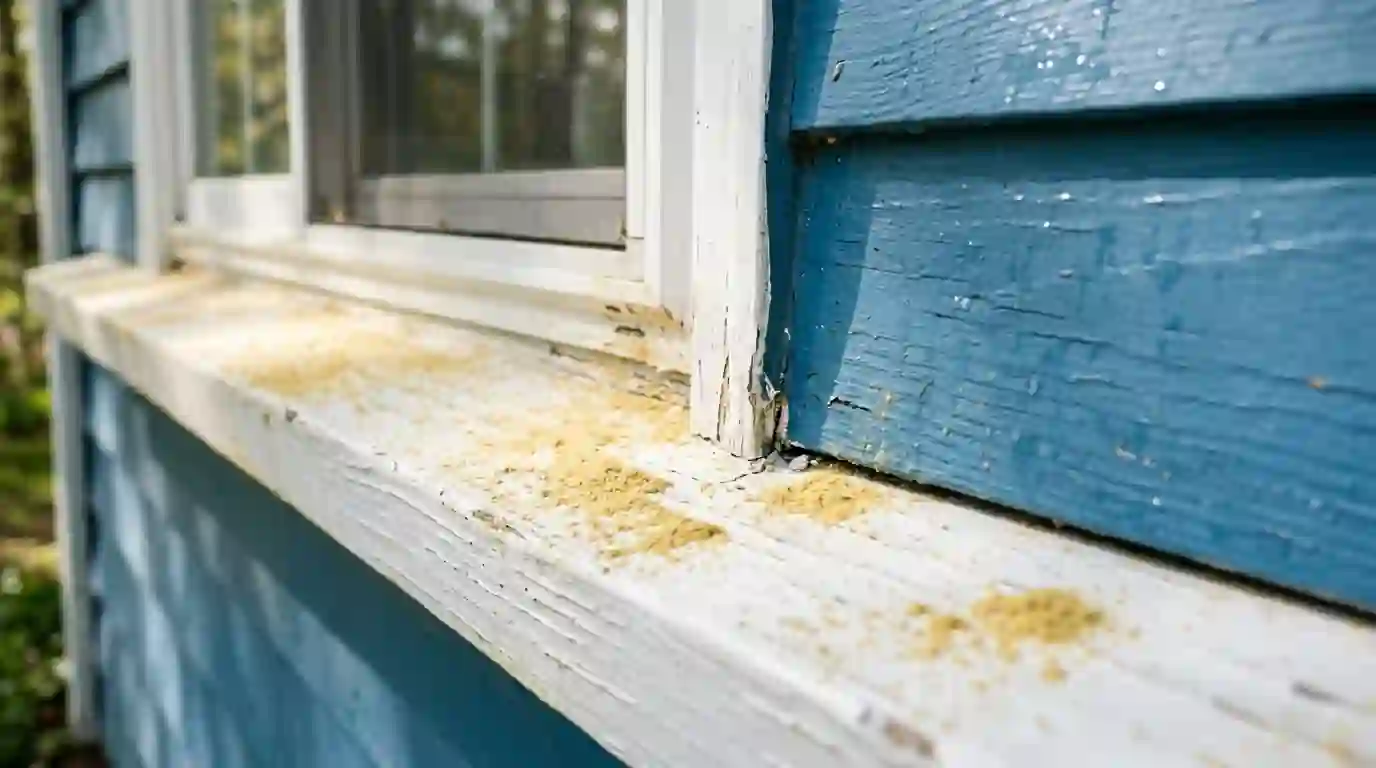
Once the walls are dry, we look closely at the areas where growth was heaviest. Wood trim and siding boards that stayed wet for years often hide soft spots, especially at the bottom edges and around window sills. We probe them, replace rotten sections, and prime any bare wood before caulking and finish coats.
What mildewcide additives can and can't do
Most quality exterior paints already contain mildewcides. Additional additives can be stirred into paint for extra protection in tough spots. They help slow regrowth, but they don't kill existing mildew, and they lose strength over a few years as rain leaches them out.
Sheen and color also matter. Satin and low-luster exterior finishes shed dirt and water better than flat, which gives mildew less to hold onto. Lighter colors show growth sooner, but dark colors aren't immune. We usually recommend a satin acrylic with built-in mildew resistance for the shaded sides of a house.
Primer is part of the system as well. On bare wood or patched areas that had heavy growth, we use a stain-blocking exterior primer so any faint shadow left after cleaning doesn't bleed through the topcoat. The whole house then gets two finish coats, since a thicker film holds up longer against damp air than a single thin coat stretched across the siding.
Keeping growth from coming back
Fixing the conditions works better than any additive. Trim back tree limbs that overhang the roof and keep shrubs 18 inches or more from the siding so air can move. Clean gutters and extend downspouts so water drains away from the walls. Aim sprinklers at lawns and beds, not the house.
A light wash every year or two keeps new growth from getting established, especially on the north side. If the same patch grows back quickly, look for a moisture source: a leaking gutter seam, a clogged downspout or a sprinkler head hitting the wall. Fixing these protects the paint and, in turn, the wood beneath it. Shaded fences and decks benefit from the same approach, and a fence stain with mildew resistance helps there.