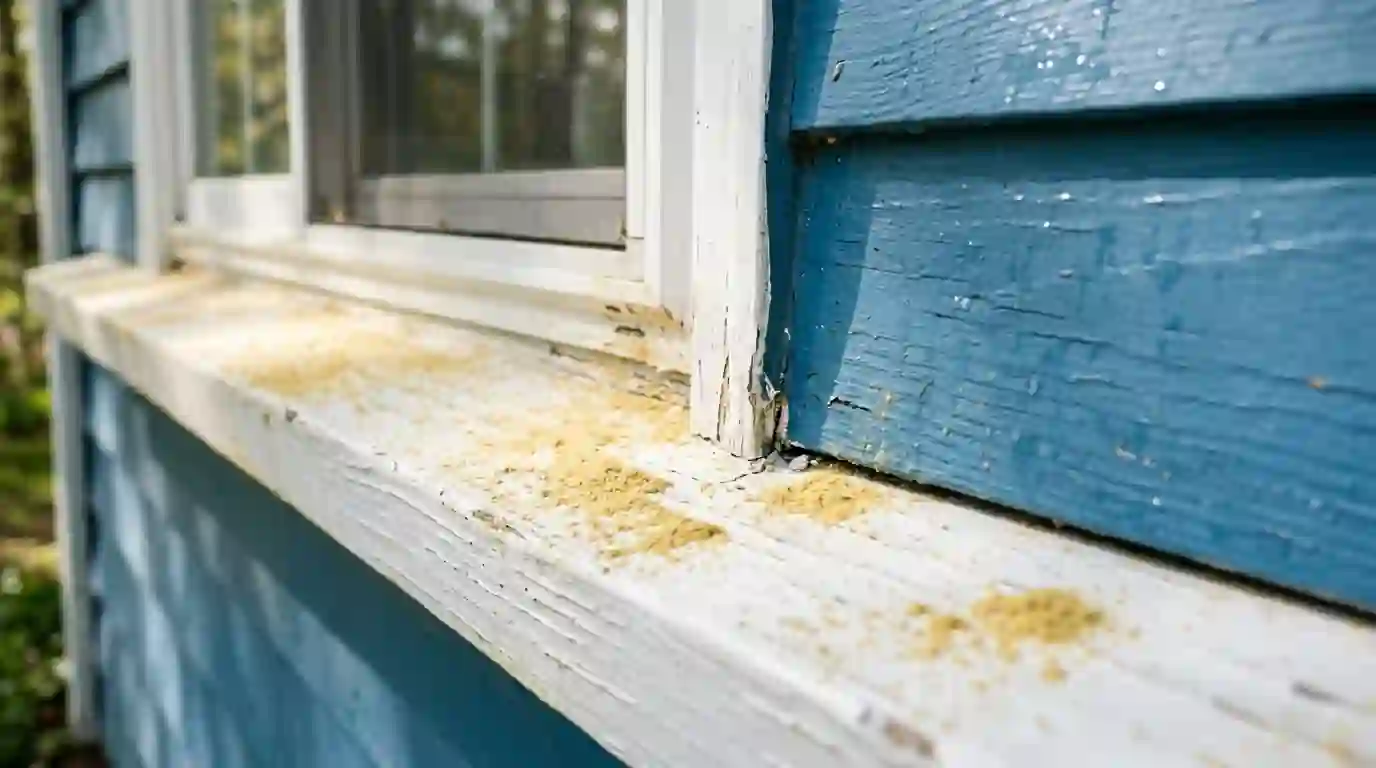
Pine pollen lands in wet paint and stays there, leaving gritty texture and a yellow cast on light colors. It also coats washed siding before primer goes on, which weakens adhesion. During peak pollen, roughly March into April, we either rewash and wipe surfaces right before painting or move the project to interior rooms and save the exterior for late April onward.
What pine pollen does to wet paint
Fresh paint stays soft for a while after it looks dry. During that window, anything that lands on it sticks, and in an Atlanta spring that mostly means pine pollen. On a calm morning the coating is light, but a breezy afternoon can dust a freshly painted door or window sill so thoroughly that the finish feels like fine sandpaper once it cures.
Light colors show it most. White trim and pale siding can pick up a faint yellow cast, especially on horizontal surfaces where pollen piles up. Pollen also holds moisture and gives mildew something to feed on, so a gritty finish on a shaded wall tends to darken faster over the following summer. None of this ruins a house, but it shortens the life of a paint job we want to last for years.
Prep is where pollen does the most damage
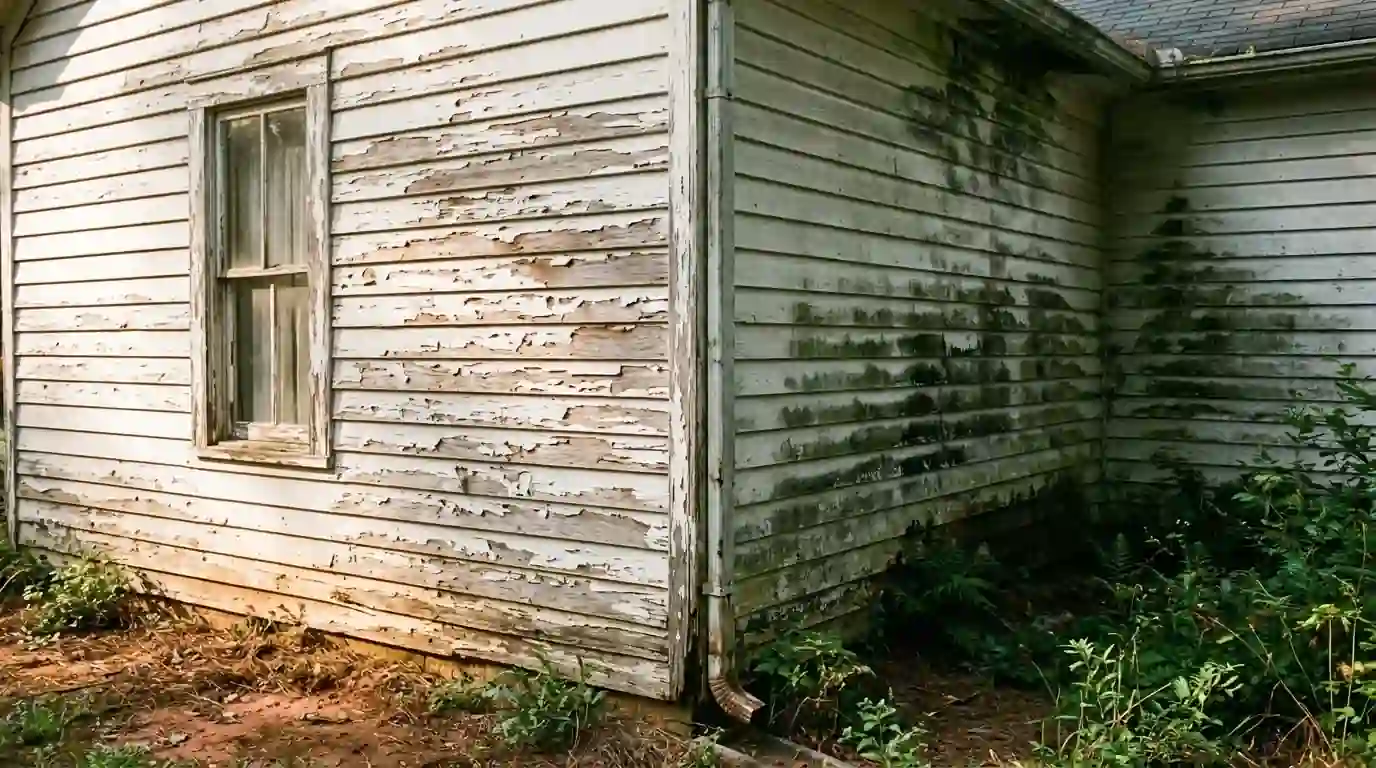
Most people picture pollen landing on the topcoat, but the bigger problem shows up earlier. We wash a house so the primer and paint can grip clean siding. If the siding dries and then sits for two days under falling pollen, we're priming over a dusty yellow layer instead of bare surface. Paint applied over that dust can peel in sheets later, because it was never truly gripping the wall.
Caulk is another weak point. Pollen that blows into an open joint before caulk goes in keeps the caulk from sticking to both sides, and the bead pulls loose in the first hot summer. Sanding dust mixed with pollen also clogs sandpaper and smears across trim. In heavy weeks, we wipe joints and trim with a damp cloth right before each step.
How we time the wash before painting
Outside pollen season, a house can be washed a few days ahead of painting with little risk. In spring we shorten that gap. Our goal is to wash the siding no more than a day or two before primer goes on, and on heavy pollen days we rinse again with a garden hose the morning of, then give the surface time to dry fully before anything is applied.
We check readiness with a simple test: wipe a dark cloth across the siding at hand height. If it comes back yellow, the wall isn't ready. That extra rinse costs us an hour or two, but it's far cheaper than scraping off peeling paint a year later.
- Wash the house within a day or two of priming
- Rinse again the morning of painting if pollen has settled
- Let siding dry completely before primer or caulk
- Wipe-test with a dark cloth before each coat
- Paint horizontal surfaces last, ideally on calm days
Which surfaces we hold back on windy pollen days
Not every surface reacts the same way. Porch floors, deck rails, window sills, handrails and the tops of fence boards catch far more pollen than vertical siding, because it settles straight down onto them. On a windy spring day we keep the brushes on vertical walls and leave those flat surfaces for a calm, damp morning or for later in the job when the pollen has thinned.
Front doors are another case where we tend to wait. A glossy door finish shows every speck, and it needs a long, undisturbed dry time. We usually schedule door and shutter work near the end of the project, so pollen that blows across the porch during the rest of the job doesn't end up in the final coat.
Using March and April for interior projects
Spring is a smart time to move work indoors. Windows stay shut while the pollen is heavy anyway, the weather outside doesn't affect drying, and our schedule tends to have more room than it will in the fall rush. Bedrooms, hallways, stairwells and whole-floor interior repaints all fit well into these weeks.
Kitchens are another good fit. Cabinet refinishing needs a clean, dust-controlled spray area, and that's much easier to manage when we aren't fighting pollen through an open garage door. A tip for inside jobs: change your HVAC filter before work starts, because a filter loaded with pollen can push fine dust back into the house while the paint is still soft.
Cleaning pollen off paint that has already cured
If pollen does settle on finished paint, patience matters. Exterior acrylics feel dry within hours but keep curing for two to four weeks. Scrubbing during that time can burnish or scuff the finish. A gentle rinse with a garden hose and a soft brush is enough for most surfaces, and anything stubborn can wait until the paint has hardened.
Once cured, a quality exterior paint sheds pollen with a hose rinse each spring. For pollen trapped in the film itself, the fix is a light scuff sand and another coat on that area. We look for those spots at the final walkthrough and touch them up before we pack up.