Most Atlanta-area HOAs require approval from an architectural review committee before you change exterior colors, and sometimes even for a repaint in the same colors. You'll usually send an application with color names and codes, which surfaces get each color, photos of the house and sometimes painted samples. Approval commonly takes two to six weeks, so plan the request before booking painting dates.
Why so many Atlanta neighborhoods review paint colors
Planned subdivisions across the metro, from Alpharetta and Johns Creek to Peachtree City and McDonough, are often governed by covenants that include exterior appearance rules. Many intown townhome and condo associations have similar rules. The goal is usually consistency, so a single house doesn't look out of place on the street.
That means even a minor change, like moving from one tan to a slightly darker one, can need approval. Some associations publish a pre-approved color palette, which makes the process quicker. Others review each request individually, and a few ask for a neighbor sign-off or a site visit before deciding. Knowing which kind of association you have tells you how much lead time to build in. Historic districts in the city may also review exterior changes, and their process is separate from any HOA.
Find your rules before you pick colors
Start with your covenants and the architectural guidelines, which are often posted on the HOA website or available from the management company. Look for sections on exterior paint, color palettes, trim and doors. Some associations only regulate body and trim colors, while others review front doors, shutters and even garage doors.
Check whether a repaint in the existing colors needs approval. Many associations require at least a notice, even if no change is planned. Also note whether there's a rule about neighboring houses, since some communities don't allow the same color scheme on adjacent homes.
- Architectural guidelines and covenants
- Pre-approved color palette, if one exists
- Which surfaces are reviewed
- Rules on matching neighboring homes
- Committee meeting schedule
What a strong application includes
Committees approve requests faster when everything is clear. List each color with the manufacturer, color name and code, and say exactly where it goes: body, trim, shutters, front door, garage door. Add photos of the house from the street and from each side, and note any changes to sheen or material.
Many homeowners also include a simple marked-up photo showing which color goes on which part of the house. If you're painting doors and shutters in an accent color, call that out separately. For condo and townhome buildings, approvals may come through the board, and our association painting work often starts with this same paperwork.
Sample boards and test patches
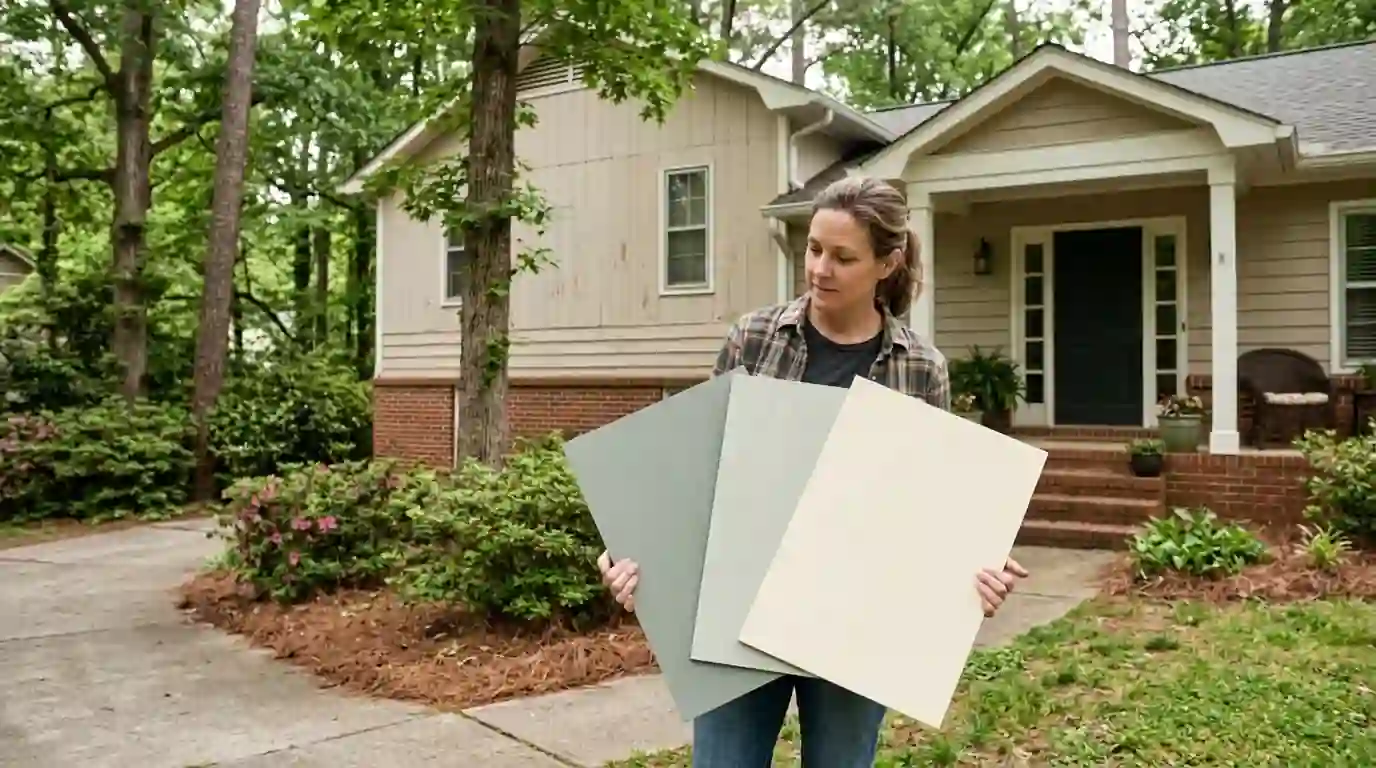
Paint chips are small and colors look different outdoors. Many committees ask for painted samples, either on boards or directly on the house. A sample board is a piece of primed hardboard or siding painted with each proposed color, sized large enough to see from across the street.
Test patches on the actual siding show how a color reads in your light, next to your roof and stone or brick. We usually paint patches on a shaded side and a sunny side, since colors shift noticeably between them. If you're still choosing, a color consultation can help narrow choices that fit within your HOA's palette.
Timing and what happens after approval
Review times vary. Some committees meet monthly, others review on a rolling basis, and covenants often allow 30 to 45 days for a response. Plan on two to six weeks, and build that into your schedule before booking a start date, especially if you want work done in the fall.
Once approved, keep the approval letter and share it with your painter. If the committee asks for changes, they usually suggest an alternate color or a change to one surface. Work that starts before approval can lead to fines or a requirement to repaint, which is an expensive mistake.
Approvals sometimes come with conditions or an expiration date, often six months to a year, so don't let a letter sit too long before work begins. If you change your mind about a color partway through planning, send a revised request rather than assuming a small shift is fine. Committees do compare finished houses against what they approved.
Common reasons applications are sent back
The most common reason is missing information: a color without its code, unclear placement, or no photos. Other reasons include colors that are too close to a neighbor's, shades outside the community palette or bright accent colors on large surfaces.
Fixing these usually takes one round. A clear application with samples and a marked photo avoids most of them. If you're not sure your color fits, ask the management company before applying, or attend a committee meeting to hear what they look for.
- Color codes or manufacturer missing
- Placement of each color unclear
- Too close to an adjacent home's colors
- Outside the published palette
- No photos or samples included